When children keep returning to the same question in play, a thoughtfully chosen field trip can give them new things to notice, compare, and investigate. Start with their questions, consider destinations where they can explore them firsthand, and use the Field Trip Safety Checklist Buy Now $0.99 to organize safety preparations before, during, and after the visit. For guidance on connecting safe, engaging outings to your curriculum, explore Enriching Education: Field Trips  Buy Now $16.00. Read on for ways to choose a purposeful, inclusive trip and carry children’s discoveries back into classroom play.
Why should a field trip grow from children’s current investigation?
A field trip is most meaningful when it answers a real curricular need rather than simply filling a calendar slot. Children arrive with prior knowledge, theories, and questions; a thoughtfully selected destination gives them opportunities to test ideas in a setting where the subject exists beyond books and classroom materials. Research and practice guidance describe field trips as ways to connect new information with prior learning, strengthen interest, and make concepts more relevant.
Start by looking closely at children’s play and conversations. What do they repeatedly build, sort, draw, pretend, or ask about? A group investigating how water moves might benefit from visiting a creek, garden, or water-treatment exhibit. Children wondering where food comes from might learn from a garden, market, or farm. The best destination is not necessarily the most impressive or distant; it is one where children can notice something connected to their own inquiry.
This approach also respects children as capable learners. Their questions help shape the experience, while educators connect those questions to curriculum goals and developmental opportunities. Fieldwork can support language, science, math, movement, social interaction, and knowledge of the community when the visit is intentionally designed.
How can you identify the right destination?
Translate children’s investigation into a practical learning purpose, then compare possible locations. Ask what children could actually observe or do there—not only what a brochure promises. A place may be exciting yet offer little time for child-led discovery, while a nearby site may provide rich, accessible opportunities to investigate.
- Name the inquiry: Write a short statement of what children are trying to understand, such as “How do plants get what they need to grow?”
- List observable evidence: Identify what children might see, hear, compare, count, or safely handle at the site.
- Check developmental fit: Ask whether the schedule, activities, language, and movement demands suit your age group.
- Assess access and logistics: Consider travel time, cost, restrooms, water, accessibility, sensory needs, and supervision requirements.
- Contact the site: Explain the children’s inquiry and ask about hands-on options, group size, visitor expectations, and available materials.
Community locations can be excellent learning environments: a library, shop, park, garden, workshop, or neighborhood service may connect children to people and work they encounter in daily life. For a nature-based investigation, choose a site where children can move, pause, and look closely. A destination should extend the inquiry, not dictate it.
How do you connect the visit to children’s questions?
Use a simple before-during-after cycle so the excursion becomes part of the investigation rather than a stand-alone event. Before the trip, invite children to share what they know and what they want to find out. A class question web or “know, wonder, learned” chart can make their thinking visible. Keep children’s words where they can revisit them, and select only a few useful vocabulary terms to introduce in advance.
Previewing the place through photographs, books, a map, or a short story can make an unfamiliar environment more predictable. Explain what will happen, how the group will travel, and what children may do when they arrive. Visual schedules and repeated reminders are especially helpful for children who find routine changes challenging.
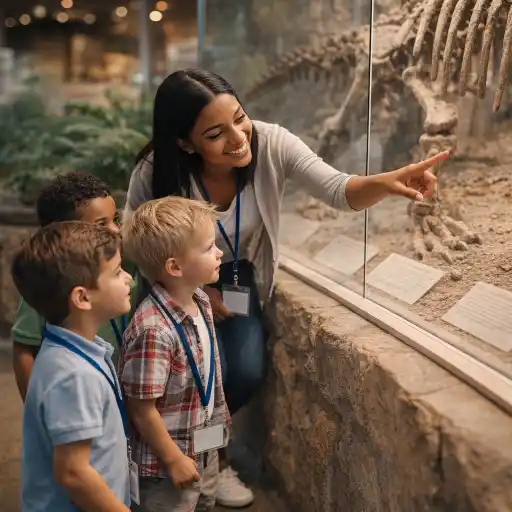
During the visit, offer a clear invitation to observe without requiring every child to produce the same answer. Bring simple materials such as clipboards, paper, or a camera if permitted. Adults can prompt attention with open-ended questions:
- “What do you notice?”
- “What is different from what we saw in the classroom?”
- “What might happen if…?”
- “Which of our questions could we investigate here?”
Allow children time to look, talk, and follow relevant discoveries. The educator’s role is to support inquiry, document observations, and connect new evidence to children’s ideas—not to deliver a long lecture.
How can the experience be safe, inclusive, and manageable?
Thoughtful logistics protect children and preserve the attention needed for learning. Follow program policies, confirm family permissions, review transportation arrangements, and assign clear roles to staff and chaperones. Ratios and other requirements depend on location and jurisdiction; state requirements vary - check your state licensing agency. If transportation or supervision planning is a concern, consider Transportation and Field Trip Safety Buy Now $25.00 for focused professional learning.
Contact the destination in advance and, when feasible, visit beforehand. Look for hazards, accessible routes, restrooms, water, quiet areas, and places where children can regroup. Review allergies, medication needs, emergency contacts, and any equipment or support children may need. Make sure adults know how children will be counted and supervised during transitions.
Inclusion begins with flexibility. Offer different ways to participate: a child might observe from a quieter spot, use a communication device, draw instead of speak, explore in a smaller group, or take a brief break. Share concrete expectations using pictures and positive language. Instead of relying only on “don’t touch,” explain what children can safely do and why a site rule matters. Respectful planning helps children feel prepared without making the outing overly restrictive.
What should educators do before, during, and after the trip?
A manageable plan keeps the learning intention visible while leaving space for children’s discoveries. Before leaving, agree on one primary question, a few observation prompts, and adult responsibilities. Send families clear information about timing, clothing, food, costs, and any support needs. Prepare a small set of materials rather than carrying a full classroom outdoors.
- Before: Record children’s questions, preview the site, introduce essential vocabulary, and practice routines.
- During: Use active supervision; pause for observation and conversation; capture a few notes, drawings, or photographs where permitted.
- After: Revisit the original questions, invite children to describe evidence, and make room for new questions.
Follow-up can take many forms: a class book, a model, dramatic play, a display, a drawing with dictated words, or a simple chart comparing children’s predictions with what they observed. Documentation need not be elaborate. A photograph, a child’s comment, and an educator’s note about a developing skill can preserve the meaning of the experience and inform next steps.
Reflection also helps educators evaluate the destination itself. Did the site offer adequate time and access? What captured the children’s attention? Did the visit deepen their inquiry, or did a new question emerge? Use these observations to decide whether to return, invite an expert, investigate with classroom materials, or choose a different community resource.
What common planning pitfalls can you avoid?
Even a popular destination can miss the mark if the trip is planned around adult convenience rather than children’s learning. A common pitfall is choosing a site first and trying to attach a curriculum connection afterward. Begin with the children’s questions, then select a place that offers relevant evidence or experiences.
- Too many goals: Focus on one central inquiry and a few related skills rather than trying to cover everything.
- Over-scheduling: Leave time for transitions, rest, conversation, and child-led observation.
- Passive participation: Ask about opportunities to explore, handle appropriate materials, or speak with people connected to the topic.
- Unprepared adults: Share group lists, schedules, supervision assignments, expectations, and children’s learning focus with chaperones.
- Ending at the bus ride home: Plan a reflection or representation activity so children can revisit and extend the experience.
Another pitfall is assuming every child will experience the destination in the same way. Sensory preferences, mobility, communication, language, and prior experiences all shape participation. Ask the site about access and accommodations, and prepare alternatives that preserve children’s agency. If a trip becomes impractical, a local walk, virtual conversation with a community expert, or carefully prepared in-class encounter can still extend the investigation.
🎒 Practical reminder: Pack the essentials, but make your most important resource a short list of children’s questions. It keeps adults focused on the reason for the visit while allowing the children’s curiosity to lead.
How can a field trip extend what children are already investigating?
Choose a field trip by starting with what children already wonder about, then identify a destination where they can encounter useful evidence, people, materials, or experiences. Prepare children with questions and a concrete preview; plan for safety, accessibility, and realistic logistics; and make room for active observation during the outing. Most importantly, return to the investigation afterward through conversation, documentation, play, and further exploration.
A successful trip does not need to be far away or elaborate. Its value lies in the connection between children’s existing ideas and what they discover in the world around them. When providers plan with intention and remain responsive to children’s interests, field trips can deepen #inquiry, strengthen #curiosity, build #community connections, and create meaningful opportunities for #learning through #experience.
For a more complete planning framework, explore Enriching Education: Field Trips Buy Now $16.00. The course focuses on preparing safe, engaging outings and integrating them with children’s learning.
- CDA Home Visitor Subject Area 3 Part 3 Birth to 5
- Mastering Supervision: Keeping Children Safe in All Settings
- Birth to Five CDA Credential with Portfolio Review
- CDA Bridge Bundle: Family Child Care without Portfolio Review
- CDA Bridge Bundle: Infant/Toddler without Portfolio Review
- CDA Bridge Bundle: Preschool without Portfolio Review
- Creating Environments that Nurture Growth and Community
- Texas Director Credential
- Enriching Education: Field Trips
- Every Moment Matters: Schedules and Transitions
- CDA Certification en Español: Recursos y Consejos para Educadores Bilingües
- 💛🧩 ¿Cómo puedo hacer que mi enseñanza sea inclusiva para los niños con autismo?
- Recursos en Español sobre el Sueño Seguro del Bebé
- Cómo Iniciar el Proceso de Obtención de la Licencia de Cuidado Infantil
- Regulaciones de Licenciamiento de Cuidado Infantil en California para Centros y Hogares de Cuidado Infantil Familiar
- Proporciones de Cuidado Infantil y Tamaños de Grupo por Edad en Maryland (Guía Rápida para Centros y Hogares)
- Proporciones de Cuidado Infantil y Tamaños de Grupo por Edad en Nueva Jersey (Guía Rápida para Centros y Hogares)
- Proporciones de Cuidado Infantil y Tamaños de Grupo por Edad en Virginia (Guía Rápida para Centros y Hogares)
- Lista para Guardería en Casa en Illinois: Cómo Iniciar una Guardería en el Hogar
- Por Qué la Supervisión Activa Es Clave para la Seguridad en el Cuidado Infantil
- Capacitación Previa al Servicio para Proveedores de Cuidado Infantil en Dakota del Norte
- Las Mejores Ideas de Excursiones para Guarderías en Dakota del Norte
- Las Mejores Ideas de Excursiones para Guarderías en Texas
- Las Mejores Ideas de Excursiones para Guarderías en Georgia
- Best Daycare Field Trip Ideas in Virginia
- Best Daycare Field Trip Ideas in California
- Summer Field Trips for Daycares in Nevada
- Celebrando la amistad en el cuidado infantil durante el Día de los Mejores Amigos
- Canciones, juegos y preguntas de círculo para niños
- How Can You Choose a Field Trip That Extends What Children Are Already Investigating?
