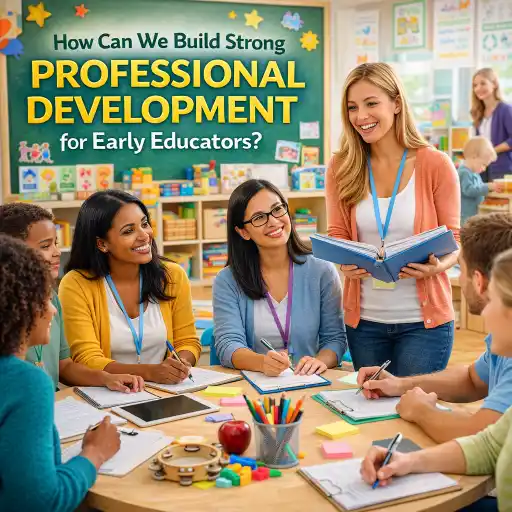
Every day you help young children learn and grow. Good learning for staff matters just as much as learning for children. Our #professionaldevelopment plan can help your team feel confident and supported. It helps #educators teach better and helps #children thrive by using focused #coaching and strong #mentorship.
Why this matters: High-quality staff learning leads to calmer classrooms, better child outcomes, and happier staff. Small, steady investments in learning pay off. State requirements vary - check your state licensing agency.
Which professional development strategies actually work?
Here are proven approaches that fit busy schedules and classroom needs. Use more than one strategy for best results.
- 📚 Self-paced online courses
1) What: Flexible online lessons staff can finish on their own time. 2) Why: They fit work schedules and can be repeated. 3) Where: Find many options on ChildCareEd and course catalogs like ChildCareEd self-paced trainings. For educators seeking formal credentials that can count toward licensing or demonstrate verified skills, see our guide to online child care certification, which outlines flexible certification options for busy educators and parents.
- 🧑🏫 Coaching and mentoring
1) What: Job-embedded coaching and peer mentoring. 2) Why: Coaches help teachers try new skills in real time. 3) Evidence: Coaching improves practice when it is ongoing, not one-time, as described in coaching studies and ChildCareEd resources like mentorship articles.
- 🏅 Microcredentials and stackable learning
1) What: Short, skill-focused credentials teachers can show as proof. 2) Why: They focus on real classroom skills and can build into larger certificates. See trends from microcredential research.
- 👥 Professional learning communities (PLCs)
1) What: Small groups that meet to reflect and share. 2) Why: Peer reflection builds trust and makes learning practical. Guides on building learning communities explain how to start and sustain PLCs (learning community processes).
Tip: Mix 1–2 self-paced courses with one coaching cycle and monthly PLC meetings. Use ChildCareEd courses to match goals and licensing needs (planning ideas).
How can directors plan, fund, and track staff learning?
Directors and providers can make PD simple and fair. Follow these clear steps so staff feel supported and learning links to classroom change.

- Set clear goals
1) Choose 2–3 program goals (example: improve interactions, boost language). 2) Match trainings to those goals. ChildCareEd has topic pages and course lists for easy matching (ChildCareEd planning).
- Make a yearly PD plan
1) Number required trainings (health, safety). 2) Add growth topics (classroom management, inclusion). 3) Schedule time for practice and reflection.
- Track progress and certificates
1) Use a spreadsheet or group admin tools to track completion. 2) Keep copies of certificates and upload to state registries when needed. ChildCareEd group admin options can help with bulk purchases and tracking (group training).
- Fund and support staff
1) Budget stipends or paid time for coursework. 2) Use bulk buys, scholarships, or local grants. 3) Encourage staff by paying for coach time or creating in-house peer coaches.
Remember: state requirements vary - check your state licensing agency. Small supports like paid study time and clear tracking help staff complete learning and use it in the classroom.
How do coaching and mentorship improve teaching and child outcomes?
Coaching and mentorship are powerful because they put learning into everyday work. Here is how they help, step by step.

- 🧭 Guide practice
1) Coaches help teachers try new moves right in the classroom. 2) Mentors share experience and boost confidence. ChildCareEd shows how mentorship creates a culture of ongoing learning (mentorship post).
- 🔁 Offer feedback and reflection
1) Coaches observe, give feedback, and plan next steps. 2) Teachers reflect and make small changes that add up. Research on coaching in quality initiatives explains why follow-up matters (coaching study).
- 🌱 Support continuous improvement
1) Mentorship builds relationships that keep staff in the field longer. 2) Coaching tied to goals improves classroom interactions and child learning. See program impact ideas in ChildCareEd impact article.
- ✅ Use evidence
1) Ask teachers to show one short change after training (photo, note, video). 2) Use that evidence to guide next steps and measure child outcomes.
What are common mistakes and how do we avoid them?
Many centers try PD that looks good on paper but does not change what happens in the room. Avoid these common errors with simple fixes.
- ❌ Mistake: Counting hours instead of impact
Fix: Require a short evidence piece after training (one change photo, short reflection, or classroom example). That shows learning was used.
- ❌ Mistake: One-off workshops with no follow-up
Fix: Pair workshops with coaching cycles and PLC meetings. Research shows sustained, job-embedded PD works best. ChildCareEd recommends combining online courses with coaching (practical steps).
- ❌ Mistake: Irrelevant topics or no staff voice
Fix: Ask staff what they need. Let them choose some topics. Use adult learning principles so training is practical and respectful (adult learning guide).
- ❌ Mistake: No time to practice
Fix: Schedule short paid practice slots, peer observations, or built-in coaching time during the week.
Why this helps: When teachers see PD as useful and supported, stress drops and retention improves. The OECD notes that workload and support affect staff stress and turnover (OECD report).
Conclusion
Practical PD is: 1) focused on clear goals, 2) mixed (online + coaching + PLCs), and 3) tracked with evidence. Directors can plan simple yearly PD, fund short supports, and use group tools from ChildCareEd to manage courses and certificates.
FAQ (short):
- Q: Can online PD count for licensing? A: Often yes — save certificates and check your state. State requirements vary - check your state licensing agency.
- Q: How many PD hours per year? A: It depends on state and role. Many centers set 10–30 hours; check local rules and approved courses.
- Q: What if staff resist learning? A: Ask them what they need, offer choices, give paid time, and pair training with coaching.
- Q: Are microcredentials worth it? A: Yes — they show clear skills and can be stacked into larger credentials (microcredential trends).
You are doing important work. Use a mix of reliable online courses, coaching, mentoring, and clear tracking. Start small, plan with staff, and celebrate each step forward.
- 45 Hour Preschool Methods and Materials
- 24 Hour Texas Pre-Service
- CDA Bridge Bundle: Family Child Care without Portfolio Review
- CDA Bridge Bundle: Infant/Toddler without Portfolio Review
- CDA Bridge Bundle: Preschool without Portfolio Review
- Emergent Learning & Development
- 45-Hour Infant and Toddler Curriculum
- Texas Director Credential
- CDA Infants/Toddlers: Lesson Planning Made Easy
- Empowering Early Childhood Education: NYAEYC
- The Vital Role of the CDA Credential for Virginia's Early Childhood Educators
- The Vital Role of Professional Development
- ChildCareEd: Empowering Early Childhood Educators with Quality Training
- CDA Council's Early Educators Leadership Conference
- Bright Futures: Why CDA Certification is the Career Glow-Up You Need in 2025
- CDA Certification en Español: Recursos y Consejos para Educadores Bilingües
- Growing Bright Futures: Early Childhood Education in Oklahoma🌟
- Bright Futures in Colorado: What Every Early Childhood Educator Should Know
- Leading with Heart: Why Oklahoma’s Early Childhood Leaders Make All the Difference
- Guiding the Future: Directors and Administrators Are the Heart of ECE in Pennsylvania
- 🌲Leading the Way: How Directors & Administrators Shape Early Learning in Oregon
- From Training to Career Growth: Exploring Online Early Childhood Education
- Online Early Childhood Education Courses: Learn, Grow, and Advance Your Career
- What Counts as Professional Development for Early Childhood Educators?
- What Is the CDA Credential, and How Can Child Care Professionals Earn It?
