When families can understand and respond to updates in the language they know best, everyday communication becomes a stronger partnership—not another hurdle. Explore Building Bridges for Dual Language Learners Buy Now $25.00 to develop practical strategies for inclusive family communication and classroom support; the course can help deepen the knowledge behind the technology. Used thoughtfully, translation tools can make routine messages more accessible while preserving the trust and human connection children and families need.
Why does language access matter in child care?
Language access is more than convenience. It affects whether families can understand enrollment information, health and safety plans, daily updates, and invitations to participate. A Migration Policy Institute policy brief notes that language can shape whether families are able to identify, enroll in, and communicate with early childhood programs. When a family cannot easily understand a message, a missed response should not be mistaken for indifference.
Accessible communication helps families share what they know about a child’s routines, interests, comfort, and development. That knowledge supports continuity between home and care and helps educators make more responsive decisions. Translation technology can reduce friction for common updates, but it works best as part of a broader approach that respects families’ preferred languages and communication methods.
Language preferences are individual. A caregiver may prefer one language for speaking and another for reading, or may prefer a phone call over an app. Ask rather than assume, and revisit preferences as family needs change. The goal is not simply to send more messages; it is to help families feel informed, included, and able to take part in decisions about their child.
What can translation technology do well—and where are its limits?
Digital translation features can make routine communication easier. Depending on the platform, staff and families may be able to exchange direct messages, translate announcements, or read child observations in a selected language. Some childcare communication platforms describe tools that translate messages and newsfeed posts in multiple languages. These features may save staff from copying text between separate apps and help families access updates more promptly.
Still, automated translation is a support tool, not a guarantee of complete understanding. It can miss context, tone, local expressions, dialect, or the meaning of early-childhood terms. A brief translated alert may work for a reminder about a picture day; it may be insufficient for an incident, a health concern, or a discussion about a child’s development.
- Use translation technology for routine, straightforward updates and invitations.
- Keep messages short, concrete, and free of idioms, acronyms, and unexplained program jargon.
- Review important translated content for accuracy and clarity whenever possible.
- Offer families a way to ask questions or request a different communication method.
Technology should extend access, not replace professional interpretation, careful listening, or direct relationships. A translated message is a beginning; a real opportunity to respond is what makes communication reciprocal.
How can programs choose and introduce a useful tool?
Start with family and staff needs rather than a feature checklist. Ask which languages families prefer for written and spoken communication, which channels they already use, and whether they have reliable access to a smartphone or the internet. Also consider staff workload, data privacy, accessibility features, ease of onboarding, and whether the platform translates the kinds of messages your program actually sends.
A small pilot can reveal practical issues before a program-wide rollout. Test account setup, notifications, translation quality, and the steps required to send and retrieve updates. Invite a few families and staff members to share feedback in their preferred language or format. Compare participation and staff time with your existing process, while remembering that low app activity may reflect access barriers or different preferences—not a lack of interest.
Directors can set simple shared expectations so messages remain consistent across classrooms. For example, decide which channel is used for routine announcements, how staff handle urgent matters, and who follows up when a family asks a question. Explain how the tool works in accessible language, offer a non-digital alternative, and protect private child and family information according to program policies.
Technology is most helpful when it is reliable, manageable for educators, and genuinely usable by families. Build in a check-in after a few weeks and be prepared to adjust the system based on what families and staff report.
How can translated communication stay personal and two-way?
Translation can make a message readable, but partnership also depends on warmth, respect, and the chance to con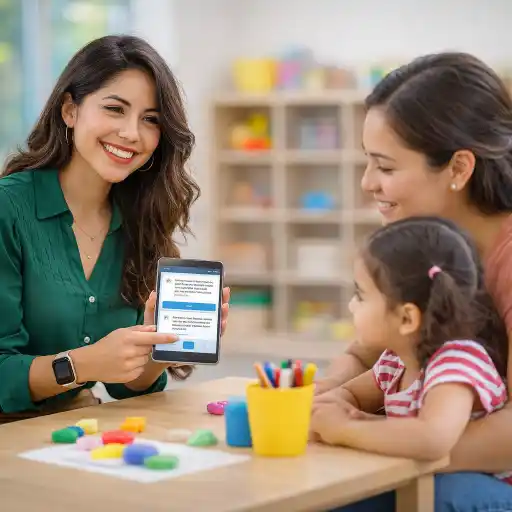 tribute. Begin by learning each family’s preferred name, language, channel, and contact times. Then invite family knowledge with open, specific questions: “What helps Kai feel comfortable at nap time?” or “Which words does your family use for this routine?” These questions show that caregivers are experts on their children.
Use digital tools to share meaningful moments, not only reminders and problems. A short note about a child’s persistence, new interest, or joyful discovery can help a family picture the day and create a welcoming opening for a reply. NAEYC describes how teachers can use family audio and video stories, photographs, and QR codes to connect children’s home experiences with classroom learning. Such practices can make families’ languages and knowledge visible, while keeping participation flexible and voluntary.
Make space for responses in more than one form: an app reply, voice message, paper note, phone call, or brief conversation at drop-off. Respond to questions and close the loop on agreed next steps. When a family does not answer, check whether the message reached them and whether another format would work better rather than assuming they are disengaged.
- 🌟 Share a specific strength or observation before making a request.
- Ask families how they prefer to receive routine and important information.
- Invite stories, words, songs, or images that families choose to share.
- Make participation optional and avoid placing translation work on children.
When should providers use a qualified interpreter instead?
Translation converts written content; interpretation supports a live conversation. For complex or sensitive matters—such as a health or safety concern, a developmental discussion, a referral, or a significant care decision—offer a qualified interpreter when needed. Automated translation alone may not convey nuance, allow for immediate clarification, or support the privacy and accuracy that the conversation requires.
Prepare for interpreted conversations: clarify the purpose, share relevant documents ahead of time when appropriate, speak directly to the family, and use short, clear sentences. Pause for interpretation and allow time for questions. Check understanding with an open invitation, such as, “What questions do you have about the plan?” rather than relying only on “Do you understand?” Do not ask children to interpret adult discussions. A bilingual staff member is not automatically trained to interpret, particularly in a high-stakes conversation.
For written communication, prioritize documents families need to make informed decisions or respond to the program, such as enrollment, consent, health, and emergency information. Use plain language before translating, and provide a way for families to ask for clarification. Federal language-access obligations depend on the program and its funding; consult applicable guidance and program leadership rather than assuming one rule applies to every child care setting. State requirements vary - check your state licensing agency.
How can a program avoid common technology pitfalls?
One common mistake is assuming that a message is understood because an app marked it as delivered or translated it. Delivery does not confirm comprehension. Another is relying on automated translation for sensitive conversations or complex documents without review. Literal translations can also create confusion when the original text uses idioms, abbreviations, or technical terms.
Programs can reduce these risks with a few dependable practices. Keep the original message clear and concise; test translations for key terms; and offer an interpreter or another communication channel when the topic requires discussion. Ask families for feedback about clarity and accessibility, and respond without defensiveness when a tool does not meet their needs. Avoid treating a family’s lack of response as agreement or lack of care.
Protect privacy by using program-approved tools and following policies for records, photographs, and child information. Be transparent about how families can access messages and who can view them. Maintain a consistent backup plan for urgent communication in case a platform, device, or internet connection fails.
Finally, do not let technology become the only measure of engagement. Family partnership includes listening, follow-through, and recognizing family expertise—whether communication happens through an app, a paper note, a conversation, or a qualified interpreter. Thoughtful tools can help reduce barriers, but relationships do the deeper work.
Conclusion: How can translation technology strengthen family partnerships?
Translation technology can help child care programs make routine information more accessible, reduce repetitive work, and create more opportunities for families to stay connected. Its value depends on thoughtful implementation: learn each family’s preferences, select a usable and secure tool, write clearly, and invite families to respond. For important, nuanced conversations, use qualified interpretation when needed rather than relying on automated translation alone.
The central goal is not simply to translate more words. It is to ensure families can understand, ask questions, share their knowledge, and participate in decisions about their children. Combine technology with human listening, flexible communication options, and consistent follow-up. With that foundation, language access becomes a daily expression of welcome and respect.
Explore related ChildCareEd courses
- Building Bridges for Dual Language Learners Buy Now $25.00
- Bridging Cultures: Family Communication & Collaboration
 Buy Now $55.00
- Equity-Centered Communication in ECE Buy Now $55.00
- Training Guide for Families from Diverse Language and Cultural Backgrounds Buy Now $24.00
- Open Ears: Listening in Child Care Buy Now $16.00
- Building Bridges for Dual Language Learners
- Building Bridges for Dual Language Learners: For Workforce Solutions
- Bridging Intent and Response: Communication
- CDA Bridge Bundle: Family Child Care
- CDA Bridge Bundle: Family Child Care without Portfolio Review
- Bridging Intent and Response: Communication
- Texas Director Credential
- Building Bridges for Dual Language Learners
- Bridging Cultures: Family Communication & Collaboration
- Supporting Families and Caregivers in Language and Literacy
- CDA Certification en Español: Recursos y Consejos para Educadores Bilingües
- Apoyo en Preescolar para Retrasos del Habla: Estrategias Simples que Ayudan
- Retraso del Habla en la Guardería: Cómo Pueden Ayudar los Proveedores
- Cómo Trabajar en el Cuidado Infantil en Carolina del Norte: Requisitos y Pasos
- Celebrando la amistad en el cuidado infantil durante el Día de los Mejores Amigos
- How can Nevada child care programs make parents true partners?
- How can child care providers communicate effectively, manage hard conversations, and boost family involvement?
- How Can Child Care Providers Help Families Access Child Care Assistance?
- How can I strengthen family partnerships without lengthy meetings?
- Early Childhood Policy Training: How Policy Shapes Practice in ECE
- How Can Childcare Programs Encourage Meaningful Family Participation?
- How Can Child Care Providers Communicate Effectively With Families About Their Child’s Day?
- When Is Translation Not Enough in Parent Communication?
- Can AI Help Child Care Providers Communicate With Multilingual Families?
- How Can Technology Make Daily Family Communication Faster Without Making It Impersonal?
- AI Translation in Child Care: Helpful Shortcut or Risky Replacement for Human Communication?
- How Can Translation Technology Help Child Care Programs Bridge Language Barriers with Families?
- How Can Child Care Programs Use Technology to Keep Families More Involved?
- How Can Technology Support Dual-Language Learners in Early Childhood Classrooms?
- How Can Child Care Providers Connect CDA Training With Family Engagement?
