November can bring children’s attention to changing weather, leaves, family routines, and seasonal materials—but the best activity is the one that grows from what children actually notice and do. A purposeful observation-to-planning routine helps you turn those moments into engaging, age-appropriate experiences; Assessing through Observation Buy Now $35.00 offers focused professional learning on observation methods and assessment that can strengthen your classroom planning.
Why do November observations matter for activity planning?
Seasonal themes provide a convenient starting point, but a calendar should not dictate every classroom experience. Children may be fascinated by puddles, migrating birds, family recipes, windblown leaves, neighborhood construction, or the sounds of a familiar song. Attentive observation helps educators discover these interests and plan experiences that connect to children’s existing knowledge and emerging questions.
Observation also helps providers see development across domains in everyday moments. As children sort leaves by shape, they may compare attributes, use descriptive language, negotiate with peers, and refine hand movements. During pretend market play, they may explore counting, role-taking, vocabulary, and family routines. These are opportunities to notice what each child can do and identify a thoughtful next step—not to test children against a seasonal checklist.
NAEYC explains that observing, documenting, and assessing children are essential to planning, implementing, and evaluating learning experiences. Its guidance on observing, documenting, and assessing development emphasizes ongoing, purposeful, reflective, and culturally and linguistically responsive practice. When November planning follows that cycle, children’s interests and strengths—not just a theme—shape the curriculum.
- Notice which materials, ideas, and routines invite sustained engagement.
- Identify strengths and emerging skills across developmental domains.
- Use children’s questions and play as evidence for next-step planning.
What should educators look and listen for in November?
Begin with an open question rather than a predetermined craft. For example: “How are children using natural materials?” “What do they say about changes outdoors?” or “Which parts of the pretend cooking area draw children into shared play?” A focused question helps educators observe without deciding in advance what children’s actions must mean.
Watch and listen during child-led play, outdoor exploration, transitions, meals, small groups, and familiar routines. November may offer opportunities to observe how children handle gloves and zippers, compare the sound of rain and wind, investigate seeds or gourds, or tell stories about people and places important to them. Interests will differ across children and communities, so avoid assuming that every child celebrates the same holidays or has the same seasonal experiences.
Record specific, observable evidence. Instead of writing “Sam enjoyed fall science,” note: “Sam picked up three leaves, placed the smallest beside the largest, and said, ‘This one is tiny.’” Include the date, context, materials, and relevant peer or adult interactions. Short factual notes are often easier to use than broad judgments.
- What did the child do, say, repeat, or investigate?
- How long did the child stay involved, and what helped sustain engagement?
- Did the child use materials in an unexpected or inventive way?
- How did language, culture, relationships, or sensory preferences shape participation?
- 🔎 Note children’s own questions; they can point toward a meaningful investigation.
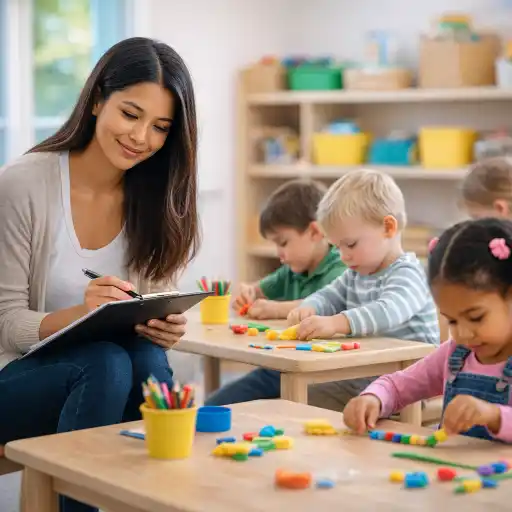
How can observations become developmentally appropriate activities?
Move from evidence to a modest, purposeful next step. First, describe what happened; then consider what the child may be exploring and what support could extend that learning. Developmentally appropriate practice considers common patterns of development, each child’s individuality, and the context of learning. The aim is a suitable challenge—not an activity that is simply “for the age group.”
Imagine that several children collect leaves, compare colors, and ask why some are crisp while others are damp. You might offer magnifiers, sorting trays, paper, and drawing tools for close examination. Invite children to describe differences, make predictions, or create a class collection. A child who prefers watching can participate by choosing a leaf or dictating an observation; a child ready for additional challenge might group leaves by more than one attribute.
Seasonal materials can support many domains without requiring a narrow holiday focus. For example:
- Language and literacy: Make a shared book of children’s observations, using their words and drawings.
- Math: Compare, sort, count, or measure safe natural materials.
- Science: Explore changes in weather, textures, water movement, or plant parts.
- Creative expression: Offer open-ended collage, printmaking, music, or movement.
- Social learning: Invite children to plan a shared structure, market, or storytelling scene.
NAEYC’s article on using observation to guide teaching describes how teachers can use children’s interests and documented learning to adapt strategies and design experiences. Keep the materials flexible, and let children’s ideas influence how the investigation develops.
How can providers make activities inclusive and responsive?
An activity is developmentally appropriate only when children can access it in meaningful ways. Consider developmental variation, home languages, disability, sensory preferences, family knowledge, and children’s different experiences of November. Seasonal activities should invite participation without implying that a particular holiday, family structure, food, or tradition is universal.
Offer more than one way to engage. Children might handle materials, observe, point, draw, move, use assistive tools, speak in a home language, or dictate an idea. Use photos, objects, gestures, and familiar vocabulary to make concepts accessible. If an activity uses natural objects, check for choking hazards, allergies, cleanliness, and program safety procedures, especially with infants and toddlers.
Family knowledge adds context that classroom observation alone cannot provide. Ask caregivers what children are interested in at home, what words they use for familiar objects, and whether particular materials or celebrations require adaptation. Treat family participation as an invitation, not an obligation. NAEYC notes that assessment should reflect children’s languages, experiences, and contexts and should involve family perspectives when appropriate.
- Provide choices for active, quiet, tactile, and observational participation.
- Use adaptive tools, visual supports, and materials at varied levels of complexity.
- Represent different families and traditions respectfully; do not ask a child to speak for a whole culture.
- Check materials and supervision needs before inviting exploration.
For additional professional learning in responsive planning, explore [Planning for Every Child: Responsive Strategies in Action](https://www.childcareed.com/courses-planning-for-every-child-responsive-strategies-in-action-4043.html), which focuses on using assessment and observation information to individualize curriculum and adapt learning experiences.
How should educators document, reflect, and adjust plans?
Documentation becomes useful when it informs a decision. After an observation, separate the factual record from your interpretation. Ask what the child may be learning, what conditions supported engagement, and what you want to observe next. Avoid drawing a large conclusion from one moment; children may show different skills in different settings or with familiar people.
Use a simple planning cycle: observe, document, interpret, plan, implement, and revisit. For example, if children repeatedly compare leaves, offer magnifiers and a sorting invitation, then observe whether they notice new details or collaborate in different ways. If interest fades, that is useful information too: change the materials, ask a new question, or follow another interest. A plan is a guide, not a script.
Teams can make this process manageable by sharing brief notes during planning meetings, agreeing on objective documentation practices, and making time for staff reflection. Directors can support educators with accessible materials, clear documentation expectations, and opportunities to discuss how activities connect to developmental goals. Protect supervision at all times; observation should be embedded safely into normal classroom practice.
Common pitfalls include choosing an activity only because it fits November, interpreting one observation as a complete picture of a child, and overdirecting play toward a predetermined product. Return to evidence and let children’s actions guide the next step. State requirements vary - check your state licensing agency for applicable documentation, assessment, and curriculum expectations.
Conclusion: How can November observations lead to better activities?
November classroom observations are most valuable when they reveal children’s interests, strengths, questions, and ways of participating—and then influence what educators offer next. Focused, objective notes help providers move beyond generic seasonal activities toward experiences that are purposeful, flexible, and grounded in children’s development and context.
Remember the central steps:
- Observe children across play, routines, and varied settings.
- Document what you see and hear before interpreting it.
- Plan accessible experiences connected to children’s interests and developmental goals.
- Revisit the evidence and adjust activities as children’s ideas evolve.
When providers ask what children are showing them this November—and respond thoughtfully—the classroom becomes a place where seasonal curiosity can grow into meaningful learning.
Courses for further learning

- Moving About the Classroom: Effective Transitions for Everyday
- Lesson Planning for Preschoolers
- 45 Hour Preschool Methods and Materials
- Engaging Indoor Activities for Inclement Weather
- 45 Hour School Age Methods and Materials
- CDA Bridge Bundle: Family Child Care without Portfolio Review
- CDA Bridge Bundle: Infant/Toddler without Portfolio Review
- CDA Bridge Bundle: Preschool without Portfolio Review
- Positive Attention: Interactions & Supervision for Infants & Toddlers
- Texas Director Credential
- 💛🧩 ¿Cómo puedo hacer que mi enseñanza sea inclusiva para los niños con autismo?
- 😅❌ ¿Cómo Puedo Manejar a un Niño que Dice “¡NO!” a Todo en el Aula?
- 👶 ¿Cuáles son las proporciones y grupos requeridos en Dakota del Norte? 🏫
- Recursos en Español sobre el Sueño Seguro del Bebé
- ¿Cuáles son las mejores actividades del Día de la Tierra para niños en casa o en el aula?
- Actividades de Motricidad Gruesa que Desarrollan el Equilibrio, la Coordinación y la Fuerza
- 10 Ejemplos de Cómo la Cultura Influye en el Desarrollo Infantil
- Actividades de Fiesta para Niños de Preescolar y Primaria
- Proporciones de Cuidado Infantil y Tamaños de Grupo por Edad en Maryland (Guía Rápida para Centros y Hogares)
- Proporciones de Cuidado Infantil y Tamaños de Grupo por Edad en Nueva Jersey (Guía Rápida para Centros y Hogares)
- Proporciones de Cuidado Infantil y Tamaños de Grupo por Edad en Virginia (Guía Rápida para Centros y Hogares)
- Cómo Trabajar en el Cuidado Infantil en Carolina del Norte: Requisitos y Pasos
- Celebrando la amistad en el cuidado infantil durante el Día de los Mejores Amigos
- Cómo simplificar la capacitación para sus empleados de daycare
- How Can November STEM Activities Encourage Curiosity and Discovery?
- How Can November Outdoor Activities Help Children Explore and Appreciate Nature?
- How Can November Classroom Observations Guide Developmentally Appropriate Activities?
- How Can Child Care Providers Help Families Recognize Their Children’s Developmental Progress in November?
- How Can November Classroom Observations Strengthen Family Communication?
- How Can Anecdotal Observations Make November Parent Conferences More Meaningful?
