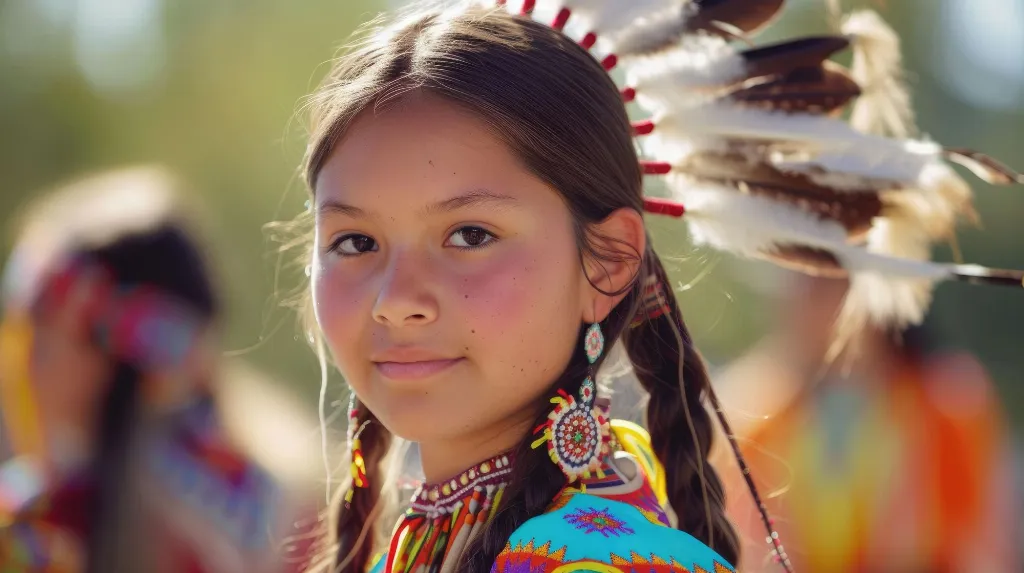
 Young children notice what we do. When we teach about Indigenous peoples, we can be kind, accurate, and helpful. This article gives simple steps and real ideas for child care providers and directors. You will find book ideas, hands-on projects, ways to invite community, and common mistakes to avoid.
Use activities that center Indigenous voices and teach with #respect for people and places. Include books and materials by Indigenous creators to build #culture in your #classroom for #children who come from many backgrounds.
How can I choose books and materials that are respectful?
Start with books and media made by Indigenous authors, illustrators, and storytellers.
- 📚 Read the author notes first. Many Indigenous picture books include notes that explain context. ChildCareEd recommends choosing Indigenous-authored books for Indigenous Peoples’ Day and beyond; see Read, Create, Learn as an example.
- 🔎 Be specific. Name the nation or community when it is known. The University of Alberta editorial guide reminds us to use precise, respectful language and to avoid generalizing all Indigenous peoples as one group (editorial resource).
- 🌿 Pick non-sacred themes. Nature, food, family, songs, and everyday life are safe and meaningful topics. ChildCareEd’s activity packs include nature art and story stones that connect to books without using sacred items (activity resource Buy Now $0.00).
- 🔁 Repeat and keep books available. Make the books part of daily play so children can revisit them and practice new words.
Tip: Choose books for the age you teach. For toddlers pick short, rhythmic books; for preschoolers choose stories with clear scenes they can act out. For language work, strategies like TPR-Storytelling (Total Physical Response) help children learn Indigenous words by pairing actions with language (TPR-Storytelling guide).
What hands-on activities are safe, simple, and meaningful?
Hands-on learning connects to culture in a gentle, age-appropriate way. Use activities that invite all children to observe, make, and wonder.
- 🍂 Nature collage: Collect leaves, sticks, and seeds. Tie the activity to a story about the land. This avoids sacred objects while honoring nature.
- 🪨 Story stones: Paint stones with simple images from a book and let children retell the story with the stones. ChildCareEd suggests story stones as a low-cost tool (storytelling ideas).
- 🎶 Simple songs and rhythms: Use clapping or drumming patterns only when the book or local community says it is okay. Avoid copying sacred songs or dances.
- 🥣 Food learning with care: Read about a traditional food first, then use smell-and-tell (safe, non-allergenic items) or a no-cook trail-mix activity. Always check allergies and family permissions.
- 🧭 Experiential learning: Plan short, place-based activities (garden, nature walks) so children learn from the land. This matches experiential approaches used in Indigenous pedagogy (experiential learning).
When you plan: 1) Link the activity to a real Indigenous source (book, local teaching). 2) Keep activities short and repeatable. 3) Offer adaptations for children who need help with fine motor skills or sensory breaks.
How should I involve Elders, families, and community partners?
Community voices make learning real. Follow these respectful steps:
- 📞 Reach out early: Contact local Indigenous organizations, cultural centers, or education offices. Ask who can advise or visit.
- 💬 Ask preferences: Ask your guest what they want to share, how they want to be named, and whether photos are okay. Honor their choices.
- 💵 Offer an honorarium: Many communities expect a thank-you payment or gift. Offer travel or an honorarium and ask what is appropriate.
- 🧰 Prepare children: Teach simple visit rules ("eyes watching, ears listening, hands calm"). Keep visits brief and child-friendly.
- 🤝 Co-plan: Work with community members to design activities. This avoids tokenism and builds trust.
State requirements vary - check your state licensing agency when planning visitors or food activities. Use community-led resources whenever possible and give credit to the people who share their knowledge.
What common mistakes should I avoid and how can I check my work?
Being well-meaning is not enough. Here are mistakes and fixes:
- 🔴 Mistake: Treating all Indigenous cultures the same.
- Fix: Be specific. Name the nation or community, and use resources from Indigenous creators (style guide).
- 🔴 Mistake: Using sacred songs, regalia, or ceremonies as costumes or crafts.
- Fix: Avoid sacred items. Ask community members what is private and what is public. Use nature art, story stones, and play props instead (activity resource Buy Now $0.00).
- 🔴 Mistake: Relying on non-Indigenous sources or stereotypes.
- Fix: Prioritize Indigenous-authored books and local voices. See curated book lists and best-practice tips from ChildCareEd and American Indians in Children’s Literature (book lists).
Quick FAQ:
- Q: Can I do a dress-up activity? A: No. Avoid regalia and sacred wear. Use paper crafts instead.
- Q: How do I pick books? A: Choose Indigenous authors and read author notes first (Read, Create, Learn).
- Q: How to include language? A: Use TPR-Storytelling to teach single words with actions (TPR guide).
- Q: Who pays Elders? A: Offer an honorarium and follow community guidance.
Final tips: 1) Center Indigenous voices. 2) Keep activities short, concrete, and linked to real sources. 3) Review your materials with a community member when possible. Small, respectful steps build trust and help children learn with heart and accuracy.
Summary
Respectful Indigenous activities are simple to plan and powerful for young learners. Use Indigenous-created books and materials, choose hands-on activities that honor land and family, invite community voices carefully, and avoid common pitfalls like stereotypes and sacred appropriation.
For classroom-ready ideas, see ChildCareEd’s activity pages and read local editorial guides to stay respectful and accurate (activities Buy Now $0.00, language guide).
- Character Development for Childcare Professionals
- Teacher-Child Interactions for Stronger CLASS® Outcomes
- Administering Basic Health and Safety ONLINE
- Engaging Indoor Activities for Inclement Weather
- Emergent Learning & Development
- Mind's Medicine: Music in Early Childhood
- Children at the Wheel ONLINE
- Moving About the Classroom: Effective Transitions for Everyday
- Technology as a Classroom Tool
- CDA Certification en Español: Recursos y Consejos para Educadores Bilingües
- 😤💬 ¿Qué Le Digo a un Niño que Acaba de Morder a Otro?
- Cursos De Daycare En Español
- Cómo Abrir Una Quardería En Casa Sin Dinero?
- Actividades de Motricidad Gruesa que Desarrollan el Equilibrio, la Coordinación y la Fuerza
- Actividades de Fiesta para Niños de Preescolar y Primaria
- Retraso del Habla en la Guardería: Cómo Pueden Ayudar los Proveedores
- Cómo Trabajar en el Cuidado Infantil en Carolina del Norte: Requisitos y Pasos
- Cómo Ser Maestra de Preescolar en Illinois
- What Do Minnesota's Native American Communities Need From Childcare Providers?
- Respectful Indigenous Activities for Early Childhood Classrooms
- Calabazas, hojas y manzanas: actividades de otoño para preescolares
- How can North Dakota providers celebrate America’s 250th in age-appropriate ways?
- How can North Dakota child care providers celebrate America’s 250th in simple, respectful ways?
- How can Michigan providers teach community and citizenship with America’s 250th activities?
- National Massachusetts Day for Kids: Explore the Bay State Through Play
- What Are Age-Appropriate Ways to Honor Latino Cultures in the Classroom?
- What Should You Review Before Sending Home a Thanksgiving Activity?
- How Can Preschool Thanksgiving Activities Avoid Stereotypes?
