Many directors and #providers tell me they want a simple way to explain free 2‑K to parents. This short guide helps you talk about what 2‑K offers, who can apply, and how to reach families who most need this help. Use the steps below, local links, and plain language to build trust and get more kids into safe, free care. Remember: state requirements vary - check your state licensing agency.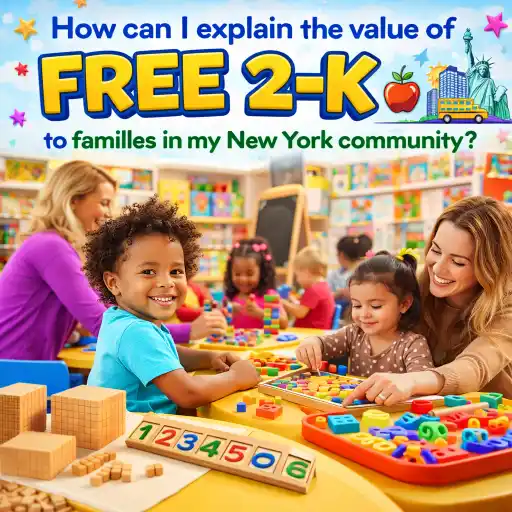
What is free 2‑K, and why does it matter to families here?
Why it matters:
- ✅ Child development: Early programs help language, self‑control, and social skills. Research shows early childhood programs give big benefits over time (RAND) and improve health and learning (CDC).
- ✅ Family stability: Free seats let parents work, train, or attend school. Cities are also doing outreach to reach families—see NYC launch coverage (Yahoo) and local reporting (SILive).
- ✅ Community: Programs can bring new public funding and partnerships to your neighborhood (ChildCareEd on universal care).
Use one or two of those reasons when you talk with families — short, clear benefits stick.
How do I explain the benefits in plain language that families will remember?
1. Use 3 quick bullets parents can read fast:
- 🟢 Safe, licensed care with trained staff (share your license and training links). See how to get OCFS‑ready at OCFS readiness.
- 🟢 Learn and play every day — teachers help speech, thinking, and friends.
- 🟢 Help for parents: enrollment help, meals, and referrals to local services (ChildCareEd: program prep).
2. Use examples parents know: “Your child will practice words, eat lunch with friends, and nap in a safe spot.”
3. Share one local fact: number of seats or how to apply. Cite the application window and MySchools steps from the city (Yahoo: how to apply).
What outreach messages and methods reach the families who need 2‑K most?
- 📌 Local partners: 1) pediatric clinics, 2) WIC sites, 3) Family Welcome Centers, 4) community groups. Share a one‑page flyer and ask partners to hand it out.
- 📱 Online: post in neighborhood Facebook groups and update your Google listing. For marketing tips, see ChildCareEd marketing.
- 🏃♀️ Events: host short play‑dates or open houses tied to community events (bring snacks, short signup forms). Public outreach efforts like NYC’s “2K for 2‑K” run and jingle contest show creative ways to reach families (AOL).
- 🗣️ Language access: translate materials and offer phone help in common languages. Cultural respect and clear communication build trust (staff‑parent communication study).
Numbered follow‑up plan to convert interest to enrollment:
- 📧 Day 0: give a simple sign‑up card or take a phone number.
- 📞 Day 1–3: call or text with next steps and help with paperwork.
- ✅ Day 7–14: invite to a short visit or play date to meet staff.
How do I handle eligibility, enrollment paperwork, and avoid common mistakes?
1. Be clear about who can apply: For NYC’s first year, families in certain school districts apply through MySchools; parents can call or visit Family Welcome Centers (Yahoo).
2. Simple enrollment checklist to keep on hand:
- 📝 Proof of child’s age (birth certificate, hospital record).
- 🩺 Immunization or health form (follow licensing rules).
- 🖊️ Signed emergency and pick‑up forms.
- 📸 Photo and short family consent for communication (translations if needed).
3. Common mistakes and fixes:
- 😬 Missing follow‑up: assign staff to one person who tracks calls and visits.
- 🧾 Confusing forms: make a one‑page guide with pictures and translated headers.
- 🔎 Not preparing files for audits: scan documents and keep a backup. For OCFS audits and training records, see OCFS readiness.
4. Build trust with families by:
- 🤝 Showing your license and safety plans.
- 🩺 Health and safety orientation: To help staff strengthen the licensing and training foundation that builds family trust, ChildCareEd's Health and Safety Orientation
 Buy Now $55.00 is a 6-hour OCFS-approved online course covering core health and safety standards — a strong credential to highlight when showing families your license and safety plans, and a practical step toward OCFS readiness for 2-K seats.
 - 📚 Giving one quick tip about the child’s day (one positive detail) at pickup.
- 🔁 Keeping promises: if you say you will call, call back within 48 hours.
- 🤝 Engaging families for child success: For staff who want to strengthen how they communicate with families about 2-K and build trust through outreach, ChildCareEd's Engaging Families for Child Success Buy Now $55.00 is a 6-hour online course covering strength-based communication, family partnership strategies, and how to reach families who may not otherwise engage — directly supporting the outreach plan, follow-up sequence, and trust-building steps outlined in this guide.
Summary and quick FAQ
Summary (3‑step starter):
- 📣 Prepare 1 sentence + 3 bullets about why 2‑K helps families (#2K #families #providers #enrollment #funding).
- 🤝 Reach families where they are: clinics, community centers, translated flyers, and quick follow‑up.
- ✅ Keep clear paperwork, a short checklist for parents, and one staff member to own outreach.
FAQ (short):
- Q: Who can apply? A: It depends on the local rollout — share the city link and help families apply (Yahoo).
- Q: Will my program be paid? A: Some seats are contracted; others use vouchers. Read the provider steps at ChildCareEd.
- Q: How do I reach families who don’t apply online? A: Offer phone help, in‑person signups, and partner with local trusted groups (see outreach research: Fowler).
- Q: Where can I get materials and training? A: ChildCareEd has scripts, flyers, and OCFS‑approved training bundles (ChildCareEd).
You’re doing important work. Simple, kind messages and steady follow‑up help families see the real value of free 2‑K. State requirements vary - check your state licensing agency. Use local news and ChildCareEd links above to keep families informed and to make sign‑up easy.
Latest Jobs
- CDA Certification en Español: Recursos y Consejos para Educadores Bilingües
- 👶 ¿Cuáles son las proporciones y grupos requeridos en Dakota del Norte? 🏫
- Cómo Abrir Una Quardería En Casa Sin Dinero?
- Recursos en Español sobre el Sueño Seguro del Bebé
- 10 Ejemplos de Cómo la Cultura Influye en el Desarrollo Infantil
- Lista para Abrir una Guardería en Casa en Dakota del Norte: Cómo Empezar
- Lista para Guardería en Casa en Illinois: Cómo Iniciar una Guardería en el Hogar
- Cómo Ser Maestra de Preescolar en Illinois
- Capacitación Previa al Servicio para Proveedores de Cuidado Infantil en Nevada
- Capacitación CDA gratuita en Illinois
- How can earning a CDA in New York help child care providers and open new opportunities?
- How can New York childcare workers finish online trauma-informed care training to better serve vulnerable children?
- How can New York childcare workers in the Bronx find Spanish-language CEU courses?
- Celebrando la amistad en el cuidado infantil durante el Día de los Mejores Amigos
- Why Does Child Care Cost So Much in New York — And How Can Providers Talk to Families About Value?
- How can I explain the value of free 2‑K to families in my New York community?
- Cómo simplificar la capacitación para sus empleados de daycare
- How can I renew my New York child care license without a gap?
- How can my program find its niche as 2‑K and 3‑K grow in New York?
- How do I build an effective emergency preparedness plan for my Kansas child care program?
