Fall pretend play can turn a simple orchard into a lively invitation for children to stretch, reach, and twist as they imagine gathering apples. With thoughtful setup, these movements support active participation, body awareness, and playful learning for children with varied abilities. Explore the ideas below, and consider Balancing Physically Active Play in Child Care Buy Now $25.00 to build practical skills for planning structured and child-led movement across the day. The course offers a fuller foundation for balancing active, creative, and quieter experiences in your classroom.
Why include upper-body movement in fall pretend play?
Reaching toward an apple, stretching across a pretend branch, or twisting to place fruit in a basket gives children meaningful reasons to move their shoulders, arms, and trunk. These actions are part of broader gross-motor experiences: children coordinate large muscle groups, adjust posture, and explore how their bodies move through space. They also get to make choices and repeat actions at a pace that feels comfortable.
Movement is not separate from learning. An orchard scenario naturally invites language such as “reach up,” “turn around,” “place it beside the basket,” and “stretch across.” Children can count apples, sort colors, take turns as pickers and helpers, or invent a story about the harvest. The CDC’s overview of physical activity benefits identifies benefits for children’s attention, memory, muscles, endurance, and overall health.
A small, planned invitation can also help address long periods of sitting. Rather than expecting children to stay still until a designated exercise period, educators can weave short movement opportunities into dramatic play, transitions, and group experiences. This is especially useful in fall, when familiar seasonal themes can make movement feel like part of an engaging story—not a drill.
How can you set up an orchard that invites safe reaching and twisting?
Keep the setting simple and flexible. A paper tree, a sturdy cardboard tree, or a felt orchard can provide the backdrop. Add soft, lightweight pretend apples and a basket or crate. Position apples at different heights and angles, but make sure the arrangement stays within children’s safe reach; avoid encouraging climbing on furniture or stretching from unstable surfaces.
Offer several ways to play so children can choose their level of movement. One child might reach for an apple attached to a low branch, while another points to the apple they want a partner to collect. A child who prefers a seated position can twist gently to place apples in a nearby basket or reach across a tabletop orchard.
- Use soft, oversized props that are appropriate for the children’s ages and abilities.
- Place materials at varied, accessible heights, with clear space around the play area.
- Provide baskets on the floor, a low table, or a child’s lap so children can choose how to transfer apples.
- Invite children to help arrange the orchard and choose roles, such as picker, basket carrier, or farm-stand helper.
- 🍎 Model gentle movements: reach, pause, bring the apple close, and turn to place it in the basket.
Use active supervision, check that materials are secure, and keep walkways free of obstacles. A useful fall orchard pretend-play setup can also support spatial language while children move among props.
Which playful activities build reaching, stretching, and rotation?
Short, repeatable activities help children explore upper-body movement without turning pretend play into a performance. Start with one idea, demonstrate it naturally, and let children adapt the action. Repetition is valuable: children may want to pick the same “apple” several times as they practice coordinating their movements.
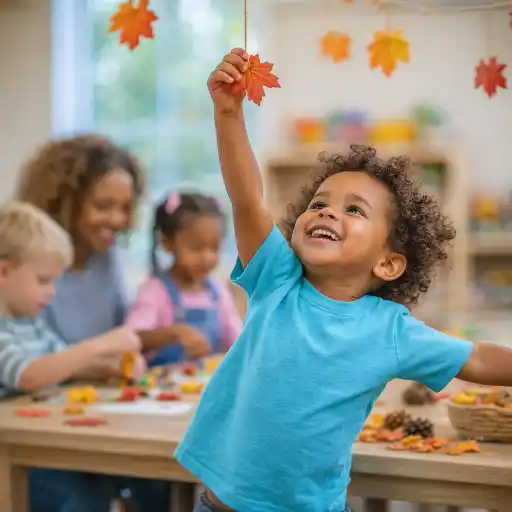
- Reach-and-pick: Place soft apples on low branches or picture cards. Children reach with one or both hands, then bring each apple to a basket.
- Across-the-orchard transfer: Put the apple basket beside the child. Invite children to reach across their body or turn their trunk gently to place an apple inside. Keep the distance comfortable.
- Branch stretch: Children pretend to stretch toward a high branch, then lower their arms to “pick” an apple placed within safe reach.
- Harvest helper: A child chooses an apple, then turns toward a partner who holds the basket. Partners can switch roles.
- Orchard story in motion: Narrate a simple story: “The wind moved the branches. We reach for an apple, turn toward the basket, and place it gently inside.”
Pair actions with words such as high, low, across, beside, and turn. Let children respond through speech, gestures, pointing, signs, or movement. For more ideas on keeping movement part of a balanced schedule, see ways to notice and reduce sedentary stretches.
How can you adapt the activity so every child can participate?
Inclusive planning begins by focusing on the purpose—exploring body movement, making choices, and joining shared play—rather than requiring every child to perform the same action. Children have different movement ranges, sensory preferences, communication styles, and experiences. Adjust the materials, position, distance, pace, and social arrangement to make participation possible and meaningful.
- Offer seated, standing, supported, or partner-assisted versions of reaching and placing.
- Move the orchard closer, lower the branches, or use larger and lighter apples.
- Use picture choices, demonstrations, or simple one-step directions to show what can happen next.
- Let a child direct a partner, point to an apple, or choose which color goes in the basket.
- Build in time to watch before joining; observation can be a comfortable first step.
These adaptations reflect the principle that small changes in the physical, social, and temporal environment can support engagement across children’s diverse strengths and needs. NAEYC discusses this approach in its article on fostering engagement within inclusive settings. When appropriate, collaborate with families and specialists to understand helpful supports and follow individual plans.
Notice children’s participation without comparing them. A child might show understanding by reaching, looking toward an apple, asking a peer to pass it, or placing it in the basket. Describe what you observe specifically, and use those observations to plan the next inviting step.
How can providers keep movement purposeful, safe, and enjoyable?
Safety and joyful movement can work together. Before play, inspect the area, secure props, remove trip hazards, and make sure children have enough room to move without bumping into peers or furniture. Stay positioned to see and hear children, scan continuously, and intervene when a foreseeable hazard arises. Model a calm pace and avoid turning the activity into a race or a test of flexibility.
Keep directions brief and let children’s ideas shape the play. Too many instructions can make a simple invitation feel like a task. Instead of correcting each movement, describe what is happening: “You reached for the red apple and turned to put it in the basket.” Offer a simple choice—“Would you like to pick an apple or hold the basket?”—and respect a child’s decision to participate differently or take a break.
Directors can support consistency by helping staff identify movement opportunities across the day, including classroom centers, transitions, and outdoor play. The CDC recommends adequate indoor and outdoor space, staff learning about age-appropriate movement activities, and regular opportunities for active play in early care settings; see its physical activity standards. State requirements vary - check your state licensing agency.
For a deeper planning resource, explore Balancing Physically Active Play in Child Care Buy Now $25.00. It addresses the balance of structured and unstructured activity, creative time, and sedentary behavior, helping providers connect a seasonal idea like orchard play to a thoughtful daily rhythm.
Conclusion: How can fall play help children stretch, reach, and twist?
Fall pretend play can offer meaningful upper-body movement when children have accessible materials, safe space, and room to guide the story. Reaching for apples, stretching toward a branch, turning to place fruit in a basket, and inviting a partner to help all create natural opportunities to move while playing.
- Keep the setup simple, sturdy, and within safe reach.
- Offer different ways to participate, including seated movement, pointing, and partner-directed play.
- Pair movement with warm narration and seasonal language, without turning play into a quiz.
- Observe children’s engagement and adjust materials or pacing to support access.
The goal is not perfect form or identical performance. It is a welcoming orchard where every child can explore movement, make choices, and enjoy the harvest story. For practical strategies to balance activity throughout the day, explore the ChildCareEd course linked above.
- Moving About the Classroom: Effective Transitions for Everyday
- From Play to Planning: Building Culturally Competent, Child-Centered Curriculum
- What Makes Me Special: An Overview of Autism and ADHD
- Admin as Mentors in Early Education
- Building Equity: Inclusionary Practices in Preschool
- Play with Purpose: Supporting Children with Autism
- Sensitive Periods in Montessori: Guiding Natural Learning
- Playful Spaces for Infants & Toddlers
- Wellness in Action: Teaching Healthy Habits to Children
- Montessori Cultural Activities: Exploring the World Through Play and Learning
- CDA Certification en Español: Recursos y Consejos para Educadores Bilingües
- Hoppin’ Into Easter: 10 Outdoor Easter Gross Motor Activities
- 💛🧩 ¿Cómo puedo hacer que mi enseñanza sea inclusiva para los niños con autismo?
- ❄️ ¿Qué actividades al aire libre funcionan bien para los niños de Illinois en cada estación? 🌷🍂
- Recursos en Español sobre el Sueño Seguro del Bebé
- ¿Cuáles son las mejores actividades del Día de la Tierra para niños en casa o en el aula?
- ¿Cómo puedo usar escenarios de juego de roles de primeros auxilios en mi aula?
- Actividades de Motricidad Gruesa que Desarrollan el Equilibrio, la Coordinación y la Fuerza
- 10 Ejemplos de Cómo la Cultura Influye en el Desarrollo Infantil
- Capacitación en Salud y Seguridad Preventiva en Línea para Proveedores de Cuidado Infantil
- Proporciones de Cuidado Infantil y Tamaños de Grupo por Edad en Maryland (Guía Rápida para Centros y Hogares)
- Proporciones de Cuidado Infantil y Tamaños de Grupo por Edad en Nueva Jersey (Guía Rápida para Centros y Hogares)
- Proporciones de Cuidado Infantil y Tamaños de Grupo por Edad en Virginia (Guía Rápida para Centros y Hogares)
- Actividades de Otoño Fáciles para Preescolares esta Temporada
- Retraso del Habla en la Guardería: Cómo Pueden Ayudar los Proveedores
- Cómo Trabajar en el Cuidado Infantil en Carolina del Norte: Requisitos y Pasos
- Celebrando la amistad en el cuidado infantil durante el Día de los Mejores Amigos
- Canciones, juegos y preguntas de círculo para niños
- How Can Cozy Animal Bedtime Play Teach Preschoolers Sequencing in Fall?
- How Can Fall Classroom Play Help Children Stretch, Reach, and Twist?
