Continuous professional growth means learning and improving at work every year. For child care leaders and teachers, it keeps practice fresh, helps staff feel confident, and makes a safer, happier place for kids. In this article you will find simple steps, ideas, and useful links to support your team’s #growth in easy-to-use ways for busy schedules. Read on to find practical tips based on trusted resources like ChildCareEd and national guidance.
What is continuous professional growth and why does it matter?
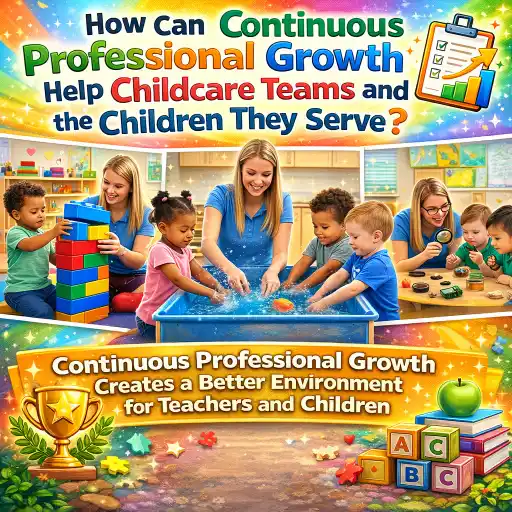
1. Continuous professional growth means ongoing learning — not just one workshop. It includes courses, coaching, peer sharing, and reflection. Good learning focuses on clear skills that help children learn and stay safe. See ideas from ChildCareEd and research about how training links to quality practice (ECRP).
2. Why it matters:
- Better care for #children: Trained staff use proven methods that help kids learn and feel secure (ChildCareEd).
- Stronger teams: Ongoing learning builds confidence and reduces turnover — but low pay and time limits make learning hard (see RAND).
- Better systems: Countries and states encourage continuing learning for teachers (OECD).
State requirements vary - check your state licensing agency.
How can I build a practical professional growth plan for my staff?
- Start with a quick needs check. Ask staff: “What will help you most?” Use short surveys or staff meetings. Put answers on a simple list.
- Set 3 small goals for the year. Example goals: improve infant supervision, learn new language strategies, update health & safety training. Keep goals measurable.
- Pick learning options that match goals. Good options include:
- 📚 Online self-paced courses for busy staff (see ChildCareEd).
- 🗣️ Short group workshops or peer coaching to practice skills together (mentoring and coaching ideas in mentoring resources).
- ✅ Microcredentials or stackable courses for staff who want credentials (microcredential overview).
- Plan time: schedule short learning blocks during the week or pay staff for learning time. Embedding learning into work time helps completion (RAND).
- Track progress with simple measures: number of hours, new strategies tried, staff confidence, and child-focused outcomes.
Keep your plan flexible. Celebrate small wins and adjust goals every 6 months. Use resources and course lists from ChildCareEd to fill gaps.
What learning formats and supports work best for busy childcare providers?
- Online self-paced courses — good for busy schedules. They let staff move at their own speed and return later. See ChildCareEd course ideas like CDA and health & safety at Where Can I Study ECD Online?. For structured certification paths that work around work and family commitments, consider exploring online child care certification options that offer flexible pacing and credentialing.
- 🧑🏫 Live virtual workshops — allow questions and role play. Use short sessions (1–2 hours) to keep attention.
- 🤝 Peer learning and coaching — pair new staff with mentors. Research shows mentoring and coaching help teachers use new ideas in class (Mentoring text).
- 🔍 Reflective cycles — use simple inquiry: observe, try a change, reflect, repeat. The Cycle of Inquiry is one model for teacher reflection (ECRP).
- 🏷️ Microcredentials and badges — teachers earn focused, stackable skills that can count toward credits or pay increases (microcredential trends).
Combine two or three formats. For example, pair an online course with a short coaching visit and a group reflection. Use free or low-cost modules when budgets are tight — ChildCareEd offers many options (ChildCareEd).
How do I measure success and avoid common mistakes?
Measure success with simple, doable checks. Avoid common pitfalls so training actually changes practice.
- Measure with these quick tools:
- 📈 Count completed hours and certificates.
- 📝 Track new strategies tried in class (short teacher notes or videos).
- 👀 Observe child responses: more play, better language, calmer routines.
- 💬 Ask staff about confidence and what helped.
- Common mistakes — and how to avoid them:
- ⚠️ Mistake: One-off workshops without follow-up. Fix: add coaching, peer groups, or reflection cycles (ECRP).
- ⚠️ Mistake: Training that is too long or not tied to daily work. Fix: choose short modules and connect learning to routine tasks (ChildCareEd).
- ⚠️ Mistake: Not paying staff for training time. Fix: schedule PD during paid hours or offer incentives; embed learning into the day (RAND).
- Use a simple growth journal or digital folder to collect evidence: lesson notes, photos, child work, and reflections. This helps measure change over time and supports credentialing like the CDA (CDA & Professionalism).
FAQ (short answers):
- Q: How much time is needed? A: Start small — 1–2 hours per month, then increase as staff practice new ideas.
- Q: Can online courses count for licensing? A: Many do. State rules vary - check your state licensing agency.
- Q: How to support low-wage staff? A: Offer paid learning time, microcredentials, or in-center coaching (RAND).
- Q: What if staff resist change? A: Start with strengths, ask for their ideas, and let them lead small tests.
Conclusion
Continuous professional growth is a practical, doable way to lift your program. Focus on small steps: pick clear goals, use short learning options, pair training with coaching, and measure simple outcomes. Use trusted resources like ChildCareEd for courses and ideas, and look to research about mentoring, microcredentials, and reflective practice when you plan (microcredentials, mentoring, Cycle of Inquiry).
Remember: start small, support staff with time and respect, and celebrate progress. Your commitment to #professionaldevelopment helps #educators feel valued and gives #children better chances to learn and grow. Keep going — one step at a time.
Follow these steps to make a plan that fits your center and staff schedules. Use short, clear goals and mix learning types.Many formats can work. The key is to choose options that are realistic and connected to practice. Mix them for the biggest benefit.- 45 Hour Child Growth and Development
- Admin as Mentors in Early Education
- Unlocking Support for Florida Childcare
- CDA Bridge Bundle: Family Child Care
- CDA Bridge Bundle: Family Child Care without Portfolio Review
- CDA Bridge Bundle: Infant/Toddler without Portfolio Review
- CDA Bridge Bundle: Preschool without Portfolio Review
- Texas Director Credential
- 45 hour Growth and Development Birth-age 12 ONLINE
- Empowering Child Care Providers: How ChildCareEd Paves the Path to Career Advancement
- Online Childcare Courses
- CDA Council's Early Educators Leadership Conference
- Slaying Metaphorical Dragons of Fear and Self-Doubt in Childcare Educators
- The Guardian of Giggles: The Magic of Child Care Professionals, How Can You be One?
- How Earning a CDA Might Just Make You a Child Whisperer (Or At Least a Crayon Removal Expert)
- Gold Stars Aren’t Just for Kids: Why Childcare Certifications Are the Secret Sauce to Success
- The 2026 Guide to Leveling Up Your Childcare Expertise
- CDA Certification en Español: Recursos y Consejos para Educadores Bilingües
- How the Right Training Turns Child Care Workers into Rockstars
- Consejos de Supervisión Activa para Salones de Preescolar y el Juego al Aire Libre
- How can continuous professional growth help childcare teams and the children they serve?
- How can I create clubs and interest groups for school-age children?
- How Can Administrators and Teachers Improve Their Communication to Strengthen Program Quality?
- How can early childhood programs build and sustain professionalism?
- Online Early Childhood Education Courses: Learn, Grow, and Advance Your Career
- Early Childhood Administration Certificate Online: Will It Qualify You to Be a Director?
- How Can Early Childhood Educators Navigate the Emotional Side of Classroom Observation?
