When a child is ready to move on but the activity remains scattered, a calm, consistent reset can turn cleanup into part of the learning—not a power struggle. Explore Implementing the Montessori Curriculum  Buy Now $32.00 to deepen your understanding of Montessori learning areas, child-directed work, and inclusive practice; the course can help you connect everyday routines with thoughtful curriculum implementation.
Why does restoring an activity matter in Montessori?
In Montessori practice, an activity is more than the minutes a child spends using a material. The cycle includes choosing, carrying, working, completing, and returning the material so another child can find it ready. Restoration gives the child a meaningful finish and reinforces that the classroom is a shared community.
This routine supports independence, order, and consideration for others. Returning the material to its familiar place also makes choices easier for the next child: the shelf communicates what is available and invites purposeful work. As the Association Montessori Internationale’s discussion of the work cycle notes, preparing the room and tidying are also part of children’s constructive activity—not merely interruptions to learning.
Restoration should not be mistaken for hurried compliance. A child may need time to complete a sequence, regulate after frustration, or receive a reminder about where pieces belong. Adults can protect concentration while still teaching the full work cycle. That balance matters: a prepared environment depends on accessible #materials and consistent expectations, but also on respectful guidance.
When educators teach restoration as a useful skill, children practise responsibility without shame. The adult’s goal is not a spotless room at any cost; it is to help each child take an age-appropriate part in caring for the activity and the community.
How can educators guide the child through a complete work cycle?
Children are more likely to restore work when they have seen what “finished” looks like. Model the routine during a calm moment, using the actual material and a few deliberate actions. Demonstrate how to check for pieces, return items to their tray or basket, carry it safely, and place it back in its assigned shelf location.
Then give the child time to try. Keep directions brief and specific: “Let’s check the tray,” or “The puzzle goes on this shelf.” If the child has already turned toward another activity, a neutral cue can help them remember the sequence: “First we return this work; then you may choose again.” A simple visual cue or matching shelf label can make the expectation clear without repeated verbal reminders.
- Observe whether the child is still engaged before interrupting; wait for a natural pause when possible.
- Offer one manageable step at a time rather than a long list of instructions.
- Use a limited choice when it supports agency: “Would you like to carry the tray or return the mat?”
- Stay nearby and assist only as much as needed, then step back as the child gains confidence.
These practices align with guidance on building independence through lessons and predictable routines. Children learn through repetition; a missed step is an opportunity to model again, not evidence that they cannot contribute. A portable #routine can be especially useful for new children or those who benefit from visual information.
How can the prepared environment make restoration easier?
Children cannot reliably return an activity if its destination is unclear, inaccessible, or inconsistent. A prepared environment makes the next step visible: each activity has a defined place, shelves are reachable, and materials are arranged so children can see what belongs together. Matching photographs, simple icons, or clear outlines can support children who are still learning the classroom’s organization.
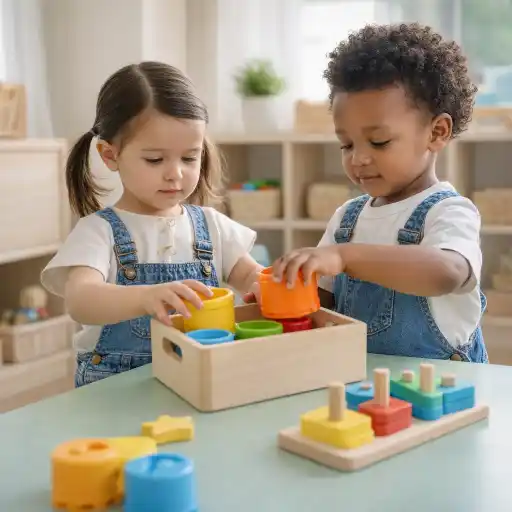
Keep each tray or basket complete and sized so a child can carry it safely. Review the shelf regularly for missing pieces, damaged materials, or items placed too high. If a popular activity is often in use, consider how children can wait or choose another option without disrupting someone’s work.
A 5-Minute Classroom Reset Checklist Buy Now $1.50 can help staff organize the space between activities or at day’s end. Its prompts cover putting materials away, preparing the room, and checking for safety concerns. Use it as an adult planning aid—not as a replacement for children’s participation in restoring their own activity.
- Place labels at children’s eye level and use consistent symbols or photographs.
- Keep the number of displayed activities manageable and ensure each is complete.
- Make the return path safe and uncluttered, with enough space for children to move.
- Use child-sized tools only when appropriate, and store cleaning products securely.
Practical-life experiences such as sweeping a small spill or washing a table can extend care of the environment when they are safe, purposeful, and taught. Explore examples of Practical Life activities for ways children can participate meaningfully. An orderly #classroom is not simply an adult preference; it is a setting that helps children understand how to act independently.
What should educators do when a child resists or needs support?
Resistance may signal that the child is tired, overwhelmed, unsure where an item belongs, or reluctant to stop an absorbing activity. Start with observation rather than assuming defiance. Consider the child’s age, communication style, sensory needs, familiarity with the material, and whether the expectation has been clearly taught.
Acknowledge the feeling and keep the boundary calm: “You wanted to keep working. We can remember where you stopped, and now we’ll return the pieces together.” When a child is distressed, connection and regulation come first; teach or rehearse the routine once the child is ready. A brief pause, an adult working alongside the child, or a single visual cue may be more helpful than additional directions.
- For children who need more processing time, give a gentle advance notice before the next choice.
- For children who benefit from concrete cues, show a picture of the shelf or point to the matching space.
- For a child who needs support with movement or coordination, adapt how the tray is carried or offer a smaller task.
- For a child who is still learning, complete one step together and gradually transfer responsibility.
Individualization does not mean abandoning the work cycle. It means adjusting the support so the child can participate with dignity and increasing independence. If patterns persist, share objective observations with colleagues and the family, and plan consistent strategies. A strengths-based response recognizes that restoring work is a learned skill, not a test of a child’s character.
How can providers avoid common cleanup pitfalls?
Even a thoughtful routine can become frustrating if adults rush children, give inconsistent directions, or treat restoration as punishment. The aim is completion with care—not speed or perfection. Give children enough time for a meaningful ending, especially when they are concentrating. Montessori guidance emphasizes respecting purposeful work while helping children learn how to finish and return it.
Avoid taking over automatically. If an adult completes every step, children lose opportunities to practise. At the same time, avoid expecting a young child to manage a complex cleanup without modeling, accessible storage, or support. Realistic expectations are essential, and abilities vary from child to child.
- Do not interrupt deep concentration solely to keep shelves tidy; identify a natural stopping point when possible.
- Do not use threats, public correction, or shame. State the expectation simply and offer help.
- Do not expect children to locate a home for materials when labels or shelf arrangements are unclear.
- Do not let a five-minute reset replace supervision or required safety practices.
- Do not assume that every child will restore at the same pace or in the same way.
After trying a shared routine, staff can reflect together: Which step did children manage independently? Where did they need a model or cue? Did the room’s layout make the task harder? As noted in NAEYC’s resources on daily routines and transitions, these moments are an important part of supportive classroom practice. Directors should ensure staffing and supervision remain consistent; state requirements vary - check your state licensing agency.
How can a five-minute reset support the next choice?
A short reset can provide a predictable bridge from one activity to another, especially when the room is busy or several children are moving at once. Keep it flexible: it is not a requirement that every child stop for a group exercise or that every activity take exactly five minutes. The purpose is to restore the material, orient children to what comes next, and make room for a fresh choice.
Try a simple sequence that children can learn through repetition:
- 🌿 Pause and notice: “You’ve finished the pouring work. Let’s check the tray.”
- Restore: return the pieces and carry the activity back to its shelf.
- Reconnect: take a breath, stretch, or briefly observe the classroom.
- Choose: invite the child to select another activity from the prepared environment.
Some children will move through the sequence quickly; others may need a visual reminder, adult partnership, or a quieter moment. For practical room-level prompts, providers can print the 5-Minute Classroom Reset Checklist Buy Now $1.50. The checklist is designed to help adults organize and check the environment; adapt its use so it supports rather than displaces children’s own responsibility.
Deeper professional learning can help teams link this everyday moment to Montessori curriculum and child development. ChildCareEd’s Implementing the Montessori Curriculum Buy Now $32.00 course addresses learning areas, mixed-age instruction, adaptations, and teacher- versus child-directed activity. Pair that broader learning with careful observation and practice, and restoration becomes a respectful part of children’s #independence, classroom order, and purposeful work.
Conclusion: What is the goal when children restore Montessori work?
Helping children restore an activity before choosing another is a practical way to complete the Montessori work cycle and care for a shared learning space. Teach the steps explicitly, arrange materials so their places are clear, and use short, respectful cues. Observe before intervening, allow time for concentration and closure, and adapt support to each child’s developmental and communication needs.
A five-minute reset can make the transition easier, but the deeper goal is not a perfectly tidy room. It is to help children experience themselves as capable contributors: they can finish a task, care for materials, and make a new choice. With steady modeling, a prepared environment, and supportive adult presence, restoring work becomes an achievable daily #practice—one small cycle at a time.
- 45 Hour Child Growth and Development
- Moving About the Classroom: Effective Transitions for Everyday
- 45 Hour Preschool Methods and Materials
- Montessori Foundations
- The Montessori Assistant's Toolkit
- The ABCs of Behavior: Turning Challenges into Learning Opportunities
- Texas Director Credential
- Mindful Supervision: Balancing Safety & Independence in Montessori
- Moving About the Classroom: Effective Transitions for Everyday
- CDA Certification en Español: Recursos y Consejos para Educadores Bilingües
- 💛🧩 ¿Cómo puedo hacer que mi enseñanza sea inclusiva para los niños con autismo?
- ¿Cómo pueden los equipos de cuidado infantil practicar habilidades rápidas de primeros auxilios en situaciones reales?
- ¿Cómo puedo enseñar habilidades de primeros auxilios con escenarios de juego de roles?
- Actividades de Motricidad Gruesa que Desarrollan el Equilibrio, la Coordinación y la Fuerza
- 10 Ejemplos de Cómo la Cultura Influye en el Desarrollo Infantil
- Actividades de Fiesta para Niños de Preescolar y Primaria
- Proporciones de Cuidado Infantil y Tamaños de Grupo por Edad en Maryland (Guía Rápida para Centros y Hogares)
- Proporciones de Cuidado Infantil y Tamaños de Grupo por Edad en Nueva Jersey (Guía Rápida para Centros y Hogares)
- Proporciones de Cuidado Infantil y Tamaños de Grupo por Edad en Virginia (Guía Rápida para Centros y Hogares)
- Lista para Guardería en Casa en Illinois: Cómo Iniciar una Guardería en el Hogar
- Cómo Trabajar en el Cuidado Infantil en Carolina del Norte: Requisitos y Pasos
- Celebrando la amistad en el cuidado infantil durante el Día de los Mejores Amigos
- Canciones, juegos y preguntas de círculo para niños
- Cómo simplificar la capacitación para sus empleados de daycare
- How Can Child Care Providers Use Natural and Logical Consequences with Young Children?
- How Can Children Restore a Montessori Activity Before Choosing Another?
- How Can Montessori Grace and Courtesy Shape More Meaningful Classroom Celebrations?
