Many communities are seeing slowdowns, layoffs, and strikes in the auto industry. That affects the whole family. This short guide helps child care leaders plan simple, clear steps to support working parents who face job loss or labor action. It focuses on practical tips you can use today to keep children safe and families steady. Providers can strengthen their support for families with Beyond the Classroom: Connecting Families to Essential Services  Buy Now $55.00, which focuses on helping families access community support, and Community and Family Engagement in Childcare, which helps educators build stronger partnerships with families during challenging times. Child care programs can also use the purchasable Parent Communication Log Buy Now $4.99 to document important conversations, changing family needs, and follow-up. This is about #autoworkers, #layoffs, #childcare, #families, and #providers.
What is happening and why does it matter?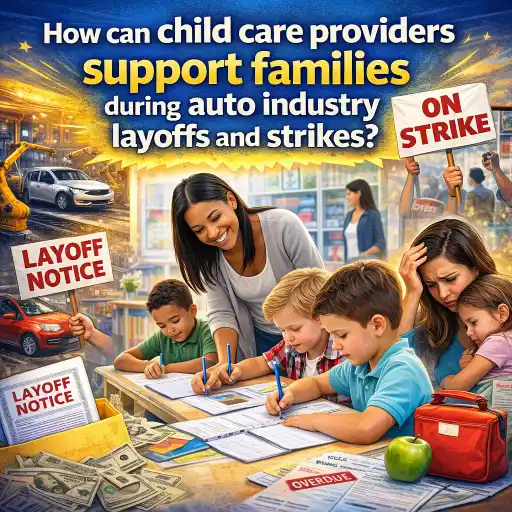
When parents lose income or have to miss work for picket lines and hearings, they need child care help. Child care centers already run on thin margins, and many closed during COVID-19, making the problem worse (CNN). For background on worker actions and the historical reasons behind national observances like Labor Day, see why we celebrate Labor Day.
Why it matters: good child care helps parents get back to work and keeps kids safe and learning. Programs that connect family supports and job help can stabilize kids and caregivers. See research on supporting family economic well-being in early childhood programs as part of ChildCareEd Buy Now $0.00.
How can a program help families when jobs are lost or hours change?
1) Offer flexible care options. Consider short-term spots, part-day care, or sliding-rate help if your budget allows. Even small schedule shifts help parents keep a job search or go to interviews.
2) Create a simple help list for families that includes:
- 📞 Your contact and hours
- 📋 Local food banks and job centers
- 💳 How to apply for child care subsidies and emergency aid
3) Connect families to local resources. Use community partners and local agencies. For example, programs that support family economic well-being can link parents to work and benefits as part of ChildCareEd’s resource Buy Now $0.00.
🤝 Family communication and support: For staff who want to strengthen how they reach out to and support families navigating job loss and financial stress, ChildCareEd's Family Connections: Creating Inclusive Relationships Buy Now $55.00 is a 6-hour online course covering respectful, strength-based communication strategies and how to build trust with families facing uncertainty — directly supporting the family help sheet, flexible care options, and resource-sharing steps outlined in this guide.
4) Keep clear policies. Tell families how long spots can be held, and explain fees. State requirements vary - check your state licensing agency.
What can centers do for staff and for short-term funding?
1) Seek emergency funds and partnerships:
- 🧾 Apply for local grants or stabilization funds (many states and nonprofits have programs) — check recent reporting on state and federal supports (MLive).
- 💼 Business planning and program stability: To help directors build the financial systems and planning skills needed to navigate enrollment uncertainty and funding gaps, ChildCareEd's Business Planning: Family Child Care Buy Now $16.00 is a 2-hour online course covering budgeting, enrollment strategies, and business basics — a practical foundation for the emergency scholarship, grant application, and short-term funding steps described throughout this article.
- 🤝 Partner with employers. Some companies help employees with back-up child care or partner spots. See employer examples and ideas in business reporting (CNBC).
- 💬 Ask unions and community groups to share information with families and staff about benefits and food or rent help (local job and family services may also assist) (Cleveland.com).
2) Communicate publicly. Let families and community groups know you are ready to help. Clear messages reduce panic and help parents plan.
How do we avoid common mistakes and make plans that work?
Common mistakes often slow help. Here are steps to avoid them:
- ⚠️ Don’t promise help you can’t keep. Be honest about spaces, costs, and timelines.
- 🔒 Don’t keep vital information locked away. Share resources for subsidies and job services. Many families don’t know what help exists — link to materials like the ChildCareEd resource on family economic well-being (ChildCareEd) Buy Now $0.00.
- 🕒 Don’t wait to act. Quick, small supports (a week of reduced fees, a reserved spot) can stop crises from growing.
Practical policies that help:
- 😊 Short emergency scholarships funded by local donors or businesses.
- 📚 A contact sheet of local job centers, food banks, and subsidy offices.
- 🤝 Agreements with nearby centers to share openings when you are full.
Conclusion: What can you do right now?
1) Make a one-page family help sheet with your contact, local supports, and subsidy links. Share by text and on your door.
2) Meet with staff and list who needs flexible hours or short-term pay help.
3) Call local partners (job centers, food banks, unions, and employers) and ask about short-term funds or shared child care solutions. Examples of employer-backed help and tri-share programs show how shared costs can support families — see recent Michigan initiatives to fund workplace child care (AOL).
Every small action helps a family stay steady. For more on supporting family economic well-being in home visiting and early childhood programs, see ChildCareEd Buy Now $0.00. State requirements vary - check your state licensing agency. You are not alone — reach out, share resources, and protect children and working families.
- 45 Hour Child Growth and Development
- 45 Hour Preschool Methods and Materials
- Emergency and Disaster Preparedness
- CDA Family Child Care Credential with Portfolio Review
- 45 Hour Infant and Toddler Methods and Materials
- 45 Hour School Age Methods and Materials
- CDA Bridge Bundle: Family Child Care
- Texas Director Credential
- CDA Certification en Español: Recursos y Consejos para Educadores Bilingües
- 🔍 ¿Qué ves cuando observas a un niño aprender?
- 💛🧩 ¿Cómo puedo hacer que mi enseñanza sea inclusiva para los niños con autismo?
- 10 Ejemplos de Cómo la Cultura Influye en el Desarrollo Infantil
- Capacitación en Salud y Seguridad Preventiva en Línea para Proveedores de Cuidado Infantil
- ¿Cómo solicito la licencia para una guardería en California?
- Regulaciones de Licenciamiento de Cuidado Infantil en California para Centros y Hogares de Cuidado Infantil Familiar
- Proporciones de Cuidado Infantil y Tamaños de Grupo por Edad en Maryland (Guía Rápida para Centros y Hogares)
- Proporciones de Cuidado Infantil y Tamaños de Grupo por Edad en Nueva Jersey (Guía Rápida para Centros y Hogares)
- Proporciones de Cuidado Infantil y Tamaños de Grupo por Edad en Virginia (Guía Rápida para Centros y Hogares)
- Lista para Guardería en Casa en Texas: Cómo Iniciar una Guardería en el Hogar
- Apoyo en Preescolar para Retrasos del Habla: Estrategias Simples que Ayudan
- Consejos de Supervisión Activa para Salones de Preescolar y el Juego al Aire Libre
- Cómo Trabajar en el Cuidado Infantil en California: Requisitos y Pasos
- Cómo Trabajar en el Cuidado Infantil en Wisconsin: Requisitos y Pasos
- Cómo Ser Maestra de Preescolar en Maryland
- Capacitación Previa al Servicio para Proveedores de Cuidado Infantil en Dakota del Norte
- Capacitación CDA gratuita en Illinois
- How can child care providers support families during auto industry layoffs and strikes in Michigan?
- Cómo simplificar la capacitación para sus empleados de daycare
