What if the routines, songs, and small moments in your room are already full of learning you can name, extend, and document? Discovering that "learning in disguise" is a practical skill that strengthens your #play practice and helps you turn everyday moments into measurable growth. For a hands-on next step, consider Play, Learn, Grow Buy Now $25.00 — a focused course that shows how to spot learning during routines and use it to plan teaching — and pair it with Tracking Progress, Shaping Futures  Buy Now $55.00 to sharpen your observation and assessment methods so you can document evidence for families and supervisors.
What does "learning in disguise" look like during ordinary classroom moments?
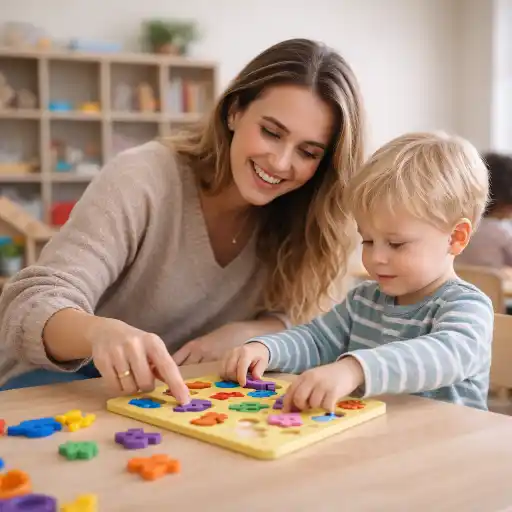
"Learning in disguise" is the idea that play, snack time, transitions, and even cleanup are dense with cognitive, language, social, and motor learning — if you know where to look. A child stacking cups at snack could be practicing early math (comparison and balance); two children negotiating costumes are rehearsing social language and perspective taking; a toddler lining up cars is practicing sequencing and fine motor control. Noticing these moments reframes the day: the #children you care for aren’t merely occupied — they are actively practicing skills you value.
Why it matters: when providers intentionally attend to these everyday moments they can:
- Increase purposeful interactions that extend learning without disrupting play.
- Turn informal moments into documented progress for families and program records.
- Make small, evidence-based adjustments to routines that improve access for all learners.
State requirements vary - check your state licensing agency. If you want structured ways to spot these episodes, the course The Best Promotion is Play Buy Now $35.00 provides practical examples of how play reveals learning.
How can focused observation help you spot hidden learning?
Observation is the primary skill that turns a curious remark into usable data. Instead of noting impressions, use short, targeted observations: pick one routine (arrival, snack, block area), decide the skill you expect to see (language, turn-taking, fine motor), and record the child’s exact behavior. Good observation is factual, not interpretive: "Eli stacked six cups and named colors" is stronger than "Eli is advanced."
Practical steps to observe with purpose:
- 🔎 Decide your focus (one skill + one context) and time-box the observation.
- 📝 Use simple forms: anecdotal notes, event sampling, or a one-page checklist.
- 📸 Collect a photo or work sample when possible (with permissions) to illustrate the moment.
- 🤝 Compare notes with a colleague to reduce bias and build shared understanding.
For training on observation techniques and translating notes into goals, see Tracking Progress, Shaping Futures Buy Now $55.00, which teaches how to use multiple measures to support accurate documentation and planning.
What strategies turn routine moments into documented learning opportunities?
To make disguised learning visible, connect the moment to a measurable objective, embed supports in the routine, and record a concise next step. Example workflow: (1) Observe a child demonstrating a skill during free play, (2) write one-line evidence, (3) create a short, measurable goal tied to a routine ("During cleanup, Marco will put 3 toys away and name their colors in 3 of 5 attempts"), and (4) use routine-based teaching to practice the skill.
Classroom strategies that work:
- Design visual prompts and picture schedules so children can practice sequencing and independence within routines.
- Use open-ended materials that invite problem solving; rotate them to sustain engagement.
- Integrate quick scaffolds: offer a vocabulary model, a gesture, or a choice to extend the skill without interrupting the activity.
Courses such as Planning for Every Child Buy Now $55.00 and From Play to Planning Buy Now $55.00 provide methods to convert observation into individualized plans and culturally responsive curriculum. For providers who want targeted modules and ready-to-use templates for tailoring instruction to each child's strengths and needs, see the Individualized Learning Online Courses.
How do we avoid common mistakes when identifying learning in disguise?
Providers often make three predictable errors: overinterpreting snapshots, labeling children by a single observed pattern, or missing the contextual supports that made the moment possible. Avoid these pitfalls by relying on multiple observations across routine contexts and by writing objective notes that are evidence-based.
Common mistakes and how to avoid them:
- Assuming a child’s one-time success means mastery — fix: collect several examples over time.
- Using judgmental language in records — fix: stick to quotes and observable actions.
- Failing to link observations to routine practices — fix: choose goals that can be practiced within daily schedules.
Also, include family input and remember: state requirements vary - check your state licensing agency before formalizing documentation systems. Training like Play, Learn, Grow Buy Now $25.00 and The Best Promotion is Play Buy Now $35.00 can help staff avoid common implementation mistakes by modeling real classroom examples.
How should programs use these observations to support children and communicate with families?
Turn short observations into clear, family-facing communication: a one-sentence evidence statement, a practical suggestion families can try at home, and a short-term goal. For example: "Today Alex stacked six cups and named two colors during center time; try a stacking game at home to help him name more colors." This strengths-based format builds trust and invites partnership.
Program-level uses:
- Aggregate data to spot curriculum gaps and inform center-wide changes (e.g., more materials to support spatial reasoning).
- Use observations in staff reflection cycles to improve scaffolding strategies and inclusive practices.
- Frame observations as part of a continuous improvement plan so directors can see evidence of growth and training impact.
If you want step-by-step planning templates and culturally responsive strategies for sharing evidence with families and leaders, consider Planning for Every Child Buy Now $55.00 and From Play to Planning Buy Now $55.00. These courses help you translate everyday observations into program-level improvements without adding administrative burden.
Summary
Recognizing "learning in disguise" turns ordinary classroom life into a rich source of teaching data. With targeted #observation, simple documentation routines, and small, routine-based goals, you can make everyday play and routines the backbone of individualized teaching. Use the evidence to engage families, refine curriculum, and prioritize staff coaching. If you're ready to practice these skills in a structured way, Play, Learn, Grow Buy Now $25.00 and Tracking Progress, Shaping Futures Buy Now $55.00 are practical courses that deliver tools you can use in your room while earning training hours to support professional growth.
Key hashtags: #play #observation #learning #assessment #children
FAQ (short)
- Q: How long should an observation be? A: Short, focused checks (5–15 minutes) plus a deeper observation monthly are practical.
- Q: Who should document? A: Teachers who know the child best; use a second observer when possible to reduce bias.
- Q: Will documenting every moment slow teachers down? A: No — brief, routine-linked notes are efficient and more useful than long, infrequent reports.
- Q: Where can I learn more? A: Courses referenced above (Play, Learn, Grow; Tracking Progress; Planning for Every Child; From Play to Planning; The Best Promotion is Play) provide practical templates and examples.
- CDA Family Child Care Credential with Portfolio Review
- CDA Bridge Bundle: Preschool
- Pediatric RSV First Aid & CPR/AED
- CDA Bridge Bundle: Family Child Care
- CDA Bridge Bundle: Family Child Care without Portfolio Review
- CDA Bridge Bundle: Infant/Toddler without Portfolio Review
- CDA Bridge Bundle: Preschool without Portfolio Review
- CDA Bridge Bundle: Infant/Toddler
- Texas Director Credential
- Childcare Training
- 10 Ejemplos de Cómo la Cultura Influye en el Desarrollo Infantil
- Capacitación en Salud y Seguridad Preventiva en Línea para Proveedores de Cuidado Infantil
- Actividades de Fiesta para Niños de Preescolar y Primaria
- Regulaciones de Licenciamiento de Cuidado Infantil en California para Centros y Hogares de Cuidado Infantil Familiar
- Proporciones de Cuidado Infantil y Tamaños de Grupo por Edad en Maryland (Guía Rápida para Centros y Hogares)
- Proporciones de Cuidado Infantil y Tamaños de Grupo por Edad en Virginia (Guía Rápida para Centros y Hogares)
- Lista para Guardería en Casa en Texas: Cómo Iniciar una Guardería en el Hogar
- Cómo Trabajar en el Cuidado Infantil en California: Requisitos y Pasos
- Cómo Trabajar en el Cuidado Infantil en Wisconsin: Requisitos y Pasos
- Capacitación Previa al Servicio para Proveedores de Cuidado Infantil en Georgia
- Capacitación Previa al Servicio para Proveedores de Cuidado Infantil en Wisconsin
- Requisitos para Guarderías en Casa en Georgia
- Capacitación CDA gratuita en Illinois
- Canciones, juegos y preguntas de círculo para niños
- Cómo simplificar la capacitación para sus empleados de daycare
- How Can Child Care Providers Recognize "Learning in Disguise" During Everyday Activities?
- How Can Child Care Directors Use Glow and Grow Feedback With Staff?
- How Can Child Care Providers Assess Children Through Everyday Activities?
- ¿Todos los niños deben participar en el tiempo de círculo?
