A certificate can make a child feel noticed—or leave classmates wondering why they were not chosen. Learn how to recognize effort and emerging skills without turning classroom appreciation into a contest, and explore the Power of Art: Bldg Self-Esteem & Positive Behavior for ALL Abilities ONLINE  Buy Now $24.00 course for practical ways to support self-esteem and positive behavior across abilities. The strategies below can help you use tools such as Learning Skills Awards as thoughtful acknowledgments—not rankings.
Why does recognition matter—and when can awards become competitive?
For young children, recognition is a social signal: it tells them what adults notice and value. Specific feedback can help a child understand that persistence, curiosity, practice, and contribution matter. But when awards repeatedly go to the same children, or imply that one child is “best,” other children may feel overlooked. Preschoolers are still learning about fairness, differences in ability, and how to interpret public praise; an award can carry more meaning than adults intend.
This does not mean educators need to stop celebrating. The goal is to make recognition consistent with a classroom culture of belonging. NAEYC’s guidance on individuality and inclusive practices emphasizes responding to children’s unique strengths, experiences, and needs. Recognition works best when it reflects those differences rather than treating one pace or one way of demonstrating learning as the standard.
External rewards can also distract from the value of the activity itself if children begin working mainly to receive a prize. Responsive Classroom describes how precise, meaningful reinforcing language can explain why an action supports learning and community. Consider awards one optional tool, alongside everyday feedback, play, relationships, and opportunities to practice.
- Celebrate a child’s growth or contribution, not a rank or “win.”
- Notice quiet, gradual, and less visible forms of progress.
- Keep each child’s worth separate from performance and award status.
How can awards recognize learning inclusively?
Start with a clear purpose: an award should name a specific skill, effort, or learning milestone—not define a child’s overall value. The Learning Skills Awards resource includes printable certificates related to shapes, letters, numbers, colors, counting, and name writing. Used flexibly, these can mark a meaningful moment; they should not become a race or a checklist that every child must complete at the same pace.
Consider how a child can demonstrate learning in different ways. A child may identify a letter by saying its name, pointing, matching it, using a communication device, or recognizing it in a home language. Adjust how the skill is shown to fit each child’s communication, goals, and access needs. NAEYC’s guidance on inclusive and individualized teaching supports adapting materials and approaches so children can participate meaningfully.
- Be specific: “You counted each block carefully and checked your work.”
- Recognize progress toward an individual goal, not only a finished product.
- Vary the skills and contributions you notice across the group.
- Offer private acknowledgment or a family note if public attention feels uncomfortable.
Keep categories neutral and respectful. Avoid labels such as “smartest” or “fastest,” and avoid criteria that reinforce stereotypes about language, culture, gender, ability, or temperament. Every child deserves a meaningful chance to be seen over time.
What practices prevent recognition from becoming a contest?
The way recognition is delivered matters as much as the certificate. Avoid leaderboards, public tallies, winner-versus-runner-up language, or systems with a limited number of awards children must compete to receive. These structures can shift attention from exploration toward outperforming peers. Instead, acknowledge multiple forms of growth and explain what the child did so the feedback itself is useful to everyone.
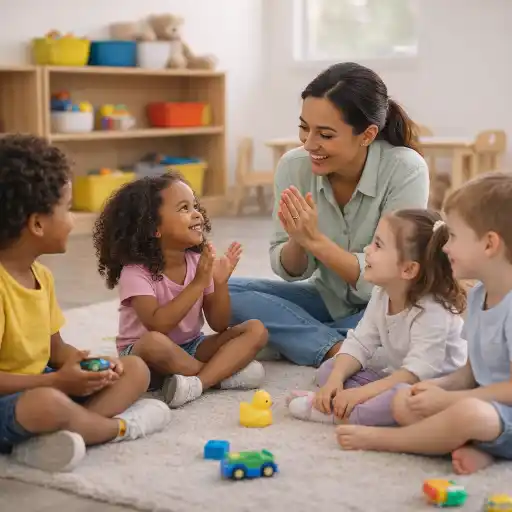
Make appreciation part of ordinary classroom life rather than saving it for ceremonies. A genuine observation during play or a routine may be more instructive than a generic “good job.” For example: “You tried different ways to fit that puzzle piece. You kept working through the challenge.” This names persistence without suggesting that some children are inherently more deserving.
- 😊 Share recognition across the group over time; keep any tracking private and adult-facing.
- Use language about effort, strategies, curiosity, and contribution—not fixed traits.
- Do not take away recognition to punish one child or motivate another.
- Invite children to notice helpful actions without voting for a “best” peer.
Peer appreciation can support community when educators guide children to name specific acts of kindness or collaboration. Keep participation voluntary, watch for popularity dynamics, and leave responsibility for equitable recognition with adults. If a child feels disappointed, validate the feeling and explain that skills develop at different times; avoid promising an award simply to end the conversation.
How can recognition support motivation and self-esteem?
Children are more likely to stay engaged when learning offers curiosity, choice, connection, and opportunities to experience progress. Awards are external recognition, so they should complement—not replace—interesting activities, responsive relationships, and practice. A certificate can mark a moment of growth, but it cannot substitute for the satisfaction of mastering a skill or contributing to the group.
Use recognition as a prompt for reflection rather than the final measure of success. After acknowledging a new skill, ask, “What helped you keep track?” or “What would you like to try next?” A child who has practiced counting might describe a strategy, show it with objects, or respond in another accessible way. These conversations help children notice their own learning and build ownership.
Keep certificates low-stakes and occasional. If every routine action earns one, children may come to expect a prize for participation; if recognition is rare and selective, others may feel excluded. Balance awards with frequent descriptive feedback, child-led discovery, and opportunities to continue practicing.
- Ask reflective questions that focus on strategy and learning, not on winning.
- Offer a choice about how recognition happens: share it, take it home, or keep it private.
- Pair an award with a chance to explore the skill further or choose a next goal.
Which common pitfalls should directors and educators avoid?
Even well-intended awards can create pressure. Common pitfalls include repeatedly recognizing children who already receive considerable attention, naming a single “top learner,” or tying awards to compliance—such as sitting still the longest—instead of a meaningful learning goal. Such approaches may reward temperament or circumstances rather than the skill educators hope to nurture.
Consider timing and personal preferences. A child may feel exposed when singled out publicly, while another may enjoy a group celebration. When appropriate, learn from children and families about what forms of acknowledgment feel respectful. Consider cultural expectations around public praise, photographs, and take-home materials. For group events, celebrate shared effort alongside individual growth.
- Avoid: public rankings, certificate comparisons, and “only one winner” formats.
- Avoid: vague labels such as “good child” or awards based on popularity.
- Try: observable descriptions linked to learning, effort, or contribution.
- Try: reviewing whose strengths are noticed and whose may be less visible.
Directors can help teams agree on developmentally appropriate criteria, accessible ways to demonstrate skills, and alternatives to public presentation. Reflect together on whether recognition is distributed fairly and supports the program’s values. State requirements vary - check your state licensing agency.
Conclusion: How can awards celebrate effort without competition?
Child care providers can recognize children’s effort without competitive classroom awards by making appreciation specific, inclusive, low-stakes, and rooted in individual growth. Notice strategies, persistence, emerging skills, kindness, and contributions—not who is smartest, fastest, or most deserving. Adapt how children demonstrate learning so that communication style, ability, or pace does not determine who gets noticed.
Use certificates as one small part of a broader culture of belonging. Pair them with warm relationships, meaningful choices, playful learning, and everyday descriptive feedback. The printable Learning Skills Awards can help mark emerging academic skills, while the online Power of Art: Bldg Self-Esteem & Positive Behavior for ALL Abilities Buy Now $24.00 course offers further learning about self-esteem, positive guidance, and inclusive practice.
Which courses can help educators strengthen these practices?
- Power of Art: Bldg Self-Esteem & Positive Behavior for ALL Abilities ONLINE Buy Now $24.00
- Open Heart, Open Art Buy Now $16.00
- Art from the Heart for Preschoolers: Open Ended Art Projects that Build Self-Esteem Buy Now $35.00
- Viewing Guidance in a Positive Light Buy Now $24.00
- Solutions NOT Punishments Buy Now $16.00
- The ABCs of Behavior: Turning Challenges into Learning Opportunities
- CDA Bridge Bundle: Preschool
- Pediatric RSV First Aid & CPR/AED
- CDA Bridge Bundle: Family Child Care
- CDA Bridge Bundle: Family Child Care without Portfolio Review
- Art from the Heart for Preschoolers: Open Ended Art Projects that Build Self-Esteem
- CDA Bridge Bundle: Infant/Toddler without Portfolio Review
- CDA Bridge Bundle: Preschool without Portfolio Review
- CDA Bridge Bundle: Infant/Toddler
- Texas Director Credential
- CDA Certification en Español: Recursos y Consejos para Educadores Bilingües
- 💛🧩 ¿Cómo puedo hacer que mi enseñanza sea inclusiva para los niños con autismo?
- 👶 ¿Cuáles son las proporciones y grupos requeridos en Dakota del Norte? 🏫
- 10 Ejemplos de Cómo la Cultura Influye en el Desarrollo Infantil
- Capacitación en Salud y Seguridad Preventiva en Línea para Proveedores de Cuidado Infantil
- Regulaciones de Licenciamiento de Cuidado Infantil en California para Centros y Hogares de Cuidado Infantil Familiar
- Proporciones de Cuidado Infantil y Tamaños de Grupo por Edad en Maryland (Guía Rápida para Centros y Hogares)
- Proporciones de Cuidado Infantil y Tamaños de Grupo por Edad en Nueva Jersey (Guía Rápida para Centros y Hogares)
- Proporciones de Cuidado Infantil y Tamaños de Grupo por Edad en Virginia (Guía Rápida para Centros y Hogares)
- Retraso del Habla en la Guardería: Cómo Pueden Ayudar los Proveedores
- Cómo Trabajar en el Cuidado Infantil en Carolina del Norte: Requisitos y Pasos
- Cómo Trabajar en el Cuidado Infantil en California: Requisitos y Pasos
- Cómo Trabajar en el Cuidado Infantil en Wisconsin: Requisitos y Pasos
- Capacitación Previa al Servicio para Proveedores de Cuidado Infantil en Wisconsin
- Requisitos para Guarderías en Casa en Georgia
- Celebrando la amistad en el cuidado infantil durante el Día de los Mejores Amigos
- Canciones, juegos y preguntas de círculo para niños
- Cómo simplificar la capacitación para sus empleados de daycare
- How Can Classroom Awards Celebrate Learning Without Creating Unhealthy Competition?
- How Can Child Care Providers Recognize Children’s Effort Without Competitive Classroom Awards?
