Valentine exchanges can build friendship and classroom community—but without thoughtful planning, they can also create stress, cost pressure, or moments of exclusion. A simple checklist, accessible ways to participate, and clear family communication help every child feel considered; for deeper professional learning, explore Effective Approaches for Autism and Inclusion  Buy Now $55.00 and Building Equity: Inclusionary Practices in Preschool Buy Now $10.00. These courses offer practical perspectives on adapting activities and removing participation barriers, while the ideas below can help you plan a smoother exchange right away.
Why does an inclusive Valentine exchange matter?
A card exchange may seem small, but children notice who is included, who gets to make choices, and whether the activity feels manageable. A child who receives no card, struggles to write many names, or is expected to join a celebration that does not fit their family’s preferences may experience the day very differently from a peer. Thoughtful planning helps prevent avoidable hurt and communicates that the classroom community values each child.
Inclusion is not the same as requiring everyone to do the same thing. It means creating meaningful options so children can participate comfortably and families can make informed choices. As ChildCareEd notes in its guidance on creating inclusive classrooms where every child belongs, practical supports, respectful relationships, and flexible participation help children feel seen and valued.
Keep the purpose centered on kindness, friendship, or appreciation—not on who gives the most elaborate card or receives the most attention. A modest, predictable exchange can be more welcoming than an elaborate party. A classroom #community is strengthened when each child can contribute without unnecessary financial, communication, sensory, or social barriers.
How can you organize the exchange before the day?
Start with a short plan and share it early. Decide whether participation is optional, what kinds of cards or items are allowed, how cards will be distributed, and whether food is part of the event. Communicate these details in plain language and provide translated information when possible. Avoid assuming that every family has time, money, or a printer available.
Use a class list and a simple #checklist to track quantities and reduce last-minute uncertainty. ChildCareEd’s Valentine’s Class Card Checklist and Printable Cards Buy Now $1.49 can help staff and families organize the exchange. Before sending the list home, verify names and clarify whether each card should be addressed or simply signed.
- Send the date, participation choices, and card expectations well in advance.
- Set a clear, consistent rule—such as preparing a card for every participating classmate—so children are not asked to select only certain peers.
- Keep spare blank cards and basic art materials at the center for families who need them.
- Choose a predictable distribution method: labeled pockets, a classroom mailbox, or a staff-supported handout.
- Plan a calm schedule with enough time for arrival, exchange, and transitions.
A checklist is a support, not a test of family participation. If a child brings no cards, the team can still offer an alternative way to join the classroom activity without drawing attention to the situation.
How can children with different support needs participate?
Plan for varied communication, motor, attention, sensory, and social needs from the beginning. Children may enjoy choosing a card but find repeated handwriting tiring; others may prefer to dictate a message, use a stamp, select a picture, or help deliver cards. These options preserve agency while making the task accessible. Ask families what supports are useful, and follow any existing individualized plans or program procedures.
Break card preparation into manageable steps: choose a card, add a mark or message, place it in a container, and deliver it. Use a visual sequence, model each step, and provide extra time or a quieter workspace when helpful. Avoid assuming that a child who does not speak aloud has nothing to say; picture choices, gestures, communication devices, and adult scribing can all support expression.
- Offer adaptive tools such as larger crayons, stickers, pre-cut shapes, or easy-grip stamps.
- Let children participate as designers, artists, message dictators, organizers, or delivery helpers.
- Use a familiar routine or simple visual schedule to preview the activity.
- Allow children to observe first or take a break, then invite them back without pressure.
Small adaptations often benefit the entire group. For more focused professional learning, Recognize, Respond, Respect: Supporting Diverse Learners Buy Now $55.00 explores individual needs and responsive strategies. The goal is not identical participation; it is meaningful access and a genuine opportunity to connect.
How can you prevent social exclusion and protect children’s dignity?
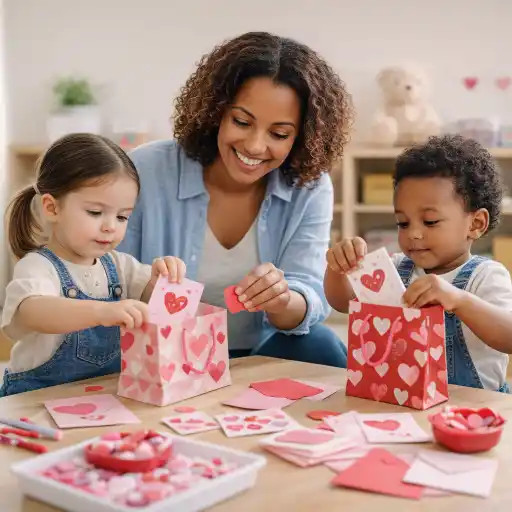
Set a clear, kind expectation: if children choose to exchange cards, each participating child receives one. Do not use popularity-based selection, public tallies, or activities that compare how many cards a child receives. A consistent distribution routine helps prevent missed names and avoids placing children in the uncomfortable role of explaining why a card is absent.
At the same time, participation should not be forced. Some children or families may not wish to celebrate Valentine’s Day, and some children may have a specific safety or relationship concern. Offer an equally valued alternative—such as a kindness mural, collaborative art, or a friendship-themed story—and let families know that opting out will not affect a child’s standing in the classroom. ChildCareEd’s article on classroom activities that build belonging offers related ideas for voluntary, low-pressure sharing.
Use inclusive language such as “friend,” “classmate,” “kind message,” or “appreciation” rather than assuming every child wants to express romantic affection. Model phrases that support respectful peer interaction: “Would you like a card?” and “No thank you is okay.” If a child has experienced bullying or feels unsafe with a peer, do not require direct contact; coordinate discreetly with the family and relevant staff. Protect privacy: do not publicly identify a child’s disability, family circumstances, or reason for opting out.
What choices can families have about cards, treats, and celebration?
Families differ in traditions, schedules, budgets, dietary practices, and comfort with holidays. An invitation should describe the plan without implying that purchasing supplies is a condition of belonging. Offer a no-cost route, such as classroom-made cards, printable templates, or a simple drawing created during the day. Make family participation voluntary and provide several ways to respond, including a brief message or conversation.
Food deserves particular care. Allergies, dietary restrictions, sensory preferences, and family practices can make treats complicated. A card-only exchange or non-food option such as a drawing or sticker can simplify logistics. If food is considered, follow program policy, verify information with families, review labels, and maintain established allergy and emergency procedures; never assume a treat is safe based on its appearance or a general claim.
- Explain that store-bought cards are optional and homemade cards are welcome.
- Offer a family opt-out or an alternative classroom activity without asking families to justify their choice.
- Keep the exchange low-cost and avoid requiring gifts, candy, or special clothing.
- Ask families privately about relevant preferences and communicate the plan clearly.
- Follow program rules for food and safety; state requirements vary - check your state licensing agency.
These choices respect family decision-making while keeping the classroom experience warm and consistent. They also help providers focus on connection rather than managing avoidable uncertainty on the day itself.
How can you make the day run smoothly and reflect afterward?
On the day, prepare materials before children arrive and assign staff roles. One adult might welcome families and collect cards, while another supports children who need help with sorting or delivery. Use labeled containers or a simple class roster so distribution is orderly. Keep a few spare cards available, but avoid announcing who needed them. A brief visual schedule can show when the exchange begins and what comes next.
Keep the event proportionate to the children’s ages and the normal classroom rhythm. Short, predictable activities reduce waiting and make it easier to support children who need transitions or quiet breaks. If the group is large, exchange cards in small groups or at a center rather than all at once. 🎨 Invite children to add a shared kindness mural or group collage as a noncompetitive option for those who prefer making something together.
Afterward, reflect with staff: Did every child have a comfortable way to participate or opt out? Were expectations clear to families? Did the timing and distribution system work? Record one or two practical improvements for next year. Consider Family (or Parent) Conferencing: Developing Trust ONLINE Buy Now $24.00 for additional learning about respectful family communication, and Social Foundations and Responsive Classrooms Buy Now $24.00 for strategies that support positive relationships and peer interaction.
Conclusion: What makes a Valentine exchange inclusive?
An inclusive, organized Valentine exchange is intentional, flexible, and centered on belonging. Communicate expectations early, use a checklist to manage logistics, make participation choices genuine, and provide accessible ways for children to create and share cards. Avoid popularity contests, unnecessary costs, and public attention to differences; keep food and safety decisions consistent with program procedures.
Most of all, remember the central question: how can every child feel considered during a classroom Valentine exchange? The answer is not a more elaborate celebration, but thoughtful preparation and respectful choices. A simple card, a classroom-made message, a quiet alternative, or a helper role can all give a child a meaningful place in the group.
Practical next step: choose your exchange format, send a clear family note, prepare a class list and spare materials, and agree as a team on accessible participation options. With these basics in place, the day can feel more predictable for providers and more welcoming for children and families.
- Classroom Setup for Child Care
- What Makes Me Special: An Overview of Autism and ADHD
- CDA Bridge Bundle: Family Child Care
- CDA Bridge Bundle: Family Child Care without Portfolio Review
- CDA Bridge Bundle: Infant/Toddler without Portfolio Review
- CDA Bridge Bundle: Preschool without Portfolio Review
- Texas Director Credential
- Access for All: Inclusion and the ADA
- Every Moment Matters: Schedules and Transitions
- Bridging Cultures: Family Communication & Collaboration
- CDA Certification en Español: Recursos y Consejos para Educadores Bilingües
- 💛🧩 ¿Cómo puedo hacer que mi enseñanza sea inclusiva para los niños con autismo?
- 10 Ejemplos de Cómo la Cultura Influye en el Desarrollo Infantil
- Capacitación en Salud y Seguridad Preventiva en Línea para Proveedores de Cuidado Infantil
- ¿Cómo solicito la licencia para una guardería en California?
- Regulaciones de Licenciamiento de Cuidado Infantil en California para Centros y Hogares de Cuidado Infantil Familiar
- Proporciones de Cuidado Infantil y Tamaños de Grupo por Edad en Maryland (Guía Rápida para Centros y Hogares)
- Proporciones de Cuidado Infantil y Tamaños de Grupo por Edad en Nueva Jersey (Guía Rápida para Centros y Hogares)
- Proporciones de Cuidado Infantil y Tamaños de Grupo por Edad en Virginia (Guía Rápida para Centros y Hogares)
- Lista para Guardería en Casa en Texas: Cómo Iniciar una Guardería en el Hogar
- Cómo Trabajar en el Cuidado Infantil en Carolina del Norte: Requisitos y Pasos
- Cómo Trabajar en el Cuidado Infantil en California: Requisitos y Pasos
- Cómo Trabajar en el Cuidado Infantil en Virginia: Requisitos y Pasos
- Requisitos para Guarderías en Casa en Georgia
- Celebrando la amistad en el cuidado infantil durante el Día de los Mejores Amigos
- Diversión fresca de verano: actividades del Día Nacional del Helado para niños
- Canciones, juegos y preguntas de círculo para niños
- Cómo simplificar la capacitación para sus empleados de daycare
- How Can Valentine’s Day Problem-Solving Activities Help Preschoolers Learn?
- How Can Child Care Providers Make Valentine’s Day Exchanges More Inclusive and Organized?
