Introduction
Finding reliable, affordable care is a daily challenge for many service members who face deployments, long shifts, and frequent moves. This article gives directors and providers practical strategies to reduce waitlists, strengthen partnerships, and improve support for military-connected children and families—starting now. A good next step is Coordinating with Community in Child Care  Buy Now $24.00, which helps programs build respectful partnerships and connect families to local supports; another useful option is Beyond the Classroom: Connecting Families to Essential Services Buy Now $55.00 for linking families to benefits, fee assistance, and respite.
How do the child care needs of military families differ from civilian families?
Military families often face predictable but intense disruptions: deployments, extended training, unpredictable shift schedules, and frequent permanent change-of-station moves. These factors create higher demand for flexible hours, short-term respite, portable records, and rapid enrollment processes. Why it matters: when child care fails, readiness and retention suffer—parents miss duty time, feel distracted, or leave the force. That connection makes quality child care a readiness and workforce issue, not just a family service. Providers who understand military rhythms can reduce stress and improve outcomes for children and the unit.
Key differences to plan for:
- Enrollment volatility: families join and leave quickly with PCS moves or deployment rotations.
- Schedule variability: nights, weekends, and last-minute shift changes are common.
- Emotional context: children may experience anxiety around deployment, reintegration, or parental injury.
Practical note for directors: keep a portable file system for each child and review contingency plans annually; state requirements vary - check your state licensing agency. Early preparation reduces disruption for children and helps your program manage waitlists and priorities more fairly. In this article we focus on actionable steps that strengthen #partnerships and program #capacity for #military families receiving #childcare while also supporting your #staffing plans.
What policies and programs already exist to support military families?
The Department of Defense runs the largest employer-sponsored child care system in the U.S., including Child Development Centers (CDCs), Family Child Care (FCC) homes, and the Military Child Care in Your Neighborhood (MCCYN) fee assistance program for community providers. Congressional and DOD reforms (NDAA provisions and pilot programs) continue to expand fee assistance, reimburse relocation-related care costs, and target investments where waitlists are worst. Community partnerships—like Armed Services YMCA collaborations and grant-funded initiatives—are proving effective at increasing local capacity.
What directors should know:
- Fee assistance can subsidize off-base care, nannies, and some in-home providers in high-need areas; awareness and navigation matter—many families don’t know what’s available.
- Programs are subject to evolving policy and funding cycles; maintain a liaison to installation family support or child care offices.
- Quality controls: DOD centers undergo frequent inspections and many centers pursue national accreditation; when using community providers verify accreditation and documentation.
Helpful professional learning: consider training staff to coordinate community referrals and benefits as part of Coordinating with Community in Child Care Buy Now $24.00 or Families, Communities, and Classrooms Buy Now $55.00, so your team can actively guide military families through options and subsidy rules.
How can child care providers form effective partnerships with military installations and community resources?
Building strong, respectful partnerships is a leverage point for expanding capacity and improving access. Focus first on relationships and clarity—installations, Family Support Centers, the MCCYN administrators (often Child Care Aware contractors), local nonprofits, and veteran-serving organizations all play a role. A formal point of contact reduces duplicated effort and speeds problem-solving during surges in demand.
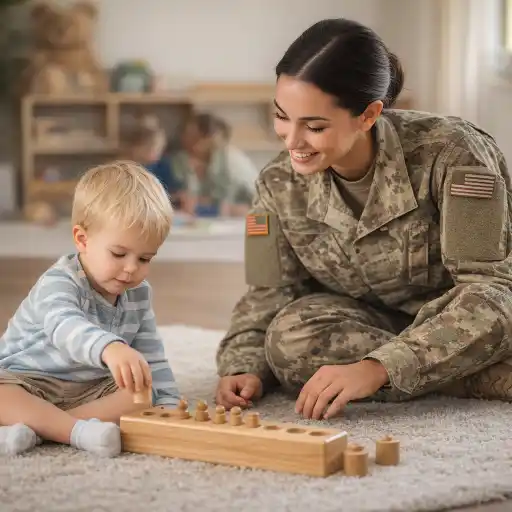
Practical partnership steps:
- 🔹 Establish a single, named liaison at your center and share that contact with the base Family Support office.
- Create a written referral pathway that clarifies documentation, eligibility, fee schedules, and timelines for enrollment.
- Offer space or programming for installation outreach events (helpful for recruiting staff and advertising openings).
- Join local coalitions (YMCA, ASYMCA, community college ECE programs) to find shared staffing pipelines and scholarship funding.
Training to strengthen these skills is available: Beyond the Classroom Buy Now $55.00 and Open Ears: Listening in Child Care Buy Now $16.00 teach outreach, referral, and intercultural communication techniques that are directly applicable when serving military-connected families. Accurate, timely communication also prevents the provider eligibility misunderstandings highlighted in GAO findings about fee assistance administration.
What staffing, operational, and quality strategies reduce waitlists and improve care?
Addressing capacity requires both short-term and long-term tactics. Short-term: expand hours (if safety ratios allow), offer targeted hourly respite, create prioritized slots for single parents and dual-military couples, and develop rapid-enrollment packets for incoming families. Long-term: strengthen recruitment, retention, and compensation; create career ladders; and pursue partnerships that buy community slots or expand physical space.
Concrete recommendations:
- Improve recruitment by connecting with spouse employment programs and local ECE college programs; offer hiring bonuses, paid training, and discounts for staff child care.
- Reduce turnover with intentional onboarding (30-60-90 plans), mentorship, and accessible professional learning—see ChildCareEd onboarding resources and the Connections That Count Buy Now $55.00 course for staff development.
- Use fee assistance and partnerships to lease community spaces or create shared-use agreements with local centers to expand slots quickly when demand spikes.
Common mistakes and how to avoid them:
- Failing to verify a community provider’s eligibility for MCCYN before referring families—establish a checklist and confirm documentation.
- Not tracking staff certifications and expiration dates—use a simple HR tracker and calendar alerts.
- Ignoring communication with installation offices—regular briefings prevent surprises when policy or funding changes.
How can centers support military families day-to-day, and what questions do providers ask most often?
Daily supports combine reliable routines with trauma-informed sensitivity. Practical classroom practices include consistent transitions, visible family photo boards to maintain connection during deployment, and small-group activities that stabilize peer relationships after separations. Directors should train staff in trauma-informed interaction and build partnerships with local mental health and family services for referrals. Encouraging family traditions and simple at-home rituals can strengthen reunification and emotional resilience; see Deck the Halls with Emotional Wellness: Family Traditions That Foster Connection for practical ideas to share with families.
Quick operational checklist:
- Maintain a portable child record (health, immunizations, IEP/IFSP documents) for each family to streamline PCS moves.
- Offer flexible billing options and clear policies for deployment-related absences to reduce financial stress for families and avoid disenrollment during deployments.
- Provide reintegration supports—welcome-back meetings, social stories, and parent–teacher check-ins to smooth transitions when a parent returns.
FAQ (practical answers for center leaders):
- Q: Can community centers accept MCCYN fee-assisted families?
A: Yes, if providers meet the program’s eligibility. DOD and GAO reports show program growth but also communication gaps—confirm eligibility early and keep families informed. - Q: How should we handle sudden enrollment drops due to PCS?
A: Keep a reserve staffing plan and cross-train staff; offer temporary hourly programs to maintain revenue and service. - Q: What training helps staff support deployment-related stress?
A: Trauma-informed care modules and resources from the National Technical Assistance Center for Children’s Mental Health are helpful; consider targeted courses on family communication like Open Ears Buy Now $16.00. - Q: How do we avoid compliance pitfalls when working with DOD fee assistance?
A: Keep clear records, follow state licensing rules, and develop a written process for appeals or follow-up when providers receive probation or termination notices.
Conclusion
Meeting the child care needs of military families takes planning, partnerships, and flexibility. Prioritize clear communication with installation offices, build community partnerships, invest in staff recruitment and retention, and adopt trauma-informed classroom practices that support children through deployment cycles. Training that strengthens community coordination and family supports—such as Coordinating with Community Buy Now $24.00, Beyond the Classroom Buy Now $55.00, and Connections That Count Buy Now $55.00—can accelerate improvements and help programs deliver stable, developmentally strong care. State requirements vary - check your state licensing agency. By focusing on #partnerships, expanding #capacity, and supporting #staffing, you can make your center a consistent, trusted resource for #military #families in your community.
- Building Bridges for Dual Language Learners: For Workforce Solutions
- Beyond the Classroom: Connecting Families to Essential Services
- 45 Hour Infant and Toddler Methods and Materials
- CDA Bridge Bundle: Family Child Care without Portfolio Review
- 45-Hour Infant and Toddler Curriculum
- Texas Director Credential Renewal
- Texas Director Credential
- Family Child Care: Building, Premises, and Outdoor Safety
- Memorial Day Activities
- Making Childcare More Accessible And Affordable For a Broader Range of Families
- Specialized Child Care for Special Needs
- Childcare Educators in NYC: Surviving the Holiday Season in the Concrete Jungle
- CDA Certification en Español: Recursos y Consejos para Educadores Bilingües
- Recursos en Español sobre el Sueño Seguro del Bebé
- 10 Ejemplos de Cómo la Cultura Influye en el Desarrollo Infantil
- Proporciones de Cuidado Infantil y Tamaños de Grupo por Edad en Nueva Jersey (Guía Rápida para Centros y Hogares)
- Proporciones de Cuidado Infantil y Tamaños de Grupo por Edad en Virginia (Guía Rápida para Centros y Hogares)
- Capacitación Previa al Servicio para Proveedores de Cuidado Infantil en Nevada
- Teaching Kids About Memorial Day Through Crafts and Activities
- Texas Child Care Center Director: Requirements and Credential Options
- New Child Care Regulations in Texas for 2026
- Canciones, juegos y preguntas de círculo para niños
- Cómo simplificar la capacitación para sus empleados de daycare
- How Can Child Care Programs Best Support Children of Military Families?
- How Can Child Care Programs Meet the Unique Needs of Military Families?
- What Is the CDA Credential, and How Can Child Care Professionals Earn It?
