Being a director or lead teacher means you want safe, happy classrooms and a team that grows. This short guide helps you create useful, doable #training that fits your daily work. Why it matters: better #leadership makes classrooms calmer, keeps #children safer, and helps your #staff stay longer. For a clear overview of why training helps programs, see What Is Child Care Leadership Training and How Can It Help My Program?.
Quick note: state requirements vary - check your state licensing agency.
What is child care leadership training and why should I invest in it?
2. Benefits you will see:
- Fewer daily fires to put out — systems replace guesswork.
- Stronger teacher skills and better child outcomes.
- Better readiness for licensing visits when records and trainings are organized.
3. Types of training to look for:
- 📚 Administration courses (for policies, budgeting, and record-keeping) — for example the 45-Hour Director-Administration
 Buy Now
 $399.00$275.00 course. - 🧑🤝🧑 Coaching and mentoring (helps staff apply skills) — see the mentorship guide.
- 💻 Quick online modules for health and #safety and child development — many are listed at Health & Safety Resources Buy Now $0.00.
Investing time in #leadership training is one of the highest-leverage choices a director can make. It helps your whole program, not just you.
How do I build a practical leadership training plan for my center?
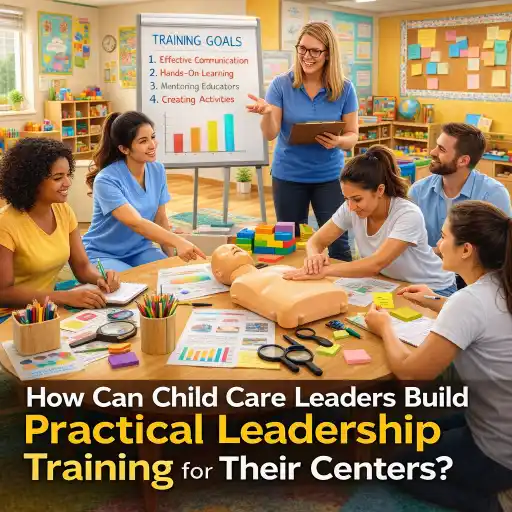
Use a simple, step-by-step plan that your team can follow. Here are 6 easy steps you can start this week. Many centers use a group admin tool and director courses from ChildCareEd to save time and track progress — see Level Up Your Leadership.
- 🔍 Assess needs: List required trainings, gaps in practice, and urgent items (CPR, emergency plans, record-keeping).
- 🧭 Prioritize 1–3 topics this quarter (example: #safety first, then coaching skills).
- 💻 Mix learning styles: enroll staff in online facts + use brief in-person coaching to practice.
- 🙂 Assign mentors: pair newer teachers with experienced ones and set short learning goals.
- 📁 Track progress: keep certificates in one place or use an admin portal to print certificates quickly — many directors find the ChildCareEd Admin Portal helpful.
- 🔁 Review and reassign: every 3 months check results and reuse unused training hours for new hires.
Example plan: start with the 45-Hour Director-Administration Buy Now $399.00$275.00 for a solid base, then add a coaching course for mentors, and purchase a bulk block of hours for staff using a group account. This keeps your #directors work organized and supports teacher growth.
How can I coach and mentor my staff so training sticks?
- 👀 Start small with observation: schedule a 10–15 minute focused observation each week.
- 📝 Use brief feedback: follow with one short, supportive coaching conversation within 48 hours.
- 🙂 Pair practice with goals: set one clear skill to try for the week (example: greeting routines, arrival transitions).
- 🔁 Reflect & record: ask staff to write one quick note about what worked — reflective practice helps learning (see guidance on reflective practice).
- 🧑🤝🧑 Build mentorship: create a simple mentor matching plan and a checklist for mentors to follow.
Tie coaching to real classroom moments. Use the 45-Hour Coaching and Mentoring Buy Now $0.00 course if you want a full coaching pathway. Small, steady coaching beats one-off training every time.
What common mistakes should I avoid and how do I measure success?
Common mistakes are easy to fix. Use clear systems and short checks to stay on track. Think about succession and fairness when you plan — good succession planning ideas are useful even for small centers (see leadership succession ideas).
- 🚫 Mistake: No record system. Fix: keep a single folder or digital file labelled "Licensing Ready" with all certificates and plans.
- 🚫 Mistake: Training without follow-up. Fix: add one coaching visit or a 15-minute team debrief after each course.
- 🚫 Mistake: Doing it all alone. Fix: delegate training leads for each room and use distributed leadership so teachers share responsibility.
- 🚫 Mistake: Not measuring results. Fix: track 3 simple metrics: 1) staff completion rate, 2) one observed classroom practice improvement, 3) parent or staff satisfaction.
How to measure success:
- Count completed trainings and certificates.
- Use short classroom observation notes to see if practices change.
- Ask staff: a 1–2 question check-in after training (Did this help you this week?).
For tools to help with tracking and bulk hours, explore ChildCareEd Group Admin. Strong #leadership and clear measurement make growth steady and visible.
Conclusion
1. Start small: pick one course, add one coaching touch, and make a short calendar for staff development.
2. Use simple tools: an admin portal, a mentor pairing, and a "Licensing Ready" folder save time and stress.
3. Keep it people-centered: training should help real classroom moments and support staff wellbeing.
Helpful resources: ChildCareEd has director courses (for example the 40-Hour Director's Course Buy Now $125.00$100.00 and the 45-Hour Director-Administration Buy Now $399.00$275.00) plus many short modules and coaching pathways. For coaching and mentoring ideas see Guiding Little Learners.
FAQ (quick answers):
- Q: Do I need a degree to be a director? A: It depends on your state and program—It depends on your state and program—state requirements vary - check your state licensing agency.
- Q: What if staff turnover is high? A: Use bulk training hours, fast onboarding, and mentorship to support new hires.
- Q: How much time should I plan for training each month? A: Start with 1–2 hours per staff per month and one coaching check-in.
You're not alone. Small, steady steps in #training, coaching, and simple systems will grow your center's quality, keep children safe, and help your team feel supported. You can do this — one step at a time.
1. Child care leadership training gives simple tools for everyday problems: staffing, safety, family communication, and program planning. Training helps you lead with calm so classrooms run smoother. Read why training helps children and staff at ChildCareEd.Training sticks when it is tied to practice. Use these steps to make learning real in classrooms. Research and practice show that coaching plus short trainings work best — see the mentoring ideas at Guiding Little Learners and coaching courses at ChildCareEd Buy Now $0.00.- 45 Hour Child Growth and Development
- 45 Hours Director-Administration ONLINE
- Bienvenido! Welcoming All Families
- 45 Hour School Age Methods and Materials
- CDA Bridge Bundle: Family Child Care without Portfolio Review
- CDA Bridge Bundle: Infant/Toddler without Portfolio Review
- Texas Director Credential
- 45 hour Growth and Development Birth-age 12 ONLINE
- ChildCareEd: Empowering Early Childhood Educators with Quality Training
- CDA Council's Early Educators Leadership Conference
- Proporciones de Cuidado Infantil y Tamaños de Grupo por Edad en Maryland (Guía Rápida para Centros y Hogares)
- Proporciones de Cuidado Infantil y Tamaños de Grupo por Edad en Nueva Jersey (Guía Rápida para Centros y Hogares)
- How Can DC Child Care Programs Keep Staff During Workforce Shortages?
- Best Early Years Training Programs for Education Teams
- How to Become a Certified Assistant Director in Child Care
- Meet Your NAC Renewal Requirement with ChildCareEd
- How Do I Become a Child Care Director in Georgia?
- What Is Child Care Leadership Training and How Can It Help My Program?
- How Can Child Care Leaders Build Practical Leadership Training for Their Centers?
- How Can Child Care Leaders Build Strong Leadership Training for Their Centers?
- How Can We Build a Positive Child Care Workplace Culture?
- Cómo simplificar la capacitación para sus empleados de daycare
- How can directors create supportive workplace cultures and practical wellness strategies for educators?
- How to Become a Childcare Director in Maryland
- How can I support quality improvement without overwhelming staff?
- How Do You Build Strong Teaching Teams?
- What leadership skills do childcare administrators really need to run safe, stable, and high-quality programs?
- How Can You Build Leadership Skills Among Classroom Teachers?
