A classroom visitor can make an ordinary morning feel surprisingly big for a young child—especially when everyone expects them to say hello on cue. A gentle, practiced wave offers a low-pressure way to build social confidence while honoring each child’s comfort and communication style. For a deeper foundation in adapting activities so all children can participate, explore ChildCareEd’s Inclusive Lessons for Preschoolers  Buy Now $16.00; this course offers practical ideas for inclusive planning, and the related Language Development in Early Childhood Buy Now $16.00 course can strengthen your strategies for supporting verbal and nonverbal communication.
As fall visitors approach, the goal is not to make every child perform a greeting. It is to help children know what may happen, practice options, and feel secure enough to participate in a way that works for them.
Why does practicing greetings before a visitor arrive matter?
For a child, meeting a visitor can involve more than saying “hello.” It may mean noticing an unfamiliar adult, pausing an activity, responding to a social expectation, managing a new voice or appearance, and deciding whether to interact. Rehearsing a small greeting routine in a familiar, playful context can make the experience more understandable without turning it into a test.
Warm, predictable interactions help children feel recognized and build trust. NAEYC’s guidance on promoting young children’s social and emotional health emphasizes consistent warmth, respect, and trusting relationships. A greeting can communicate welcome, but its meaning depends on whether children feel their choices and boundaries are respected.
Planning ahead also helps staff coordinate. If every adult uses the same calm invitation and accepts different responses, children encounter a reliable routine rather than competing expectations. That consistency supports a welcoming #classroom and can ease the arrival of new families, volunteers, or community visitors.
- Practice when children are relaxed, not only at the doorway when the visitor arrives.
- Keep the goal connection—not a spoken response, eye contact, or physical contact.
- Remember that watching quietly is a valid way to become familiar with a new person.
How can providers teach a wave as one comfortable greeting option?
Begin by demonstrating a simple wave during a familiar routine, such as morning arrival, circle time, or puppet play. Say, “I’m waving hello,” and wave naturally. Invite children to try if they wish; do not take a child’s hand and move it for them. Children learn by watching, imitating, and exploring social actions at their own pace.
Offer a few clear alternatives so a wave does not become another required performance. A child might say hello, nod, smile, use a sign, point to a greeting picture, communicate through an AAC device, or simply observe. Head Start’s resource on engaging children in conversations highlights that children communicate verbally and nonverbally, and that adults should individualize their responses to children’s needs and preferences.
A small choice board with photographs or simple symbols can make the options easier to understand. Keep the board uncluttered and place it where children can see and reach it. Pair the image with a brief phrase—“Wave, say hello, or watch”—and allow enough time for the child to choose.
- Model the wave yourself, then pause without prompting repeatedly.
- Accept a child’s familiar communication tools and established supports.
- Ask families what greetings, words, or gestures feel familiar and meaningful.
- Use an unhurried, friendly tone; avoid framing a greeting as a rule children must obey.
For additional professional learning about adapting lessons for different communication and learning needs, consider Recognize, Respond, Respect: Supporting Diverse Learners Buy Now $55.00$45.00.
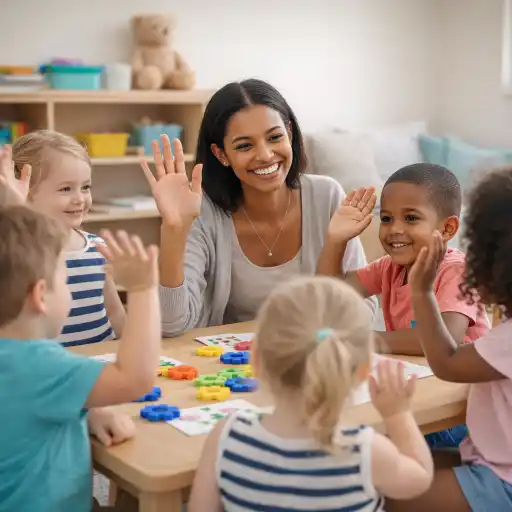
How can a short practice routine prepare children for classroom visitors?
A brief routine can make the visitor’s arrival more predictable. Introduce the sequence in child-friendly language: “A visitor may come in. We can look, wave, say hello, or stay with our activity. Our teacher will help us.” Avoid promising details that could change, such as exactly when the person will arrive or how they will behave.
Practice with a puppet, a staff member, or a familiar object standing in for the visitor. Keep the rehearsal light and repeat it across a few days if children seem to benefit. Children can choose whether to take a turn, and adults can narrate the steps without demanding that every child act them out. Predictable routines and visual supports can help children understand what comes next; CSEFEL’s brief on helping children understand routines and classroom schedules also recommends adapting supports to children’s individual, cultural, and language needs.
Try this simple sequence:
- Show a picture or describe the possible visitor in a sentence.
- Demonstrate several greeting choices, including watching or continuing play.
- Let children practice with a puppet or trusted adult—only if they choose.
- Preview where the visitor may sit or stand and which adult will support the group.
- After the visit, briefly reflect on what children noticed and how they chose to participate.
📣 Keep the rehearsal short and playful; a thirty-second practice can be enough for some groups. The aim is familiarity, not perfect recall.
How can greetings remain inclusive and respectful of boundaries?
An inclusive greeting routine recognizes that children differ in temperament, sensory preferences, language, culture, motor skills, and communication. Some children may enjoy waving from across the room; others may prefer a quiet nod or no interaction. A child’s choice should not be treated as rudeness or a problem to correct.
Do not require hugs, handshakes, high-fives, eye contact, or spoken words. Physical touch should never be the price of being welcomed. Responsive Classroom’s ideas for keeping greetings fresh and engaging include a wave that can be done without touching. Adapt any group activity to ensure that children can participate without contact and that they can pass.
Consider access in the environment, too. Put visual choices at a child-friendly height, use gestures or objects as cues, and leave a clear path for mobility devices. If a child uses an AAC system, make sure it is available and give the child time to select a message. For children who are learning English, include familiar home-language greetings when families share them.
- Offer meaningful choices, but do not overwhelm children with too many options.
- Let children watch first and join later if they wish.
- Respond positively to nonverbal messages, including a turn away or a gesture indicating “no.”
- Prepare visitors too: explain that a quiet response or no contact is acceptable.
These small decisions support #belonging and help children learn that friendly connection can take many forms.
What common greeting-practice mistakes should teams avoid?
Even a warm routine can feel stressful if adults unintentionally add pressure. The most common pitfall is treating a greeting as proof of good manners or social readiness. Children may understand the expectation and still need more time, support, or distance. The provider’s task is to create an accessible invitation, notice the child’s response, and adapt—not to insist on a particular performance.
A second mistake is practicing only one greeting or assuming a child’s communication based on a diagnosis, language background, or past behavior. Instead, observe what the child chooses across everyday routines and check with families about preferences. The CSEFEL guidance on using choice and preference underscores the value of offering options that reflect children’s interests and abilities.
- Avoid: “Give the visitor a hug.” Try: “You can wave, say hello, or keep playing.”
- Avoid: repeating prompts or speaking for a child before they have time to respond. Try: pause, observe, and acknowledge any communication.
- Avoid: rehearsing until children appear compliant. Try: stop when interest fades and return to the routine another time.
- Avoid: treating a child who watches as disengaged. Try: recognize observation as one possible way to participate.
After a visit, reflect with staff: Which choices were easy to access? Did children have enough time? Did anyone seem uncomfortable, and what environmental change might help next time? State requirements vary - check your state licensing agency when program policies or visitor procedures are involved.
Conclusion: How can a wave help children feel ready to greet visitors?
A wave can be a useful, low-pressure way to practice greeting because it is visible, simple, and does not require touch. It works best as one option in a flexible routine—not as a requirement. Model the greeting, preview what may happen, include different communication methods, and allow children to watch, respond, or pass.
The central goal is not to produce a perfect “hello.” It is to help each child feel prepared, respected, and welcome when classroom visitors arrive. By listening to children and families, planning for access, and keeping practice playful, providers can turn a small wave into a meaningful lesson in #communication, choice, and care.
For a focused next step, Inclusive Lessons for Preschoolers Buy Now $16.00 explores practical ways to design activities that welcome different learners. Providers seeking additional strategies for nurturing social-emotional growth may also find Brighter Futures: Social Emotional Development Buy Now $16.00 useful.
- 45 Hour Child Growth and Development
- CDA Home Visitor Subject Area 3 Part 3 Birth to 5
- CDA Home Visitor Subject Area 2 Part 3 Birth to 5
- Birth to Five CDA Credential with Portfolio Review
- Pediatric RSV First Aid & CPR/AED
- Anxiety: Signs & Strategies
- Emergent Learning & Development
- Creating Environments that Nurture Growth and Community
- CDA Home Visitor Credential Birth to 5
- CDA Certification en Español: Recursos y Consejos para Educadores Bilingües
- 💛🧩 ¿Cómo puedo hacer que mi enseñanza sea inclusiva para los niños con autismo?
- 👶 ¿Cuáles son las proporciones y grupos requeridos en Dakota del Norte? 🏫
- Recursos en Español sobre el Sueño Seguro del Bebé
- ¿Cómo pueden los equipos de cuidado infantil practicar habilidades rápidas de primeros auxilios en situaciones reales?
- 10 Ejemplos de Cómo la Cultura Influye en el Desarrollo Infantil
- Proporciones de Cuidado Infantil y Tamaños de Grupo por Edad en Maryland (Guía Rápida para Centros y Hogares)
- Proporciones de Cuidado Infantil y Tamaños de Grupo por Edad en Nueva Jersey (Guía Rápida para Centros y Hogares)
- Proporciones de Cuidado Infantil y Tamaños de Grupo por Edad en Virginia (Guía Rápida para Centros y Hogares)
- Lista para Guardería en Casa en Illinois: Cómo Iniciar una Guardería en el Hogar
- Retraso del Habla en la Guardería: Cómo Pueden Ayudar los Proveedores
- Cómo Trabajar en el Cuidado Infantil en Carolina del Norte: Requisitos y Pasos
- Celebrando la amistad en el cuidado infantil durante el Día de los Mejores Amigos
- Canciones, juegos y preguntas de círculo para niños
- Cómo simplificar la capacitación para sus empleados de daycare
- First Week of Preschool Lesson Plans: 5 Days of Easy Activities and Routines
- Preschool Classroom Routines: What Should You Teach During the First Week?
- How Can Child Care Providers Support Shy or Anxious Children in Group Settings?
- How Can You Plan a Calm, Organized First Week of Preschool?
- How Can a Wave Help Children Practice Comfortable Greetings Before Classroom Visitors Arrive?
