Father's Day celebrations in early childhood settings should be inclusive, developmentally appropriate, and intentional. Consider reframing the event as a celebration of "special grown-ups" so children who do not have a biological father in their lives can participate fully. To plan events and family partnerships that honor diversity and build relationships, providers often draw on family-engagement and inclusive-practice frameworks: see Family Connections: Creating Inclusive Relationships  Buy Now $55.00 for strategies to strengthen home–school partnerships, and Art from the Heart for Preschoolers Buy Now $35.00 for process-based art practices you can adapt for keepsakes or classroom displays. This article answers the practical questions teachers ask: how to make celebrations inclusive, how to scaffold activities for different ages and abilities, how to communicate with families, and how to align celebrations with social-emotional learning goals. Below you’ll also find a simple Dino Footprint craft with adaptations you can use in mixed-ability groups.
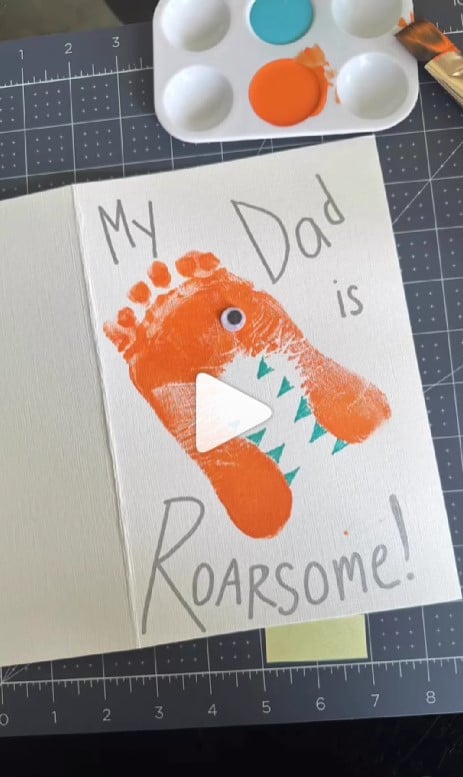
Looking for a #Father’s_Day craft? Try this cute Dino Footprint craft in your daycare so your kids will have something dinotastic to take home!
Here is what you will need:
- Paint
- Construction paper
- Googly eyes
- Glue
- Marker
- Little feet
Steps:
- Dip the child’s feet in any color of paint
- Place each footprint on a piece of construction paper with the heels of the footprints slightly parted to mimic a dinosaur’s open mouth.
- Once the paint dries use a marker to draw teeth in the dinosaurs’s mouth.
- Glue on a Googly eye
- Once the glue dries, write a fun message!
What health, safety, and consent steps should I follow for footprint crafts?
Footprint crafts are popular keepsakes but require clear protocols for hygiene, consent, and accessibility. Before the activity, obtain parent/guardian consent that specifically mentions footprints, paint, and photos; offer an opt-out that allows a child to participate with alternatives. Use only non-toxic, washable tempera designed for skin contact and keep a supply of baby wipes, warm water, and mild soap on hand. Prepare a designated work surface with disposable or easily disinfected coverings and have staff model handwashing before and after the activity. For infants and children who wear diapers or have skin conditions, avoid direct skin contact with paint—offer stamped foam footprints or educator-pressed prints instead. Provide socks or foot covers children can remove if they choose; for children who cannot stand or cooperate, use a toy dinosaur stamp or educator-made footprint so the child still has a keepsake without distress. Document any accommodations, and post simple signage that explains procedures and cleaning steps for families. Finally, include photo-consent language on the participation form so families understand whether images of their child or the craft will be posted or shared.
How can I make Father's Day inclusive for all families?
Center inclusion by using neutral language ("special grown-up"), offering opt-in activities, and providing multiple ways for families to participate (in-person, take-home, digital). Explicitly acknowledge family diversity in your classroom materials and signage. Offer an invitation that reads: "Join us in celebrating special grown-ups who support the children in our care—this may include fathers, step-parents, grandparents, uncles, aunts, siblings, or close family friends." When planning, consult family-preference forms and honor requests for privacy or alternate participation.
For guidance on hosting inclusive events and tailoring invitations, see related ChildCareEd articles: Father’s Day School Event Ideas for Early Childhood, Celebrating Fathers and Special Grown-Ups: Easy Activities, and How can child care programs host inclusive family celebrations?
What classroom activities and accommodations are developmentally appropriate?
Design activities with multiple entry points so preschoolers, toddlers, and school-age children can participate. For infants and toddlers, provide process-oriented materials (texture boards, handprint keepsakes) rather than formal crafts. For preschoolers, include open-ended elements (color choice, simple stamping) that support autonomy and fine motor development. Anticipate sensory sensitivities by having paint alternatives (stampers, sponge shapes, stickers) and providing a quiet table with an assistant to reduce overstimulation.
Useful ChildCareEd resources on adaptation and inclusion include: Celebrating Father’s Day in Child Care: Simple Ideas, Father’s Day Keepsake Ideas, and Father’s Day Activities Students Can Make and Share.
How can I adapt the Dino Footprint craft for different ages and needs?
The Dino Footprint craft below is adaptable across ages and abilities. Here are recommended adaptations and learning goals:
- Infants/toddlers: Use washable ink pads or pre-made foam footprints pressed by educators; focus on sensory exposure and caregiver-infant bonding.
- Preschoolers: Use paint but offer paintbrushes or sponges for children who avoid direct foot contact. Emphasize fine motor skills when adding eyes and drawn teeth.
- Children with sensory or mobility needs: Provide a template footprint and allow children to color or trace the shape. For children who cannot stand, press a toy dinosaur foot stamp that the child can manipulate.
- Language and SEL extension: Invite children to dictate a short message for the keepsake ("I love you" or "Roar for you!") to support emergent literacy and emotional expression.
Materials (existing list preserved): Paint; Construction paper; Googly eyes; Glue; Marker; Little feet
Steps (existing sequence preserved):
- Dip the child’s feet in any color of paint
- Place each footprint on a piece of construction paper with the heels of the footprints slightly parted to mimic a dinosaur’s open mouth.
- Once the paint dries use a marker to draw teeth in the dinosaur’s mouth.
- Glue on a Googly eye.
- Once the glue dries, write a fun message!
How should I communicate with families and share student work?
Provide families with multiple notification options (printed note, email, classroom app). Offer clear instructions for consent-to-share photos and explain how work will be distributed. Suggested message copy: "This week we will make a Dino Footprint keepsake. If you prefer your child not participate or would like a digital-only copy, please let us know." When sharing with families, highlight the learning objective (e.g., "This activity supported fine motor and emergent writing skills") to reinforce program quality.
Summary: What are the takeaways and where can I learn more?
Inclusive celebrations are intentional, voluntary, and flexible. Use neutral language, provide adaptations, and partner with families to honor each child's context. The Dino Footprint craft is a simple, adaptable project you can use as a keepsake or classroom display while promoting social-emotional learning and fine motor development. For deeper professional learning consider the ChildCareEd course Inclusive Lessons for Preschoolers Buy Now $16.00 to build inclusive lesson plans, and revisit Family Connections Buy Now $55.00 for strategies that strengthen family partnerships.
- 45 Hour Child Growth and Development
- 45 Hour Preschool Methods and Materials
- 45 Hour Infant and Toddler Methods and Materials
- Pediatric RSV First Aid & CPR/AED
- CDA Bridge Bundle: Family Child Care without Portfolio Review
- CDA Bridge Bundle: Infant/Toddler without Portfolio Review
- CDA Bridge Bundle: Preschool without Portfolio Review
- Creating Environments that Nurture Growth and Community
- Texas Director Credential
- CDA Certification en Español: Recursos y Consejos para Educadores Bilingües
- 🩺 Cumplimiento de Salud e Inmunización en Cuidado Infantil de Nevada ✔️
- 🚌 ¿Qué Significan las Regulaciones de Transporte de Illinois para las Excursiones Infantiles? 🚦
- Celebrating Fathers and Special Grown-Ups: Easy Activities for Child Care
- ¿Cuáles son las mejores actividades del Día de la Tierra para niños en casa o en el aula?
- Cómo Trabajar en el Cuidado Infantil en Carolina del Norte: Requisitos y Pasos
- Cómo Trabajar en el Cuidado Infantil en California: Requisitos y Pasos
- Cómo Trabajar en el Cuidado Infantil en Virginia: Requisitos y Pasos
- Requisitos para Guarderías en Casa en Georgia
- Celebrating Father’s Day in Child Care: Simple Ideas for Providers
- Father’s Day Keepsake Ideas for Preschool and Child Care
- Father’s Day Activities Students Can Make and Share
- Father’s Day School Event Ideas for Early Childhood
- Celebrando la amistad en el cuidado infantil durante el Día de los Mejores Amigos
- How Can We Celebrate Every Family and Create a Classroom Where Everyone Is Represented?
- How Can Handmade Gifts Help Children Express Appreciation?
- How Can Child Care Providers Create Inclusive Father’s Day Activities for Diverse Family Structures?
- How Can Writing and Art Activities Help Children Name What They Appreciate?
- How Can Child Care Programs Plan Appreciation Activities When Families Use Different Names for Caregivers?
