
Sign in to download Create a free account
This resource is free. Sign in and you'll come straight back here to download it.
Description
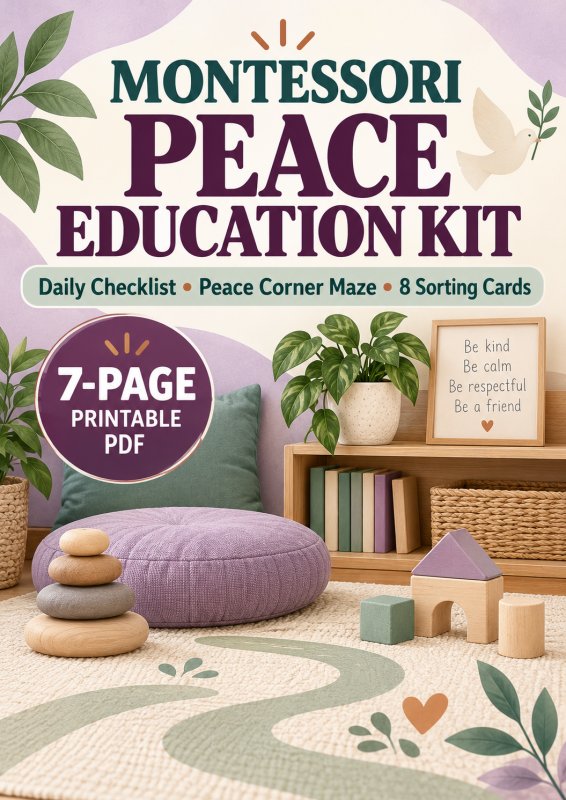
Montessori Peace Education Kit: Checklist, Maze & 8 Sorting Cards
Bring peace education into everyday classroom routines with this 7-page Montessori Peace Education Kit!
Designed for Montessori educators, preschool teachers, kindergarten classrooms, and early childhood providers, this practical resource combines a teacher reflection checklist with engaging activities that help children explore peaceful choices, cooperation, emotional awareness, and respectful communication.
With a Peace Corner maze, eight illustrated sorting cards, and a daily practice checklist, educators can model positive behaviors while encouraging children to develop the skills needed to navigate everyday classroom interactions.
What's Included?
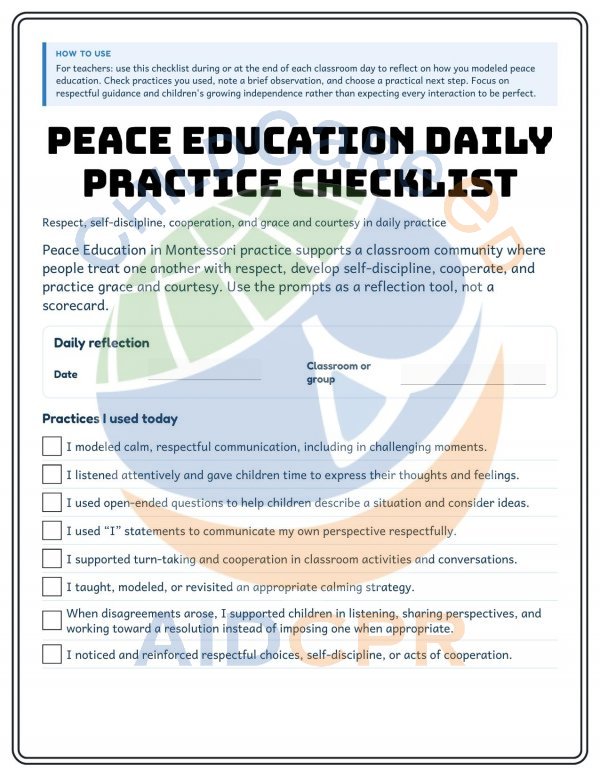
1. Peace Education Daily Practice Checklist — 2 Pages (Pages 1–2)
A printable and digitally fillable teacher reflection checklist designed to support Montessori peace education practices throughout the classroom day.
Includes:
Date and classroom or group identification fields.
Eight reflection statements covering respectful communication, active listening, open-ended questions, "I" statements, cooperation, calming strategies, conflict resolution, and positive behavior reinforcement.
Checkboxes for documenting practices used during the day.
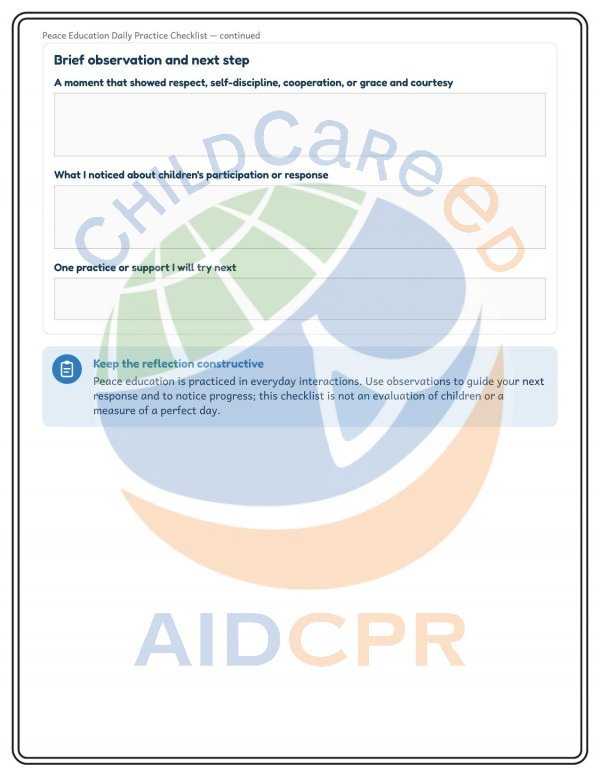
Space to record examples of respect, cooperation, self-discipline, and grace and courtesy.
Reflection prompts about children's participation and responses.
A section for identifying one practical next step.
Educational purpose: Encourages educators to reflect on their teaching practices and make thoughtful adjustments that support a peaceful classroom community.
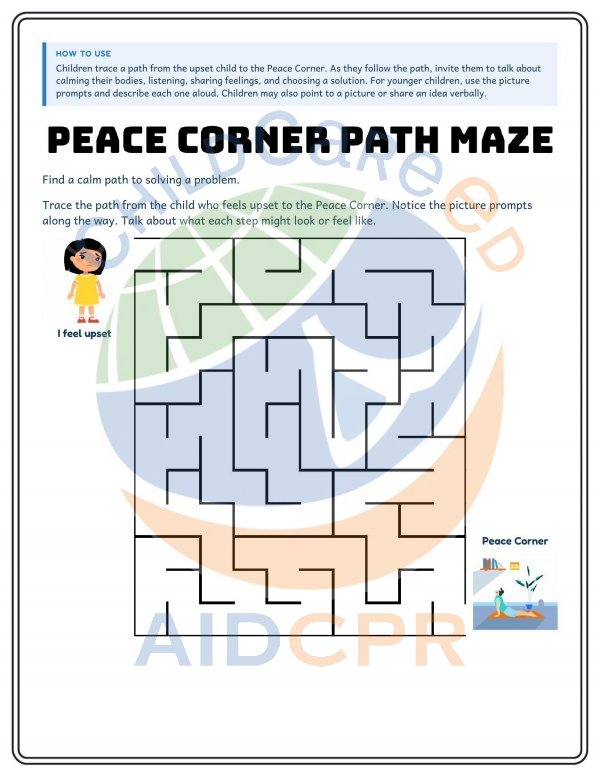
2. Peace Corner Path Maze — 2 Pages (Pages 3–4)
A child-friendly tracing and discussion activity that introduces peaceful problem-solving through a visual journey toward the Peace Corner.
Includes:
One printable maze connecting an upset child to the Peace Corner.
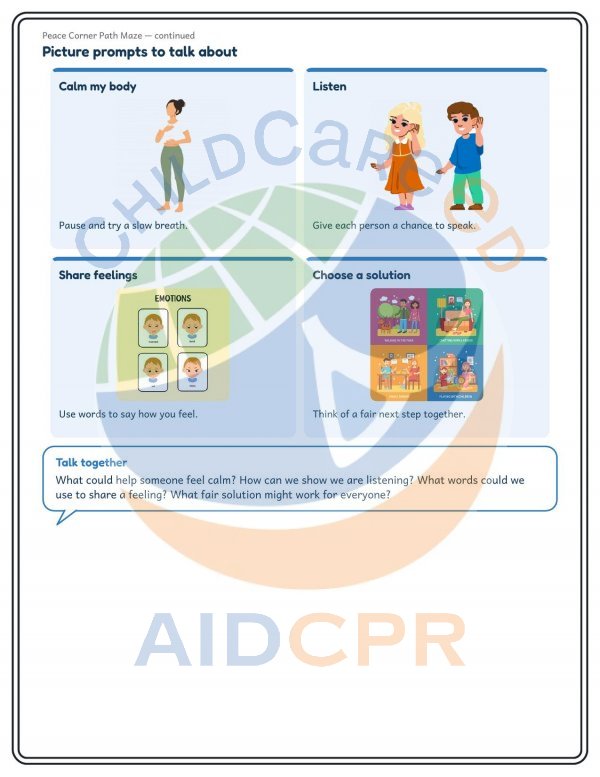
Four illustrated discussion prompts:
Calm My Body
Listen
Share Feelings
Choose a Solution
Simple explanations of each peaceful problem-solving step.
Guided discussion questions about calming strategies, listening, expressing emotions, and choosing fair solutions.
Educational purpose: Helps children recognize that calming down, listening, expressing feelings, and working together can support peaceful conflict resolution.
Younger children may participate by pointing to pictures, listening to the explanations, or sharing ideas verbally.
3. Peaceful Choices Cut, Sort, and Match — 3 Pages (Pages 5–7)
A hands-on sorting activity that helps children distinguish behaviors that contribute to a peaceful classroom from choices that need improvement.
Includes:
Two sorting categories:
Helps Our Classroom Feel Peaceful
Needs a Different Choice
Eight illustrated, cut-out behavior cards.
Four peaceful choices:
Taking turns.
Listening to a friend.
Putting materials away.
Asking for help.
Four choices to reconsider:
Grabbing a material.
Interrupting a friend.
Leaving materials on the floor.
Pushing to go first.
The activity also includes a discussion prompt encouraging children to identify a different, more helpful choice.
Educational purpose: Supports recognition of positive classroom behaviors, cooperation, listening skills, and respectful problem-solving.
Perfect For
Montessori preschool and primary classrooms.
Preschool and kindergarten social-emotional learning.
Montessori grace and courtesy lessons.
Peace Corner introductions and discussions.
Classroom behavior and positive guidance lessons.
Morning meetings and small-group activities.
Conflict resolution and friendship skills instruction.
Teacher self-reflection and professional development.
Individual or small-group activities with adult guidance.
Why Educators Will Love It
Supports Montessori peace education: Reinforces respect, self-discipline, cooperation, and grace and courtesy through practical classroom experiences.
Combines teacher and child learning: The teacher checklist encourages reflective practice, while the maze and sorting activity introduce related skills to children.
Encourages thoughtful communication: Discussion prompts support listening, recognizing emotions, taking turns, and considering fair solutions.
Offers hands-on learning: Children can trace the maze, cut and sort pictures, and discuss familiar classroom behaviors.
Flexible for different developmental levels: Educators can read directions aloud, invite verbal answers, or let children respond by pointing to pictures.
Reusable throughout the year: The checklist can support daily reflection, while both child-facing activities can be revisited during classroom discussions and peace education lessons.
Easy to incorporate into existing routines: Activities work well during morning meetings, small-group instruction, or guided conversations after classroom disagreements.
