Sign in to download Create a free account
This resource is free. Sign in and you'll come straight back here to download it.
Description
Build a Kinder, More Respectful Classroom with Montessori Grace & Courtesy!
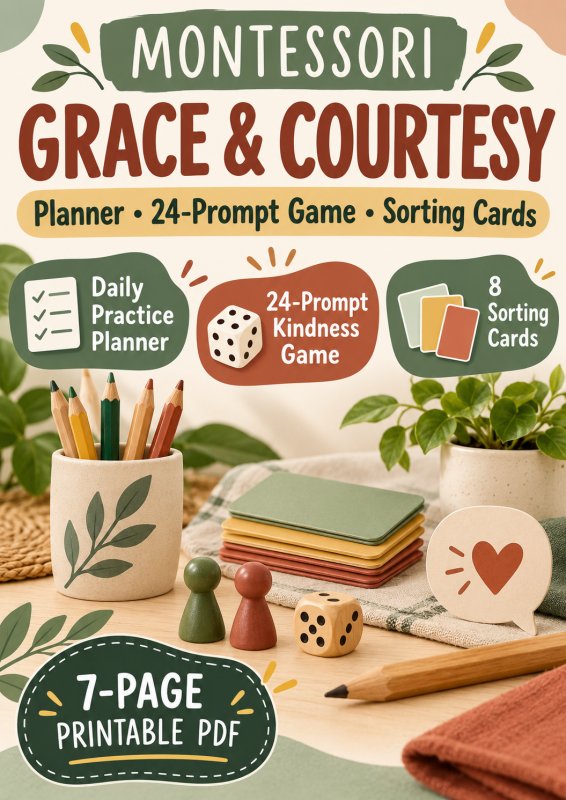
Help young children practice kindness, cooperation, independence, and respectful classroom behavior with this 7-page Montessori Grace & Courtesy Activity Toolkit!
Designed for Montessori educators, preschool teachers, kindergarten classrooms, and early childhood providers, this collection combines a reusable teacher planning form, a 24-prompt kindness board game, and an 8-card classroom choices sorting activity.
Children explore everyday social situations through play, conversation, and hands-on learning, while educators receive a practical tool for planning Grace and Courtesy lessons and reflecting on classroom interactions.
What's Included?
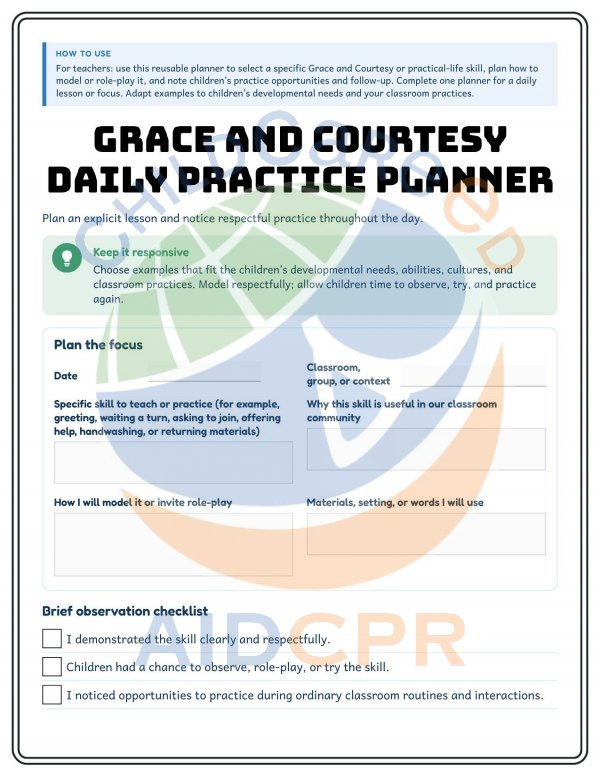
1. Grace and Courtesy Daily Practice Planner — 2 Pages
A reusable teacher planning and observation form designed to help educators introduce and reinforce respectful interactions and practical-life skills.
The planner includes:
Date and classroom or group information
Specific skill to teach or practice
Explanation of why the skill matters in the classroom
Space to plan teacher demonstrations or role-playing
Materials, settings, and suggested language
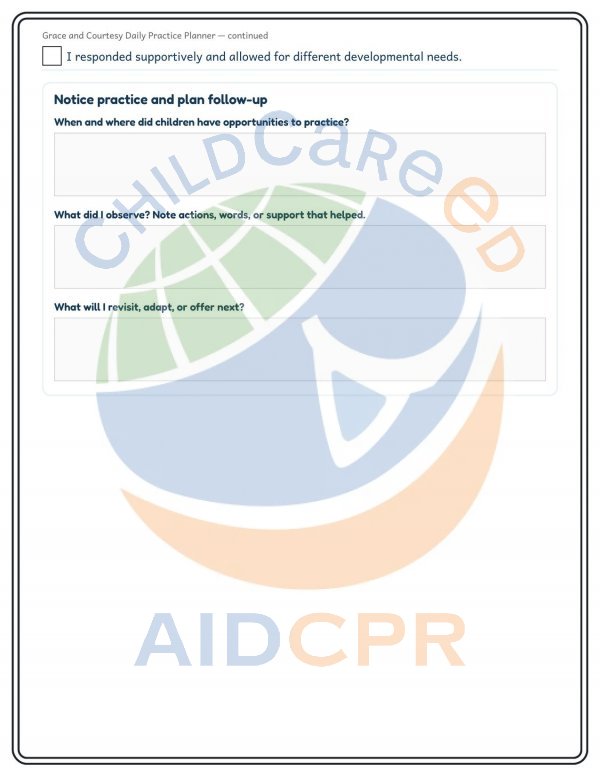
A four-item observation checklist
Space to record children's practice opportunities
Notes about observed behaviors and helpful support
Follow-up planning and adjustments for future lessons
Suggested skills: Greeting others, waiting for a turn, asking to join an activity, offering help, handwashing, and returning materials.
How to Use: Choose one skill, plan a brief demonstration, provide practice opportunities, and record observations to guide your next lesson.
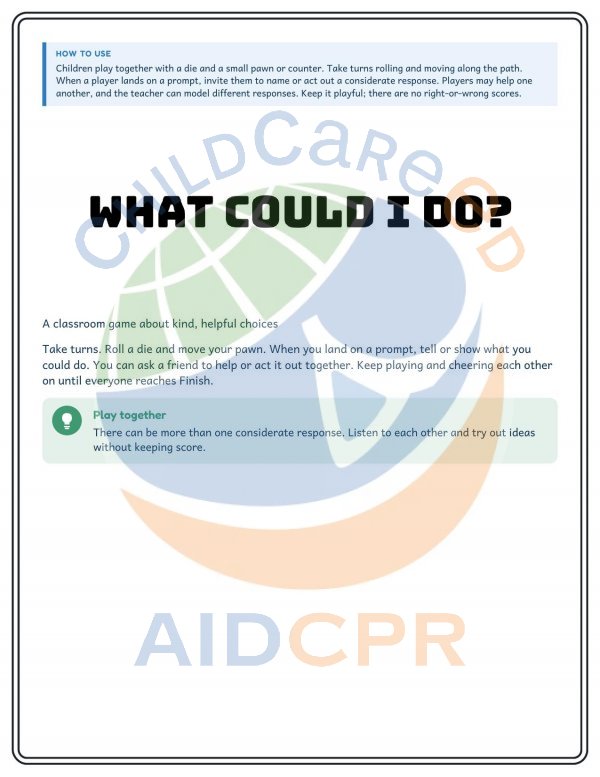
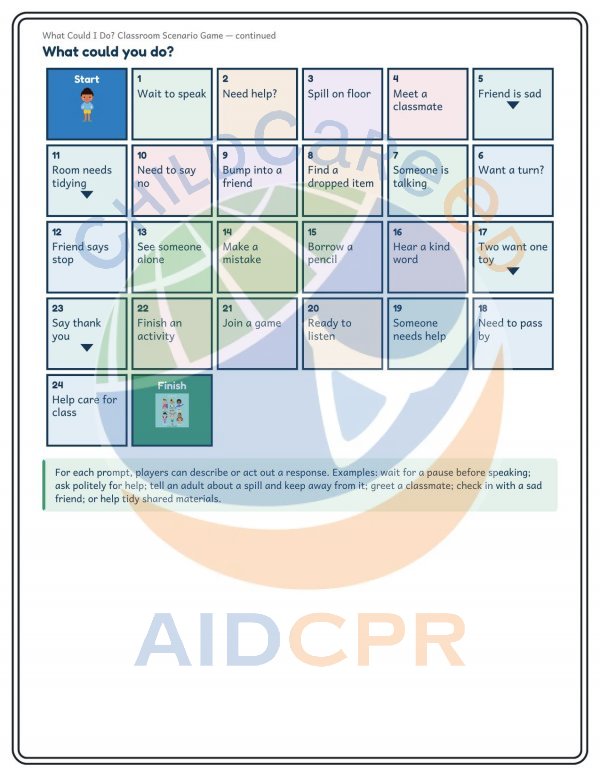
2. What Could I Do? Classroom Scenario Game — 2 Pages
An interactive classroom board game featuring 24 numbered social situations that encourage children to think about considerate, respectful, and helpful responses.
The game includes scenarios about:
Waiting to speak
Asking for help
Responding to spills
Greeting classmates
Helping a sad friend
Taking turns
Listening when someone speaks
Finding lost belongings
Apologizing or responding after bumping into someone
Respecting personal boundaries
Including others in play
Borrowing classroom materials
Managing disagreements over shared toys
Caring for the classroom environment
How to Play: Children roll a die, move a playing piece along the numbered path, and describe or act out a thoughtful response when they land on a scenario.
The game encourages cooperation and discussion rather than competition. There are no right-or-wrong scores, and players can explore different considerate responses together.
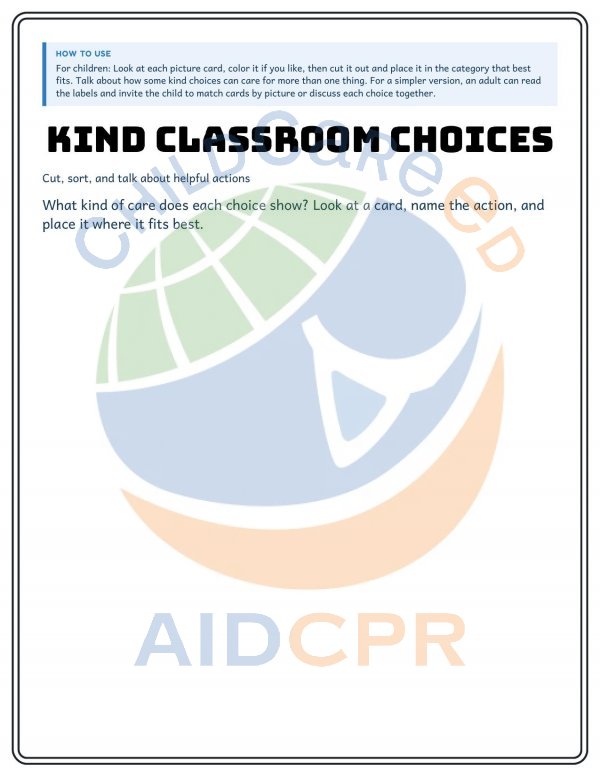
3. Kind Classroom Choices: Cut, Sort, and Match — 3 Pages
A hands-on sorting activity that helps children recognize how everyday actions demonstrate respect and care.
Includes 8 illustrated picture cards showing:
Greeting a classmate
Waiting for a turn
Listening when someone speaks
Washing hands
Putting on a coat
Wiping a spill
Returning a material
Pushing in a chair
Children sort the picture cards into three categories:
Respectful Interaction
Care of Self
Care of Environment
How to Use: Children identify each action, cut out the illustrated cards, and place them in the category they think fits best.
Educators can encourage discussion about how some actions support more than one category, helping children explain their choices and consider different perspectives.
Perfect For
Montessori preschool classrooms
Grace and Courtesy lessons
Preschool and kindergarten social-emotional learning
Classroom behavior and kindness activities
Morning meetings and circle time
Small-group cooperative games
Practical-life skill instruction
Respectful communication and friendship lessons
Classroom community building
Back-to-school routines and expectations
Teacher observation and planning
Why Educators Will Love It
Encourages meaningful social learning: Children practice responding to situations they may encounter throughout the school day.
Combines planning and practice: Educators can introduce specific skills using the planner, reinforce them through games, and revisit them during daily routines.
Promotes cooperation: The board game emphasizes shared participation, problem-solving, and considerate responses rather than winning.
Supports independence: Sorting activities introduce care of self, classroom materials, and the shared environment.
Encourages communication: Role-playing and discussion prompts provide opportunities for children to describe their ideas and listen to others.
Flexible for different learners: Activities can be adapted to children's developmental needs, communication abilities, and classroom experiences.
Reusable throughout the year: The planning form, board game, and sorting cards can support repeated Grace and Courtesy lessons.
