$2.49 One-time license · lifetime download access
Buy Now charges your payment method right away — the resource appears under My Resources. Or add it to your cart and check out together with trainings.
Description
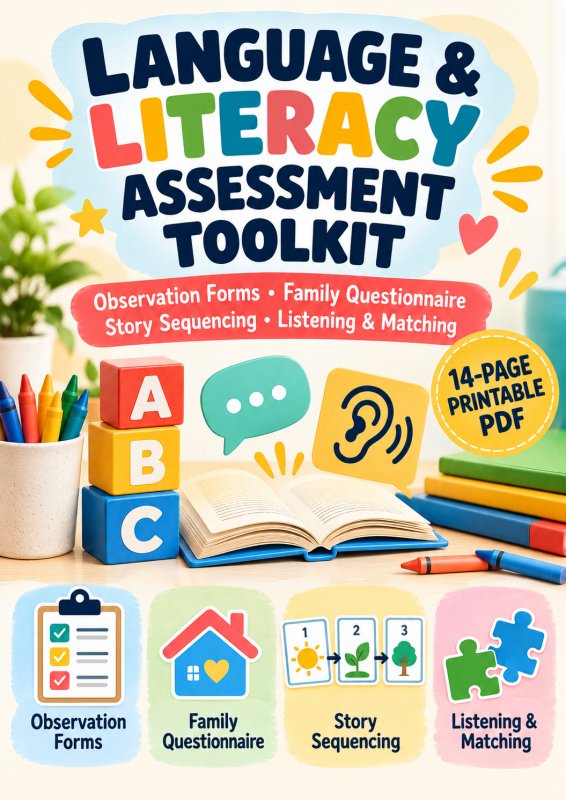
Support early language development, strengthen observation practices, and encourage emerging literacy skills with this 14-page Language & Literacy Assessment Toolkit!
Designed for preschool teachers, Pre-K educators, and childcare providers, this printable resource combines practical observation forms, family communication tools, and engaging children's activities to help educators understand and support language and literacy development.
What's Included:
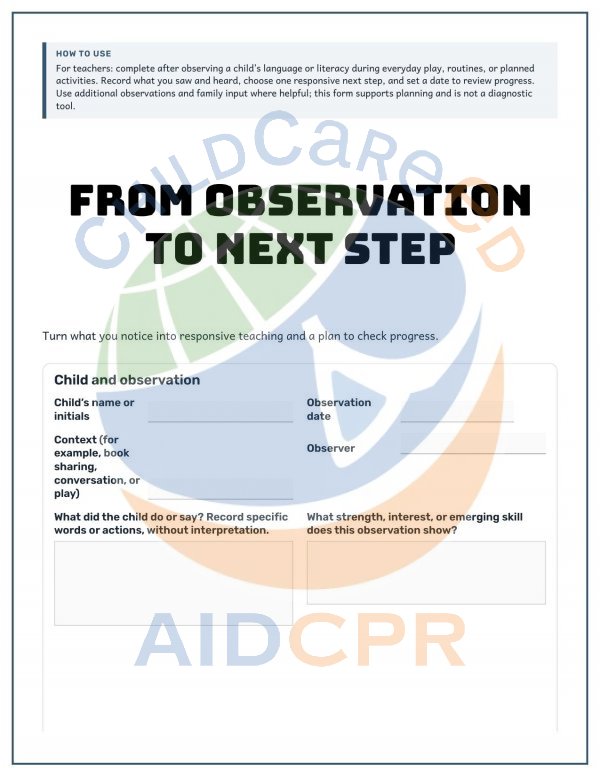
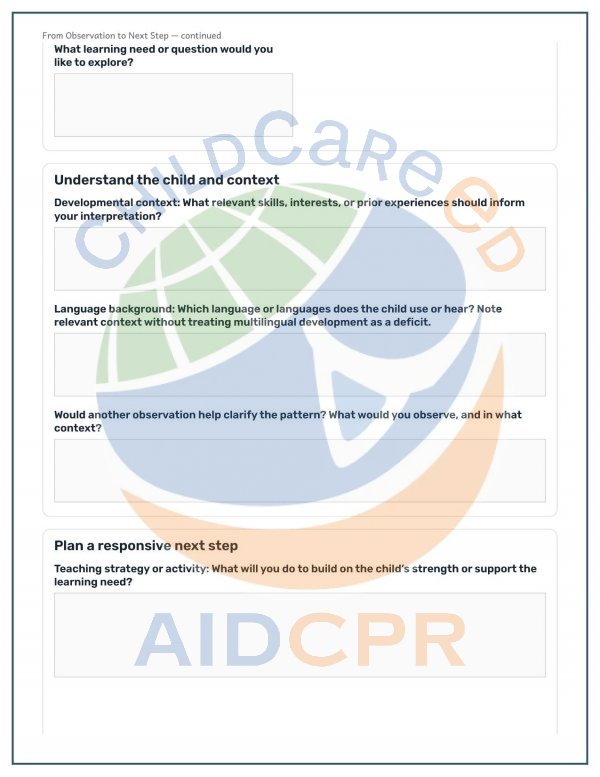
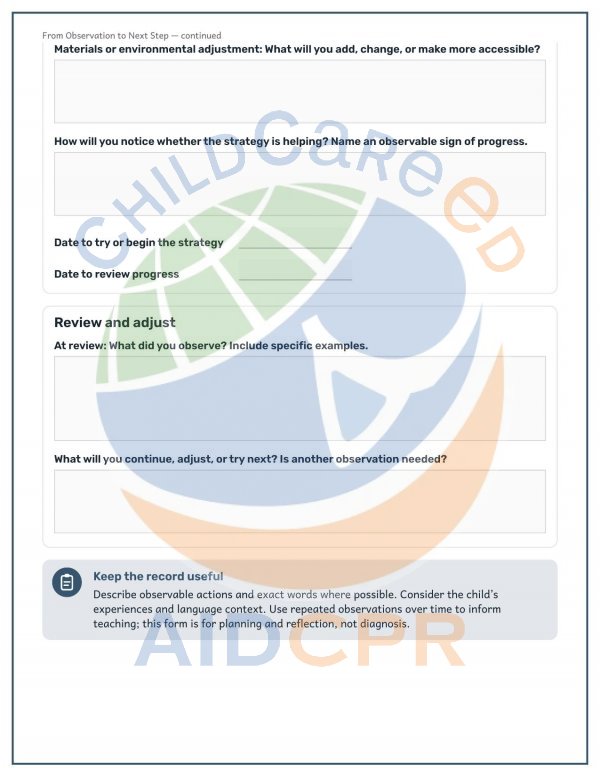
From Observation to Next Step: A teacher observation and planning form for documenting children's language and literacy skills, recognizing strengths, identifying learning needs, planning responsive teaching strategies, and monitoring progress.
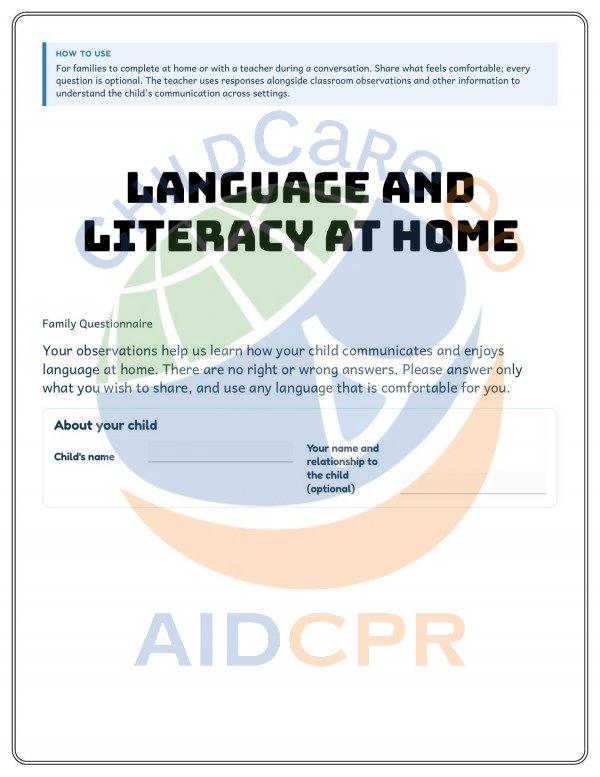
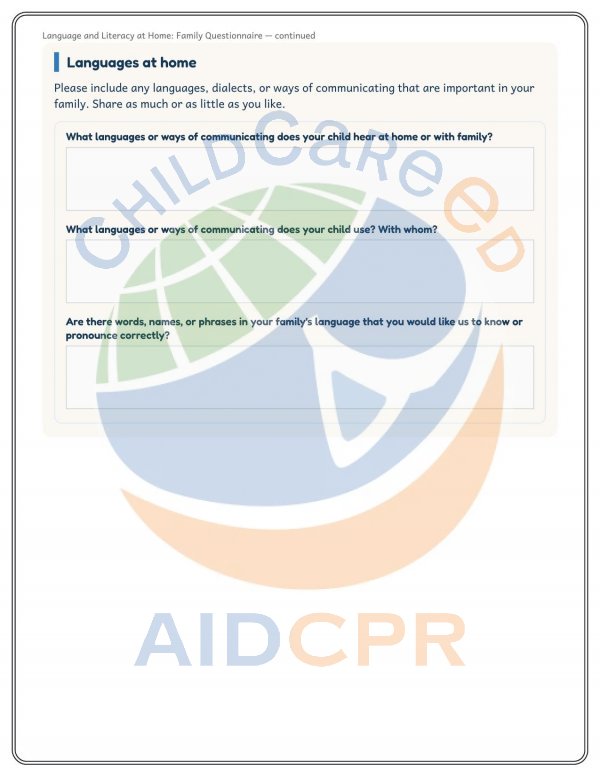
Language and Literacy at Home: Family Questionnaire: A family survey exploring home languages, communication styles, favorite books, songs, stories, and early literacy experiences. Helps educators develop a more complete understanding of children's communication across different settings.
Cut, Color, and Tell: A hands-on story sequencing activity where children color and arrange picture cards, practice identifying what happens first, next, and last, and tell or dictate their own stories. Includes a teacher observation section for recording language, vocabulary, sequencing, and comprehension skills.
Listen, Look, and Match (2 pages): A picture-matching activity that helps educators observe children's listening comprehension, vocabulary understanding, and ability to follow spoken directions.
Perfect For:
Preschool and Pre-K classrooms
Early language and literacy development
Teacher observation and documentation
Storytelling and sequencing activities
Listening comprehension and vocabulary practice
Family engagement and communication
Individualized learning and instructional planning
Early childhood assessment portfolios
Why Educators Will Love It:
Understanding children's language and literacy development begins with careful observation, meaningful conversations, and engaging learning experiences.
This toolkit helps teachers document what children say and do, build on emerging communication skills, and select appropriate teaching strategies based on individual strengths and needs.
With reusable assessment forms, a family questionnaire, and interactive children's activities, educators can connect classroom observations with practical instructional planning.
Important: These tools support informal observation, teaching, and progress monitoring. They are not standardized assessments or diagnostic instruments.
