Sign in to download Create a free account
This resource is free. Sign in and you'll come straight back here to download it.
Description
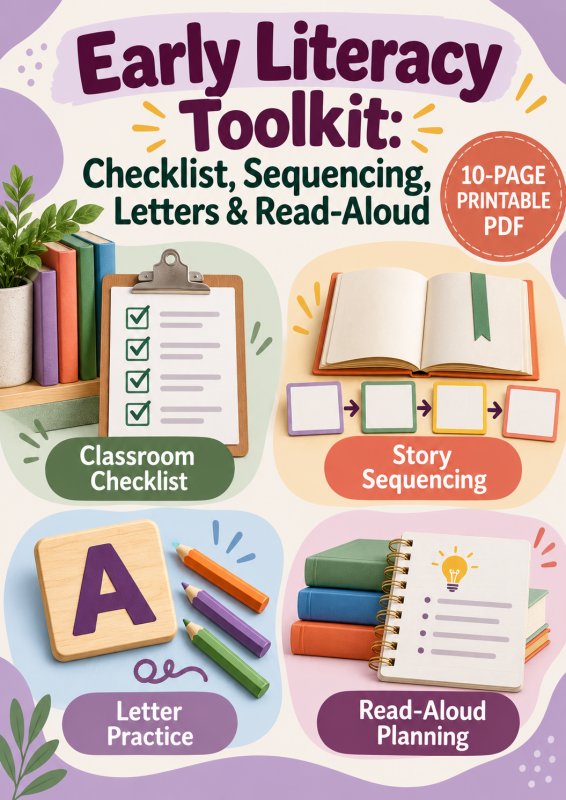
Early Literacy Toolkit: Checklist, Sequencing, Letters & Read-Aloud
Create a literacy-rich learning environment, strengthen early language skills, and make everyday reading experiences more meaningful!
Support early childhood language and literacy development with this practical 10-page printable toolkit featuring classroom observation tools, story sequencing activities, early letter recognition practice, and interactive read-aloud planning forms.
Designed for preschool and early childhood educators, this versatile resource combines child-facing learning activities with professional teaching tools to encourage storytelling, print awareness, letter recognition, and intentional literacy instruction.
Whether you're improving your classroom reading environment, planning an engaging storytime, or introducing children to early literacy concepts, this resource provides structured materials that can be used and adapted throughout the school year.
What's Included?
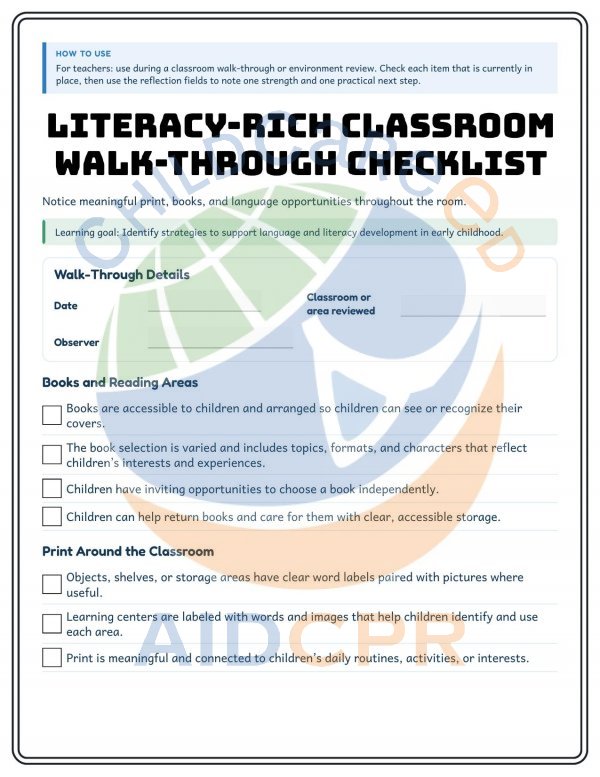
1. Literacy-Rich Classroom Walk-Through Checklist — 2 Pages
Pages 1–2 | Teacher Observation & Classroom Environment Review
A practical classroom evaluation and reflection tool that helps educators recognize opportunities to strengthen early literacy experiences.
Page 1: Classroom Literacy Environment Checklist
Includes 7 checkpoints covering:
Books and Reading Areas
Making books visible and accessible to children.
Providing varied books that reflect children's experiences and interests.
Encouraging independent book selection.
Organizing books so children can help return and care for them.
Print Around the Classroom
Using meaningful picture and word labels.
Labeling classroom learning centers.
Connecting environmental print to children's everyday routines and interests.
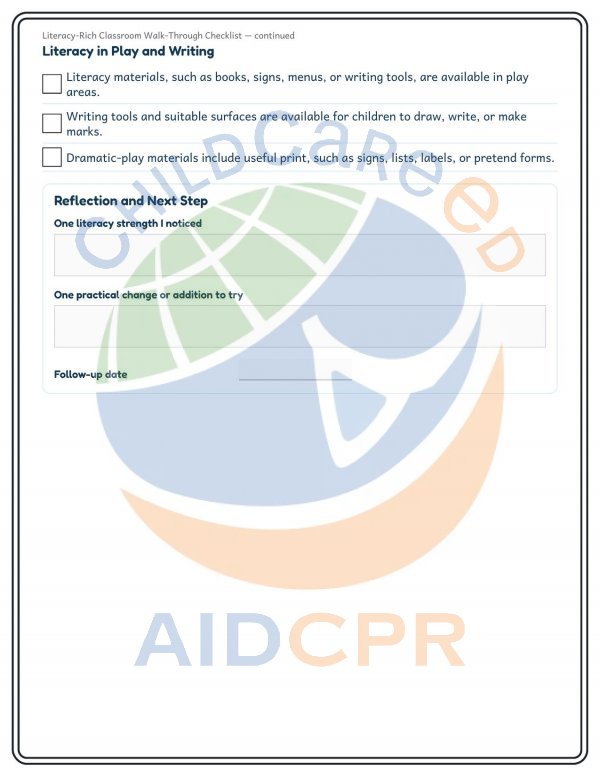
Page 2: Literacy in Play and Writing
Includes 3 additional checkpoints addressing:
Incorporating books, signs, menus, and writing materials into play areas.
Providing age-appropriate writing tools and surfaces.
Including meaningful print materials in dramatic-play experiences.
Reflection and Follow-Up
Record one classroom literacy strength.
Identify one practical improvement or addition.
Set a follow-up date.
This checklist helps educators make intentional decisions about classroom organization and access to literacy materials.
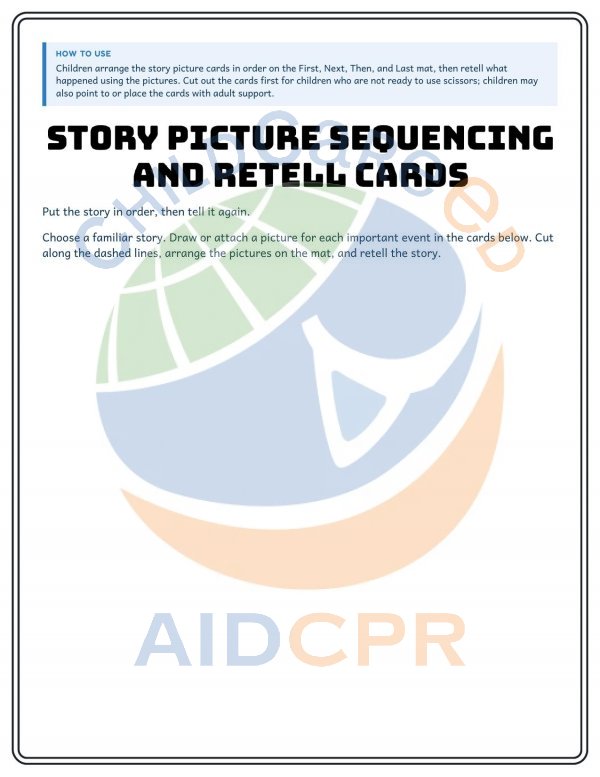
2. Story Picture Sequencing and Retell Cards — 3 Pages
Pages 3–5 | Children's Storytelling & Sequencing Activity
A flexible story sequencing activity that encourages children to organize events and retell familiar stories.
Page 3: Activity Instructions
Guidance for selecting a familiar story.
Directions for drawing or attaching pictures representing four important events.
Instructions for cutting, arranging, and retelling events.
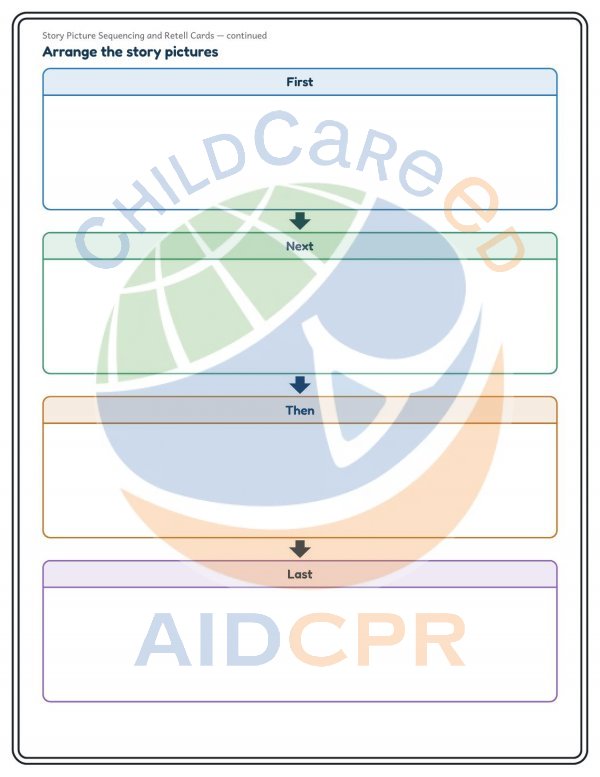
Page 4: Story Sequencing Mat
One printable sequencing mat divided into four stages:
First
Next
Then
Last
Children can place story pictures in the correct sequence and use the visual arrangement to explain what happened.
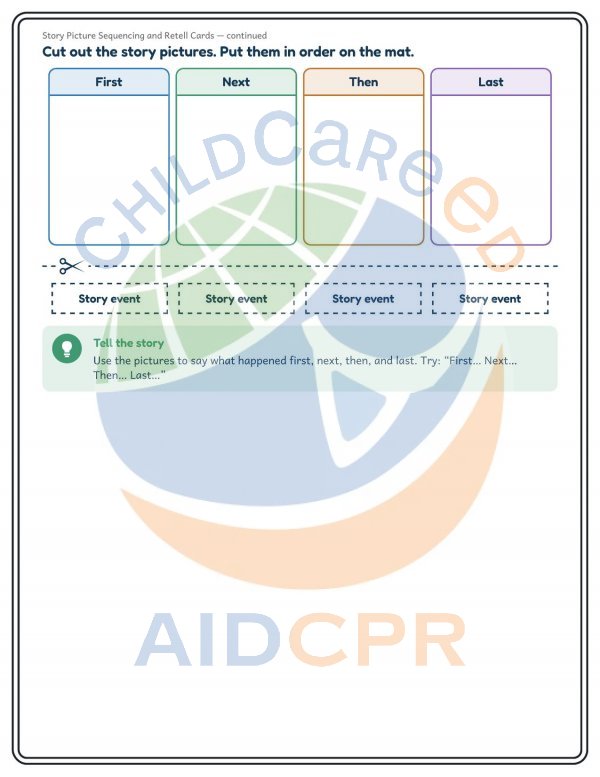
Page 5: Cut-and-Arrange Story Cards
Four blank story-event cards for children or educators to personalize.
A compact sequencing mat.
Storytelling prompts using sequence words.
Learning Opportunities:
Story comprehension and retelling.
Understanding the order of events.
Oral language development.
Sequencing vocabulary.
Visual organization and expressive communication.
3. Find the Letter in Your Name — 2 Pages
Pages 6–7 | Letter Recognition & Early Writing Activity
A guided letter recognition and handwriting activity that introduces children to identifying letters and connecting them with their own names.
Page 6: Letter Matching
A space to write the child's name.
A matching exercise featuring the letters A, B, M, and S.
Instructions for recognizing letters and connecting identical letter pairs.
Guidance for choosing a letter to practice tracing and coloring.
Page 7: Letter Tracing
Uppercase A tracing examples.
Handwriting guidelines for letter formation practice.
A coloring instruction and illustrations.
Learning Opportunities:
Letter recognition.
Visual discrimination.
Name awareness.
Early handwriting practice.
Pencil control and fine motor coordination.
Teachers can use the matching activity as an introduction to familiar letters and provide additional support according to each child's abilities.
4. Interactive Read-Aloud Planning Form — 3 Pages
Pages 8–10 | Teacher Planning & Storytime Preparation
A reusable planning tool that helps educators prepare meaningful shared reading experiences before, during, and after reading a book.
Page 8: Before Reading
Record book title, author, illustrator, date, and participating children.
Select vocabulary words to introduce.
Prepare child-friendly definitions or examples.
Plan picture-based prediction questions.
Page 9: During and After Reading
Includes planning prompts for:
Introducing print concepts, including letters, words, and spaces.
Modeling reading direction as appropriate to the book and language.
Encouraging discussion and comprehension.
Supporting vocabulary development.
Using gestures, visuals, and words to encourage participation.
Planning opportunities for children to retell stories.
Identifying follow-up activities connected to the book.
Page 10: Reflection and Future Planning
A dedicated space for recording children's responses and interests.
Notes about possible adjustments for future reading sessions.
Learning Opportunities:
Intentional shared reading.
Vocabulary enrichment.
Listening and comprehension.
Print awareness.
Conversation and oral language development.
Story retelling and responsive instruction.
Perfect For
Preschool and prekindergarten literacy instruction.
Kindergarten readiness activities.
Early literacy learning centers.
Storytime and shared reading sessions.
Small-group storytelling activities.
Letter recognition and early writing practice.
Classroom literacy environment reviews.
Teacher lesson planning and professional reflection.
Curriculum development and instructional preparation.
Childcare programs improving their language-rich environments.
Why Educators Will Love It
Combines teaching tools and children's activities: Offers practical forms for educators alongside printable literacy learning materials.
Supports foundational literacy skills: Encourages storytelling, sequencing, letter recognition, and early print awareness.
Promotes meaningful reading experiences: Helps educators organize interactive read-aloud sessions with purposeful questions and vocabulary instruction.
Encourages classroom improvement: Provides a structured way to identify strengths and areas for improvement in the literacy environment.
Flexible and adaptable: Sequencing cards can be personalized for different familiar stories, and activities can be adjusted to children's abilities.
Supports intentional teaching: Includes reflection spaces, follow-up prompts, and planning fields to help educators respond to children's learning needs.
Easy to incorporate into existing routines: Suitable for storytime, classroom centers, literacy-focused activities, and professional planning.
