Latest Blog & News

How Can Child Care Providers Teach Healthy Habits Without Focusing on Children’s Weight?
10/08/2026Everyday routines give children opportunities to enjoy movement, explore food, rest, and care for themselves without making body size the focus. Use the Indoor & Outdoor Kids Activity Calendar as a starting point for planning varied play experiences, adapting activities so children with differen... How Can Child Care Providers Teach Healthy Habits Without Focusing on Children’s Weight?

Texas Providers Looking For Child Development Classes Online?
01/25/2022ChildCareEd offers on-demand child development classes specifically useful to Texas providers. Two commonly chosen courses are Emergent Learning & Development and Grow with Me: Child Development for Mixed Ages, both designed for early care professionals seeking practical, evidence-informed conte... Texas Providers Looking For Child Development Classes Online?

When Is Repetitive Speech Typical—and When Should Teachers Pay Closer Attention?
08/14/2026Repeated words and phrases can be a normal, purposeful part of early communication—but patterns matter when repetition replaces meaningful interaction or appears alongside developmental concerns. Strengthen your classroom response with Language Development in Early Childhood, a practical cours... When Is Repetitive Speech Typical—and When Should Teachers Pay Closer Attention?
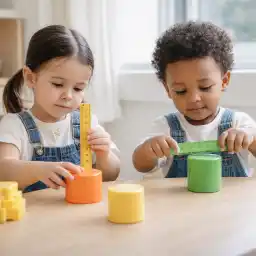
Why Do Children Get Different Measurements for the Same Object?
11/02/2026A table can be six blocks long and three books long at the same time—and that apparent contradiction is a rich math lesson. Explore why the unit changes the count, how to guide children through a fair comparison, and how Early Mathematics Through Play can help you build practical strategies fo... Why Do Children Get Different Measurements for the Same Object?
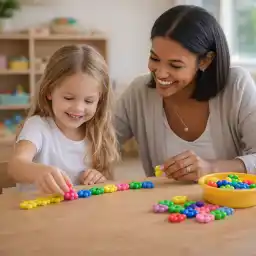
How Can Children Move from Copying a Pattern to Creating Their Own?
11/02/2026When a child can copy red-blue-red-blue, the next step is not simply a longer worksheet—it is helping them notice the rule and make choices of their own. Early Mathematics Through Play offers child care providers practical ways to connect patterns with reasoning, routines, and hands-on learnin... How Can Children Move from Copying a Pattern to Creating Their Own?
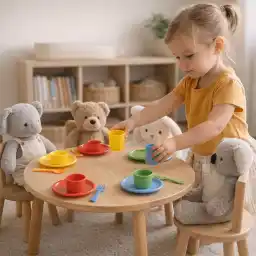
How Can Setting a Pretend Table Teach Children Whether There Is Enough for Everyone?
11/02/2026A pretend meal can turn a familiar dramatic-play moment into a meaningful investigation of quantity, fairness, and belonging. Explore Early Mathematics Through Play and Math Foundations in Early Childhood for practical strategies that help you notice and extend children’s mathematical thinking... How Can Setting a Pretend Table Teach Children Whether There Is Enough for Everyone?
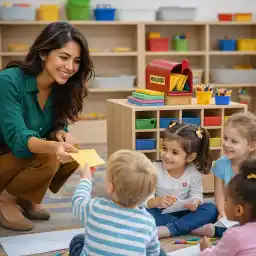
How Can a Classroom Mailbox Give Children a Meaningful Reason to Write?
11/02/2026A classroom mailbox can turn early writing from an adult-assigned task into a message children are eager to create, send, and receive. With simple routines and accessible materials, providers can nurture communication, print awareness, and peer connection through everyday play. For practical ways to... How Can a Classroom Mailbox Give Children a Meaningful Reason to Write?
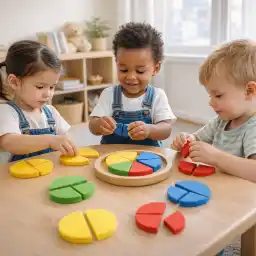
How Can Preschoolers Explore Parts and Wholes Before Learning Fraction Symbols?
11/02/2026Children do not need fraction symbols to begin thinking mathematically about parts and wholes: they need time to share, build, split, compare, and explain what they notice. The Early Mathematics Through Play course offers practical ways to strengthen classroom practice through hands-on exploration, ... How Can Preschoolers Explore Parts and Wholes Before Learning Fraction Symbols?

How Can a Pretend Shop Help Preschoolers Listen for Specific Information?
11/02/2026A pretend shop can turn a simple request into a lively listening challenge: children must notice exactly which item, quantity, or feature a customer names. For a practical foundation in supporting children’s communication, explore ChildCareEd’s Language Development in Early Childhood, wh... How Can a Pretend Shop Help Preschoolers Listen for Specific Information?
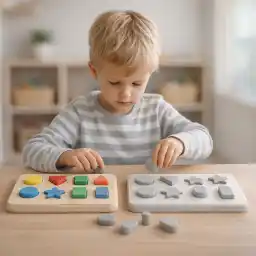
Can Children Recognize an Object When Its Color and Details Disappear?
11/02/2026A child may recognize a familiar toy at a glance—until it is shown in a different color, turned around, or reduced to a simple outline. Understanding how children identify objects when visual clues change can help you plan more supportive play and respond thoughtfully to what you observe. The ... Can Children Recognize an Object When Its Color and Details Disappear?
