The coronavirus pandemic accelerated the shift to distance education in the United States; successful early childhood professional learning now routinely includes asynchronous, self‑paced modules and instructor‑led online sessions. Explore our 45‑Hour Growth & Development (online)  Buy Now
 $399.00$275.00 and the CDA Bridge Bundle: Preschool Buy Now $300.00$249.00 to see how accredited training can fit your schedule and licensing pathway. These programs illustrate how #online, #asynchronous, and #hybrid learning models support workforce development in #CDA and #ECE contexts.
Sometimes referred to as teaching machines, online learning combines the use of computers, software, and educational theory to facilitate the delivery of learning material.
There are two aspects of online learning, which we can reference:
- Synchronous learning: This is the case where the educator and students both need to be available at the same time. Examples include learning in a classroom on Zoom, Google Meet, or similar video conferencing tools.
- Asynchronous learning: This is the case where the educator and students do not need to be available at the same time. Examples include self-paced online education - where the student completes the learning experience on their own.
The extent to which online education is replacing in-person in-class learning varies. For younger ages, we see a hybrid model, where students have the option to go to primary school, while their homework can be completed offline. In addition, some schools offer both synchronous online learning and in-class sessions in a hybrid form.
The facts at hand demonstrate that education has shifted faster towards the online learning model or hybrid model instead of pure in-class learning due to the pandemic. This requires teachers and educators to adapt to those technologies.
At ChildCareEd, we offer a variety of both online courses (asynchronous), and in-person synchronous online courses with an educator. Both deliver the two forms of education referenced earlier.
What online learning formats are used in early childhood education?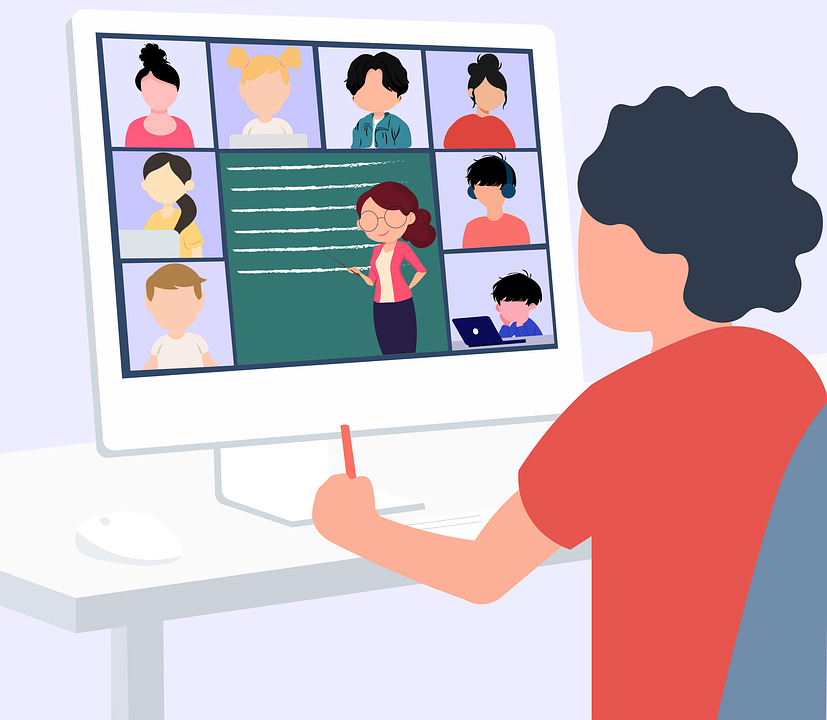
Early childhood professional learning typically appears in two formats: synchronous instructor‑led sessions (live workshops, Zoom/Google Meet seminars, cohort-based classes) and asynchronous self‑paced courses (pre‑recorded lectures, readings, quizzes, and portfolio work). Synchronous formats support real‑time interaction for observation reviews, coaching, and group reflection; asynchronous formats allow working practitioners to complete required hours on their own schedule and to revisit materials as needed. The balance between the two is often a program design choice: many high‑quality certificates blend both, providing recorded content plus scheduled live coaching.
Evidence shows online enrollment and course delivery have grown rapidly in higher education and professional training; designers choose formats that preserve interactivity and assessment while improving access. See an analysis of online growth in higher education for context: Online Learning in Higher Education (Tennessee Comptroller).
How can online courses meet licensing and credential requirements for child care professionals?
Licensing and credentialing require specific topic coverage, documented hours, and sometimes instructor verification or portfolio review. For example, many states accept a 45‑hour Growth & Development training and a corresponding curriculum course as part of staff certification; our 45‑Hour Growth & Development (online) Buy Now $399.00$275.00 and the Early Childhood Education Buy Now $99.00$84.00 course demonstrate how online modules are organized to map to state competencies and CEU systems. For professionals pursuing a CDA, bundles such as the CDA Bridge Bundle: Preschool Buy Now $300.00$249.00 explicitly meet the training portion of the credential and provide portfolio supports that align to Council expectations.
When evaluating whether an online offering satisfies a regulatory requirement, check three items: (1) training approval or state registry listing, (2) documented clock hours and CEU issuance, and (3) whether the program provides the portfolio or verification components required by the credentialing body. For program‑level guidance, see our evaluation of whether online early childhood courses are a good fit: Are online early childhood courses with ChildCareEd a good fit for my program?
How do I evaluate the quality of online early childhood programs?
Quality evaluation should focus on alignment to competencies, instructor qualifications, assessment strategy, evidence of transfer, and support for implementation. Look for:
- Clear learning outcomes tied to state or national ECE competencies (for example, topics in child growth, guidance, health & safety).
- Instructor or PD coach access (opportunities for questions, feedback on portfolios or practice).
- Assessment and demonstration of competence (quizzes plus applied tasks, observation checklists or portfolio review).
- Recognition by state registries or approvals (this affects whether training counts for licensing).
- Practical resources for classroom implementation (handouts, activity plans, family‑engagement tools).
For design and responsible technology use in early learning contexts, read: Can early childhood programs use technology responsibly to enhance learning? and for teaching digital citizenship to young children: How can early childhood educators effectively teach digital citizenship to young children?
Online programs that combine rigorous assessment (including portfolio review when required by the credentialing body) with supported implementation produce the best transfer to practice.
How can centers implement hybrid or online training for staff and families?
Centers that adopt hybrid professional learning should plan implementation across infrastructure, scheduling, pedagogy, and evaluation. A practical rollout includes the following steps:
- Assess needs and set goals (which competencies must staff complete this year?).
- Choose approved courses that map to those competencies and to state requirements.
- Provide necessary infrastructure: reliable internet, devices, and quiet spaces for staff to complete modules.
- Schedule coach‑led reflection sessions (synchronous) after key asynchronous modules to consolidate learning.
- Track completion and outcomes: collect certificates, review portfolios, and observe classroom practice.
For examples of how online training helps educators in particular states and settings, see our regional discussions: New York, Washington, and an international perspective on certificate availability: Canada course options.
What resources can I use next to act on this guidance?
Start by selecting one course that matches your immediate licensing need (for example, a 45‑hour growth & development or a CDA bundle). For practical benefits of online learning—flexibility, reviewability, and career advancement—see a summary of benefits: Top 8 Benefits of Online Learning. If you want help deciding which pathway fits your program, read our checklist article Early Years Teaching Assistant Courses: What to Know and our piece on career rewards in the field: The Top Rewards of Working in Early Childhood Education.
What should I take away about online learning for early childhood educators?
Online and hybrid learning are now standard options for professional development in early childhood education. High‑quality online offerings align to state competencies, provide evidence of learning through portfolios or assessments, and include instructor touchpoints to ensure transfer to practice. Use the checklist above to evaluate programs and pick a course that satisfies both your licensing needs and your learning style. If you want to proceed, our site offers targeted options—45‑hour trainings, CDA bundles, and full 120‑hour CDA credentials—to meet regulatory and career goals.
- 45 Hour Child Growth and Development
- 45 Hour Preschool Methods and Materials
- Birth to Five CDA Credential with Portfolio Review
- Pediatric RSV First Aid & CPR/AED
- 45 Hour School Age Methods and Materials
- CDA Bridge Bundle: Family Child Care without Portfolio Review
- CDA Bridge Bundle: Infant/Toddler without Portfolio Review
- CDA Bridge Bundle: Preschool without Portfolio Review
- Creating Environments that Nurture Growth and Community
- Every Moment Matters: Schedules and Transitions
- From Challenges to Triumphs: Strategies for Childcare Educators in New York
- Studying ECD online: Why ChildCareEd Should be Your Top Choice
- Is an Online ECE Certification Right for You? A Self-Assessment Guide
- How Can Florida VPK Providers Stand Out Under the New 2026 Accountability System?
- Can Washington early childhood educators grow with ChildCareEd’s self-paced courses?
- Start Online Early Childcare Courses with ChildCareEd
- Capacitación CDA gratuita en Illinois
- How can continuous professional growth help childcare teams and the children they serve?
- How can ECE professional development help educators and children?
- How can professional development help early childhood educators and centers?
- How can we build strong professional development for early educators?
- How can I make childcare professional development real and useful?
- How can Washington providers use state training dollars to build a stronger early learning team?
- Classroom Management Technology: Tools and Best Practices
- Learn at Your Own Pace with Online Child Care Courses
- From Training to Career Growth: Exploring Online Early Childhood Education
- Online Early Childhood Education Courses: Learn, Grow, and Advance Your Career
- What Is the Difference Between DCDEE WORKS and DCDEE Moodle?
- How Do ChildCareEd Coursebooks Make Online Training Easier to Navigate?
- How Can Technology Improve New Teacher Onboarding in Child Care?
