What are Nevada's initial training requirements for Building and Physical Premises Safety?
Nevada providers, complete your initial training requirement for Building and Physical Premises Safety. All childcare providers are required to complete 2 hours of training in Building and Physical Premises Safety  Buy Now $7.00 or the broader Basic Health & Safety and Breastfeeding Awareness Buy Now $35.00 course. This brief guide explains who must take the orientation, what the training covers, where the requirement is documented in Nevada licensing rules, and practical next steps for documenting completed hours.
The focused two-hour Building and Physical Premises Safety course emphasizes actionable prevention strategies — routine inspection checklists, safe storage and handling of hazardous materials, and supervision practices tailored to infants and toddlers. The course materials are designed to be directly portable to on-site safety routines and to support inspection readiness.
Who offers Nevada-approved courses and are they free?
H&H Child Care Training Center provides Building and Physical Premises Safety Including the Storage and Handling of Bio-Contaminants and Hazardous Materials Buy Now $7.00, a 2-hour training course specific to Nevada providers. This course is being offered to Nevada providers free of charge. Confirm availability and any cost changes on the course page before registering.
If you need other Nevada-focused options or free/low-cost certificates, see our resource page for Nevada providers: Where Can Nevada Child Care Providers Find Free or Low-Cost Training With Certificates?. Also use the Nevada Registry to record completed training; instructions are available at How do I use the Nevada Registry for child care training?.
Which Nevada regulations require and describe this training?
Nevada licensing standards set program, building and premises expectations and specify required staff orientation and training. Relevant licensing rules are in the Nevada Administrative Code; see NAC Chapter 432A for sections that describe required orientation and specified courses for staff (for example, orientation and required courses of training). Providers should consult NAC 432A directly for the authoritative regulatory text.
Caregivers must understand how to maintain a safe environment for children both indoors and out. Preventing injury is a top priority and it requires an understanding of hazards and strategies to mitigate them. This course identifies common indoor and outdoor safety hazards and provides strategies to minimize their impact. In addition, participants will review important Nevada regulations regarding building and physical premises safety.
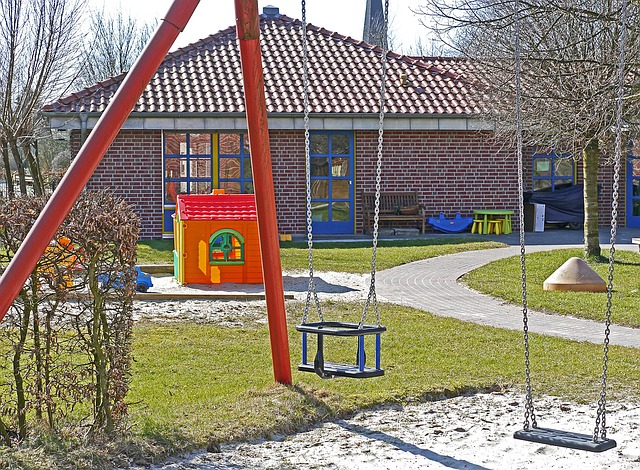
The image above is a visual prompt for common indoor/outdoor layout checks (for example: exit routes clear, play-area surfacing, secured chemical storage). Use the inspection items discussed in the course to create a simple, documented checklist for your program—inspect, correct, and record the correction.
What will you learn in this training?
By the end of this training, the learner will be able to apply practical procedures and document compliance. The measurable learning outcomes below are written so you can map them to staff files and inspection records.
- Identify infant and toddler materials and equipment — including safe sleep surfaces, age-appropriate toys, cribs and high chairs — so you can confirm items meet manufacturer and licensing guidance during inventory and inspections.
- Demonstrate an understanding of appropriate supervision for all children’s activities — recognize high-risk moments (diapering, transitions, playground use) and apply staffing/positioning strategies that reduce injury risk.
- Distinguish appropriate indoor safety concerns — identify trip and fall hazards, choking risks, safe storage of cleaning supplies, and required maintenance for fixtures and exits.
- Distinguish appropriate outdoor safety concerns — evaluate surfacing, fencing, play equipment anchor points, and shade/sun protection measures appropriate to the ages you serve.
- Define Building and Physical Premises Safety — understand the program-level policies and routine practices that together create a safe facility, and learn how to record corrective actions so they are visible at inspection.
Where can Nevada providers find additional courses and resources?
Beyond the Building and Physical Premises Safety course, Nevada providers can consult these state-focused ChildCareEd resources to meet other training or licensing needs:
- Nevada Child Care Regulations: A Guide for Child Care Facilities and Family-Based Providers
- What Are Nevada's Child Care Training Rules: 24 Hours, Wellness, and the Registry?
- How to Work in Childcare in Nevada: Requirements and Steps
- Online Early Childcare Courses in Nevada: Training Made Simple
- Where Can Nevada Child Care Providers Find Free or Low-Cost Training With Certificates?
- Child Development Classes in Nevada for Child Care Providers
Action steps: How to prepare for inspection and record compliance?
1. Complete the required two-hour Building and Physical Premises Safety course and retain the certificate in the staff file. 2. Enter the training into the Nevada Registry (where required) and note the approval code on the staff record. 3. Create a one-page facility inspection checklist from the course materials and use it monthly, documenting corrections. 4. When an inspector visits, present staff files with certificates and the recent inspection log.
How long should I retain training records and what should be on a facility inspection checklist?
Keep verifiable evidence of completed training in each staff member's personnel file as required by Nevada licensing. NAC 432A.323 specifically requires maintenance of evidence of compliance in personnel files; keep either the original certificate or a legible copy plus a secure digital backup so files are recoverable for inspections or audits. Programs commonly adopt a retention policy that keeps records for the length of employment plus an additional period (for example, 3 years) but verify your program policy and confirm with your licensing specialist.
A concise, dated, and signed facility inspection checklist demonstrates both hazard recognition and corrective action. Include the following items and record corrective actions with dates and initials:
- Exit routes, emergency lighting, and doors are unobstructed and operable.
- Playground surfacing, equipment anchors, and perimeter fencing are intact and age-appropriate.
- Cleaning supplies, chemicals, and bio-contaminants are stored, labeled, and secured away from children.
- Sleeping areas meet safe-sleep guidance and equipment (cribs, mattresses) is assembled and maintained per manufacturer instructions.
- Handwashing stations and sanitation supplies are stocked and accessible; diapering areas are clean and maintained.
- Maintenance issues (loose railings, exposed wiring, broken fixtures) are logged with corrective actions and completion dates.
Assign responsibility for completing the checklist (monthly is common), file completed checklists with the staff training records so an inspector can see both the training certificate and its practical application, and maintain copies in a program-level file for continuity. For an expanded preparedness focus, consider the Nevada-specific Emergency Preparedness and Response Planning Buy Now $25.00 course to document drills, evacuation procedures, and continuity planning.
How do I document this training and record hours in Nevada?
Document completion by keeping the course certificate in the staff file and entering the training into the Nevada Registry when required. See How do I use the Nevada Registry for child care training? for step-by-step instructions on uploading certificates and maintaining evidence of compliance for licensing reviews.
If your program receives CCDF/child-care subsidy funds, remember that federal guidance requires lead agencies to set health and safety expectations for providers receiving those funds; confirm whether additional documentation or course formats are required by your local administering agency. See federal program guidance: CCDF/CCDBG guidance on health and safety.
Summary: What Nevada providers should do next
Complete the 2-hour Building & Physical Premises Safety course, retain the certificate in each staff file, enter the training in the Nevada Registry when required, and use a dated monthly checklist to record identified hazards and corrective actions. When an inspector visits, present staff files and the most recent inspection log to demonstrate both training and applied safety practices.
Begin with the Building and Physical Premises Safety course and consider adding Basic Health & Safety and Emergency Preparedness courses to strengthen documentation and readiness. Keep your personnel files organized and back up certificates digitally to reduce risk of lost records.
- CDA Preschool Credential
- CDA Home Visitor Subject Area 2 Part 3 Birth to 5
- Building and Physical Premises Safety Including the Storage and Handling of Bio-Contaminants and Hazardous Materials
- Health and Nutrition
- 24 Hour Texas Pre-Service
- 45-Hour Infant and Toddler Curriculum
- Texas Director Credential
- A Closer Look into Developmental Theories
- Technology as a Classroom Tool
- UNITED STATES OF AMERICA - Wyoming
- Daycare Training 101: Building a Safe, Fun, and Educational Environment
- Nevada Child Care Regulations: A Guide for Child Care Facilities and Family-Based Providers
- How to Work in Childcare in Nevada: Requirements and Steps
- Capacitación Previa al Servicio para Proveedores de Cuidado Infantil en Nevada
- How do I use the Nevada Registry for child care training?
- What Are Nevada's Child Care Training Rules: 24 Hours, Wellness, and the Registry?
- What Are Nevada Wellness Training Requirements for Child Care Providers?
- What are Nevada's Wellness Training Requirements for Child Care Providers?
- Daycare Center Requirements in Nevada
- Online Child Care Courses in Nevada: Training Made Simple
- Nevada Child Care Center Director: Requirements and Training
- New Child Care Regulations in Nevada for 2026
- Child Development Classes in Nevada for Child Care Providers
- Online Early Childcare Courses in Nevada
- Nevada Home Daycare Licensing Standards
- Who Needs Child Abuse and Neglect Training—and How Often Do You Have to Take It?
- Can Your Home Become a Daycare? What to Check Before You Apply for a License
- What Should Child Care Staff Check Before Outdoor Play?
- What Are the Most Common Daycare Licensing Violations?
