Every provider in Florida wants kids to be safe during rides. Keep an empty-seat check to protect #safety of children during #transportation and strengthen #supervision with clear #policies and regular #training. This article explains simple steps, records to keep, and what to do in an emergency. We use real Florida cases and national advice so you can update your program today.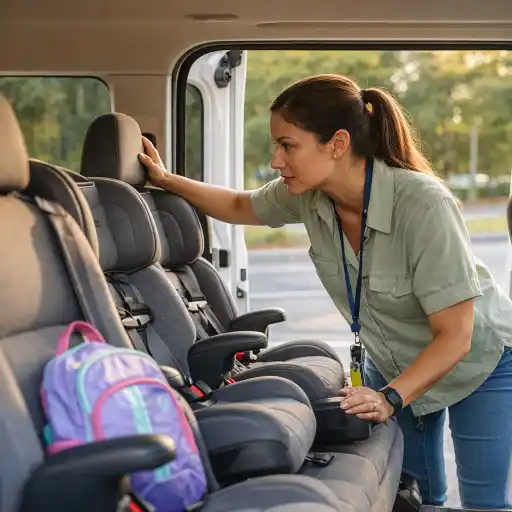
Why it matters: heat can kill fast. The CDC explains that cars heat up quickly and babies get too hot faster than adults; never leave children alone in a parked car CDC: Infants and Children and Heat. Florida news shows these tragedies still happen, like a child left in a vehicle in Miami Gardens Miami Herald and other Florida van deaths Daily Mail. State requirements vary - check your state licensing agency.
What is an "empty-seat check" and why does it save lives?
- What it is: a quick, consistent step that a driver and staff do after every trip.
- Who does it: driver plus a second staff person or the lead at drop-off.
- When: every arrival, after parking, and before leaving the vehicle area.
Why it works: small checks become habits. The Ad Council and NHTSA remind caregivers to "Stop. Look. Lock." because simple steps prevent tragedy Ad Council/NHTSA. Technology can help too: child-presence detectors are being used around the world to alert drivers if a child remains Aisin CPD and some countries require devices on buses Japan mandate.
What policies and records should Florida providers require?
Make or update these documents now:
- Transportation log: list who rode, pick-up and drop-off times, driver name, vehicle ID.
- Empty-seat checklist: signed by driver after each run.
- Daily attendance record: cross-check with classroom sign-in sheets.
- Incident report form: quick notes if anything is missing or late.
- Staff training file: proof that drivers and staff know the routine and first aid.
Tips for records:
- 📝 Keep one folder per vehicle and one digital backup.
- 📅 Use time-stamped forms. If a parent says a child didn’t arrive, you can show the log.
- 🔁 Do a weekly audit of transport logs and missing-drop follow-ups.
State rules differ - check your licensing agency for specific forms and storage rules.
How can staff prevent forgetting children in vans?
- Before you start the route:
- 🔢 Count children as they board and write the number on the transport log.
- 🎒 Place a visible reminder in the back seat (purse, shoe, stuffed toy).
- At each stop:
- ✅ Do a head count when children exit the van.
- 👀 Assign a staff “sweep” to open the rear door and check seats every time.
- After the run:
- 🔁 Driver signs the empty-seat checklist confirming the vehicle is clear.
- 📱 If a child is missing, call the family right away and follow your missing-child steps.
Train and practice these steps with role play. Technology can add protection: look into vehicle-child detection systems and backseat reminders that some carmakers and equipment makers offer. Aisin CPD tech. The Ad Council and NHTSA campaign also gives easy messages to share with families and staff Ad Council/NHTSA.
What should we do if a child is missing or found in a vehicle?
Have a clear emergency plan. Practice it so everyone knows the steps. Good actions save lives.
- If a child is missing after drop-off:
- 📞 Call the child’s family immediately and verify last known drop-off.
- 🔍 Check the vehicle and route logs and do a quick re-check of the facility and parking lot.
- 🚨 If you suspect the child is in a vehicle, call 911 right away.
- If a child is found alone in a hot car:
- 👩⚕️ If the child is unresponsive or in distress, remove them carefully to shade and call 911.
- 💧 Begin cooling (cool compresses, remove excess clothing) while you wait for help.
- 🔨 If the car is locked and the child is life-threatened, many states protect Good Samaritans who break a window to save a child; check local rules and call 911 first KidsHealth.
- Document everything:
- 🧾 Fill out incident and transportation reports right away and save logs as evidence.
- 📂 Contact your licensing agency and follow reporting rules. ChildCareEd explains what records to keep for safety and defense: ChildCareEd: Recordkeeping.
- Legal and licensing follow-up:
- ⚖️ Authorities may investigate. Legal consequences vary by case and state; review guidance on laws about leaving children in vehicles LegalMatch.
- 🏛️ The Florida Department of Children and Families or local licensing may take action; safe records help show you followed policy.
Common mistakes and how to avoid them:
- 🔸 Mistake: No second check at drop-off. Fix: Always have two people confirm the vehicle is clear.
- 🔸 Mistake: Incomplete logs. Fix: Use time stamps and require driver signatures.
- 🔸 Mistake: No training for substitutes. Fix: Include transport checks in orientation and put a checklist on the visor.
Quick FAQ
- Q: Who must do the empty-seat check? A: The driver and a second staff member or lead at the center.
- Q: How often should we train? A: At hire, quarterly, and after any incident.
- Q: Are new car sensors required? A: Not yet universally; they help but don’t replace checks. See technology ideas Aisin.
- Q: Who do we call first if a child is missing? A: Family and then 911 if you cannot find the child quickly.
Conclusion
Florida providers can prevent hot-van tragedies with simple routines: an empty-seat check, clear transport policies, written logs, and practice. Do small things every day — count kids, sign a checklist, and train staff often. Use technology where it helps, but never skip the basic human checks. Keep good records and report promptly. State requirements vary - check your state licensing agency. You are the child’s safest champion. Update your transport policy this week, run a drill, and talk with families about the steps you take to protect their children. Together we can stop these preventable losses.
Prevention is about simple steps you do the same way every day. Use checklists, headcounts, and small reminders. KidsHealth and the CDC give practical reminders like placing an item in the back seat as a cue. Nemours KidsHealth and CDC. Good policies make checks reliable and protect your program. Use clear written rules that every staff member, substitute, and driver follows. Keep neat records so you can show you followed your steps if anything goes wrong. ChildCareEd offers practical tips on recordkeeping for providers: ChildCareEd: Recordkeeping. An empty-seat check is a short routine to confirm every child who rode in your vehicle is dropped off and accounted for. It matters because heatstroke deaths can happen in minutes and many are from a child being forgotten in a vehicle. National reports show dozens of children die each year from vehicular heatstroke NSC/KXLY summary.
- Stay Alert! Steps for Emergency Prep
- 45 Hour Child Growth and Development
- Appropriate Precautions in Transportation of Children
- CDA Home Visitor Subject Area 3 Part 3 Birth to 5
- Mastering Supervision: Keeping Children Safe in All Settings
- Emergency and Disaster Preparedness
- Basic Life Support (BLS) Blended Healthcare Providers
- Texas Director Credential
- Family Child Care: Building, Premises, and Outdoor Safety
- Cómo Abrir Una Quardería En Casa Sin Dinero?
- ¿Cuáles son los pasos, los requisitos y las opciones en línea para la certificación de 90 horas para cuidado escolar en Maryland?
- ¿Cómo pueden los equipos de cuidado infantil practicar habilidades rápidas de primeros auxilios en situaciones reales?
- ¿Cómo empiezo mi certificación CDA en Florida en línea?
- Capacitación en Salud y Seguridad Preventiva en Línea para Proveedores de Cuidado Infantil
- Regulaciones de Licenciamiento de Cuidado Infantil en California para Centros y Hogares de Cuidado Infantil Familiar
- Proporciones de Cuidado Infantil y Tamaños de Grupo por Edad en Maryland (Guía Rápida para Centros y Hogares)
- Proporciones de Cuidado Infantil y Tamaños de Grupo por Edad en Wisconsin (Guía Rápida para Centros y Hogares)
- Proporciones de Cuidado Infantil y Tamaños de Grupo por Edad en Nueva Jersey (Guía Rápida para Centros y Hogares)
- Proporciones de Cuidado Infantil y Tamaños de Grupo por Edad en Virginia (Guía Rápida para Centros y Hogares)
- Horas de Capacitación Anual para Proveedores de Cuidado Infantil en Maryland
- Lista para Abrir una Guardería en Casa en Dakota del Norte: Cómo Empezar
- Lista para Abrir una Guardería en Casa en Georgia: Cómo Empezar
- Lista para Guardería en Casa en California: Cómo Iniciar una Guardería en el Hogar
- Lista para Guardería en Casa en Texas: Cómo Iniciar una Guardería en el Hogar
- Retraso del Habla en la Guardería: Cómo Pueden Ayudar los Proveedores
- Capacitación Previa al Servicio para Proveedores de Cuidado Infantil en Georgia
- Capacitación Previa al Servicio para Proveedores de Cuidado Infantil en Nevada
- Capacitación Previa al Servicio para Proveedores de Cuidado Infantil en Virginia
- How should Florida child care providers use the Empty Seat Check after hot-van deaths?
