A mistake can feel enormous to a young child—even when adults see it as a small part of learning. With calm coaching, reflective questions, and repeated opportunities to try again, providers can help children transform disappointment into confidence and competence. For a deeper professional learning experience, explore Children's Keepers: Building Childhood Resilience  Buy Now $24.00, which helps educators understand stressors and strengthen classroom practices that support resilience.
Why does recovery after a mistake matter?
Children are not born knowing how to interpret errors. A toppled tower, an incorrect puzzle piece, or an accidental hurt can quickly become “I can’t,” “I’m bad,” or “I’m never trying again.” The adult response helps determine whether the child experiences the moment as shame and rejection or as information that can guide the next attempt.
Recovery is more than encouraging persistence. It includes emotional regulation, accurate self-understanding, problem-solving, and, when another person is affected, relationship repair. NAEYC’s guidance on replacing punishment with guidance emphasizes that young children need adults to teach the “better” behavior rather than hold mistakes against them. Similarly, research-informed early learning resources describe persistence as a developmental skill that grows through appropriately challenging experiences and supportive feedback.
When providers respond with warmth and structure, children learn that competence is built through practice. This creates a #classroom culture in which children can take safe risks, ask for help, and remain engaged in learning.
What should adults do immediately after a child makes a mistake?
Use a brief routine that protects connection while moving the child toward action: Connect, Calm, Coach, and Continue. The sequence should be practiced during neutral moments so it is familiar when emotions rise.
- Connect: Move near, lower yourself to the child’s level, and acknowledge what happened. “You worked hard on that tower, and it fell.”
- Calm: Name the emotion without exaggerating it. “You look disappointed.” Offer one manageable regulation strategy, such as breathing, squeezing a soft object, or sitting nearby.
- Coach: Ask one problem-solving question: “What could we try differently?” Avoid turning the moment into a lecture.
- Continue: Invite a small retry. “Would you like to rebuild the bottom together or choose different blocks?”
Developmentally appropriate language is short, concrete, and respectful. Toddlers may need cues such as “Breathe,” “Try again,” or “Help?” Preschoolers can use longer sentences: “I feel frustrated because it broke. I can try another way.” A calm adult presence is itself a form of co-regulation; children often borrow the provider’s steadiness before they can create their own.
How can reflection cards make mistake recovery concrete?
The Mistakes Help Me Learn Reflection Cards resource can turn an abstract idea into a predictable, child-friendly conversation. Use one card after a child is calm, during small-group instruction, or as part of a “try again” center. The goal is not to interrogate children or require polished answers. It is to give them visual and verbal supports for noticing, thinking, and choosing a next step.
Cards can invite children to consider:
- What happened?
- How did your body or feelings respond?
- What did you learn?
- What could you try next?
- Who might need help or repair?
Adapt the questions to developmental level. An infant or young toddler may simply point to a picture of “sad,” “help,” or “try.” A preschooler may dictate an answer, draw a plan, or act it out with a puppet. For children learning more than one language, include home-language vocabulary and culturally familiar images whenever possible.
Use the cards alongside—not instead of—responsive interaction. A child who is still crying may need presence and comfort before reflection. Once calm, the card provides a gentle bridge from emotion to #problem-solving. Keep the conversation brief and end with an achievable action so reflection leads to agency rather than rumination.
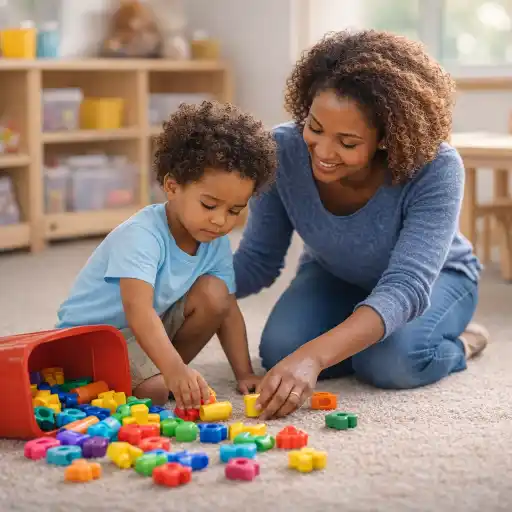
Which words help children develop a growth-oriented view of mistakes?
Language shapes how children explain success and difficulty to themselves. Focus on effort, strategy, and progress rather than fixed traits. “You are so smart” may sound positive, but it can imply that ability is a permanent quality. More useful feedback identifies what the child did: “You tried two ways to fit that piece,” or “You noticed the paint spilled and found a cloth.”
Helpful phrases include:
- “Not yet does not mean never.”
- “That way did not work. What else could we test?”
- “You kept going even when it felt hard.”
- “Mistakes give us information.”
- “Let’s change one part and try again.”
- 🙂 “Your plan changed, and you stayed with the problem.”
Providers should model the language authentically. “I made a mistake in the schedule. I’m going to check the picture cards and fix it” demonstrates accountability without shame. Reflection should also include realistic limits: not every outcome can be repaired exactly, and some mistakes require prevention or adult intervention for safety. Growth-oriented guidance is not permissive; it combines empathy, responsibility, and a clear plan.
NAEYC’s discussion of mastery motivation cautions adults not to solve every problem too quickly. Offer scaffolding—holding a board steady, suggesting a possibility, or naming a strategy—while preserving the child’s opportunity to experience competence. That balance strengthens #confidence.
How can programs build daily opportunities to practice recovery?
Children need repeated, low-stakes practice before they can recover independently during a difficult moment. Directors can support consistency by embedding recovery into routines, materials, and staff communication rather than treating it as an occasional intervention.
- Plan productive challenges: Offer puzzles, loose parts, ramps, art materials, and building tasks with more than one possible solution.
- Create a try-again space: Stock it with reflection cards, visual emotion supports, paper, blocks, and simple calming tools. Teach that the space is a resource, never a punishment.
- Use visual prompts: Post “Stop—Breathe—Think—Try” near blocks, art, dramatic play, and other areas where frustration commonly appears.
- Celebrate learning stories: Invite children to share an “oops” and what changed afterward, while protecting privacy and avoiding public embarrassment.
- Align staff language: Select two or three phrases for all adults to use so children receive predictable messages.
Observe patterns rather than labeling children. A brief record can note the activity, trigger, adult response, and whether the child returned to play. This helps teams distinguish a skill gap from an environmental problem, such as insufficient materials, long waits, or unclear expectations. State requirements vary - check your state licensing agency before changing procedures involving behavior support, documentation, or quiet areas.
Family partnership extends the learning. Share a simple prompt such as, “What happened, what did you learn, and what can we try next?” Ask families which calming words, gestures, or cultural practices are familiar at home. Consistency across settings can make recovery feel safer and more attainable.
How can providers avoid common mistakes when teaching children about mistakes?
Even well-intentioned adults can accidentally increase shame or dependence. The first pitfall is talking too much while a child is dysregulated. During intense emotion, use one acknowledgment, one limit if needed, and one calming choice. Save reflection for later.
A second pitfall is praising only the outcome. If adults celebrate a perfect tower but overlook thoughtful attempts, children may avoid challenging work. Describe process and strategy instead. A third is taking over too quickly. Assistance should be calibrated: enough to prevent discouragement, but not so much that the child concludes the adult is the real problem solver.
Other pitfalls include:
- Using reflection as punishment: A card should invite thinking, not force a child to confess or apologize publicly.
- Minimizing feelings: “It’s no big deal” can communicate that the child’s experience is unimportant. Try, “It felt like a big disappointment.”
- Demanding apologies without repair: Help children identify what would make the situation safer or kinder, then support an authentic apology, replacement, or helpful action.
- Expecting immediate independence: Recovery develops over time through co-regulation, modeling, and practice.
Seek additional support when mistakes are accompanied by persistent distress, frequent aggression, self-injury, unusually intense reactions, or a lack of progress despite consistent teaching. Document observations and consult your director, mental health consultant, early intervention provider, or other qualified professional according to program procedures. Resilience support should be trauma-sensitive and never require children to disclose experiences beyond their role or comfort.
Conclusion: How can children learn to recover after mistakes?
Children recover when adults make mistakes safe enough to examine and structured enough to learn from. The essential approach is to connect before correcting, help children calm their bodies, use concise reflection, and invite a manageable retry. Reflection cards such as Mistakes Help Me Learn give providers a practical tool for turning those steps into a repeatable classroom routine.
Remember the central takeaways:
- Normalize mistakes without ignoring responsibility.
- Use short, developmentally appropriate scripts.
- Emphasize effort, strategy, progress, and repair.
- Provide challenges and wait long enough for children to attempt solutions.
- Align staff and family language for consistency.
- Track patterns and seek help when safety or development warrants it.
With patient repetition, children begin to see an error not as a verdict about who they are, but as a moment that offers information, choice, and another opportunity to learn.
Related ChildCareEd courses:
- Children's Keepers: Building Childhood Resilience Buy Now $24.00
- ACEs and Resilience in Child Care Buy Now $24.00
- From Tantrums to Triumphs: Equipping Preschoolers with Self-Regulation Skills Buy Now $25.00
- Opportunity for Growth: Emotional Development Buy Now $16.00
- Staying Positive: Guidance for Preschoolers Buy Now $24.00
- CDA Preschool Credential with Portfolio Review
- CDA Family Child Care Credential with Portfolio Review
- CDA Bridge Bundle: Preschool
- CDA Infant/Toddler Credential with Portfolio Review
- CDA Bridge Bundle: Family Child Care
- CDA Bridge Bundle: Family Child Care without Portfolio Review
- CDA Bridge Bundle: Infant/Toddler without Portfolio Review
- CDA Bridge Bundle: Preschool without Portfolio Review
- CDA Bridge Bundle: Infant/Toddler
- Texas Director Credential
- CDA Certification en Español: Recursos y Consejos para Educadores Bilingües
- 💛🧩 ¿Cómo puedo hacer que mi enseñanza sea inclusiva para los niños con autismo?
- Regulaciones de Licenciamiento de Cuidado Infantil en California para Centros y Hogares de Cuidado Infantil Familiar
- Proporciones de Cuidado Infantil y Tamaños de Grupo por Edad en Maryland (Guía Rápida para Centros y Hogares)
- Proporciones de Cuidado Infantil y Tamaños de Grupo por Edad en Nueva Jersey (Guía Rápida para Centros y Hogares)
- Proporciones de Cuidado Infantil y Tamaños de Grupo por Edad en Virginia (Guía Rápida para Centros y Hogares)
- Consejos de Supervisión Activa para Salones de Preescolar y el Juego al Aire Libre
- Cómo Trabajar en el Cuidado Infantil en Carolina del Norte: Requisitos y Pasos
- Celebrando la amistad en el cuidado infantil durante el Día de los Mejores Amigos
- Canciones, juegos y preguntas de círculo para niños
- Cómo simplificar la capacitación para sus empleados de daycare
- After School Activities for Elementary Kids Who Finish Homework Early
- Why Are Coping Skills Important for Preschoolers?
- How Can Child Care Providers Help Children with Attention and Impulse-Control Challenges?
- How Can One Classroom Support Both Movers and Watchers?
- What Is Co-Regulation and Why Does It Matter in Early Childhood?
- How Can Teachers Support Children With Big Emotions?
- How Can Child Care Providers Help Children Recover After They Make a Mistake?
- How Can Child Care Providers Support Kindergarten Emotions on the First Day of School?
- How Can You Help a Preschooler Recover After a Difficult Drop-Off?
