$1.75 One-time license · lifetime download access
Buy Now charges your payment method right away — the resource appears under My Resources. Or add it to your cart and check out together with trainings.
Description
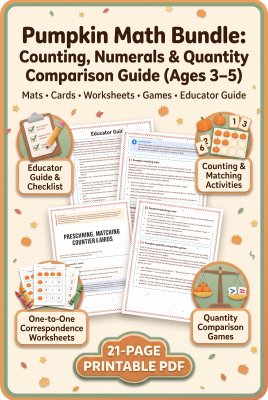
Help children explore big, small, bigger, smaller, long, short, biggest, and smallest with this practical teacher’s guide for ages 3–5. It outlines hands-on comparisons using familiar objects, picture cards, sorting trays, and simple worksheets, with learning goals that progress from comparing two objects to ordering three by size. Use it during everyday classroom play and routines to build observation, visual discrimination, comparison, and early mathematical reasoning while welcoming spoken, gestured, pointed, matched, or alternative-communication responses.
Other items you may like