$2.49 One-time license · lifetime download access
Buy Now charges your payment method right away — the resource appears under My Resources. Or add it to your cart and check out together with trainings.
Description
Communication Styles Toolkit: Checklist, Activities & Prompt Cards
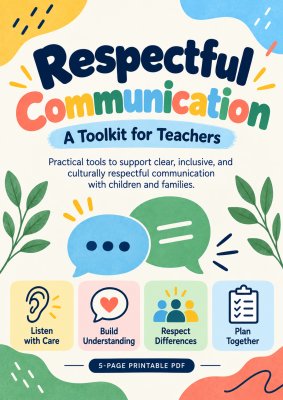
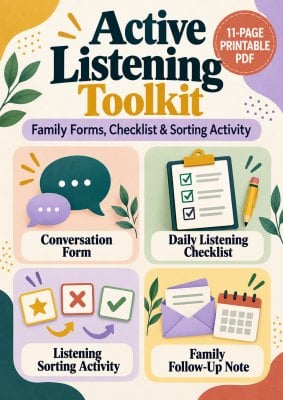
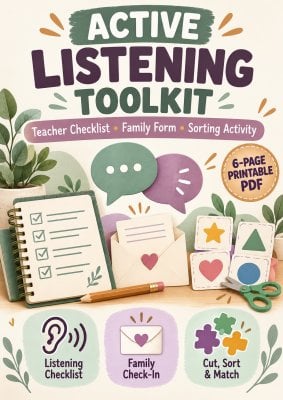
Encourage respectful communication, strengthen listening skills, and help children understand that everyone communicates differently!
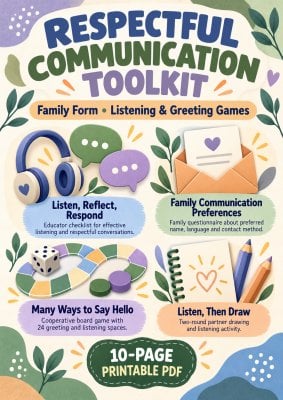
This practical 10-page Communication Styles Toolkit combines professional teaching tools with child-friendly matching and sorting activities to support responsive communication in early childhood settings.
Designed for educators and young learners, this resource encourages patience, active listening, understanding individual communication preferences, and choosing thoughtful responses during everyday interactions.
What's Included?
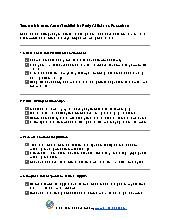
1. Pause, Listen, Clarify Checklist (2 Pages)
A reusable educator checklist featuring nine communication practices to use before, during, and after conversations. Covers attentive listening, respectful language, clarifying questions, appropriate response time, and reflection on communication strategies.
2. Match the Helpful Response (2 Pages)
A child-friendly matching activity featuring three everyday communication situations and helpful responses. Encourages children to practice patience, recognize communication cues, and discuss appropriate ways to support others.
3. Many Ways to Say It (3 Pages)
An illustrated cut-and-sort activity featuring eight picture cards and a sorting mat. Introduces different ways people communicate, including speaking, pointing, gestures, facial expressions, drawing, and communication devices. Children explore ways to share messages and understand others.
4. Listen, Check, Follow Up Prompt Cards (3 Pages)
A collection of six printable conversation prompt labels, including four ready-to-use prompts and two blank customizable labels. Supports educators in encouraging communication, checking understanding, and responding to children's individual communication preferences.
Perfect For
- Preschool and kindergarten classrooms.
- Active listening and communication lessons.
- Social-emotional learning activities.
- Inclusive classroom communication.
- Small-group matching and sorting activities.
- Teacher professional development.
- Supporting different communication styles.
- Building respectful classroom relationships.
Other items you may like