
Sign in to download Create a free account
This resource is free. Sign in and you'll come straight back here to download it.
Description
Family Partnership Kit: Teacher Forms, Coloring & Matching
Build stronger connections between families, caregivers, and early childhood educators with this practical 7-page Family Partnership Kit!
Designed for childcare providers, preschool teachers, and early childhood professionals, this resource combines ready-to-use family communication forms with child-friendly activities that celebrate caring relationships and help children recognize the many people who support them.
With a Family Conversation Notes Form, Daily Family Partnership Checklist, coloring activity, and picture-matching worksheet, educators can strengthen everyday family communication while creating opportunities for children to explore the importance of trusted caregivers.
What's Included?
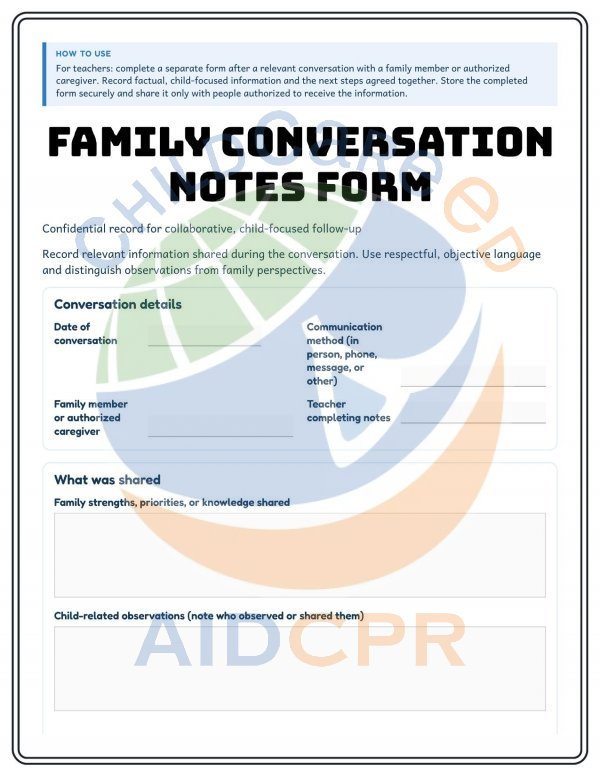
1. Family Conversation Notes Form — 2 Pages (Pages 1–2)
A structured, digitally fillable form for documenting important conversations with parents, family members, and authorized caregivers.
Includes:
Conversation date and communication method.
Family member or authorized caregiver identification.
Teacher completing the record.
Space to document family strengths, priorities, and shared knowledge.
Child-related observations and their sources.
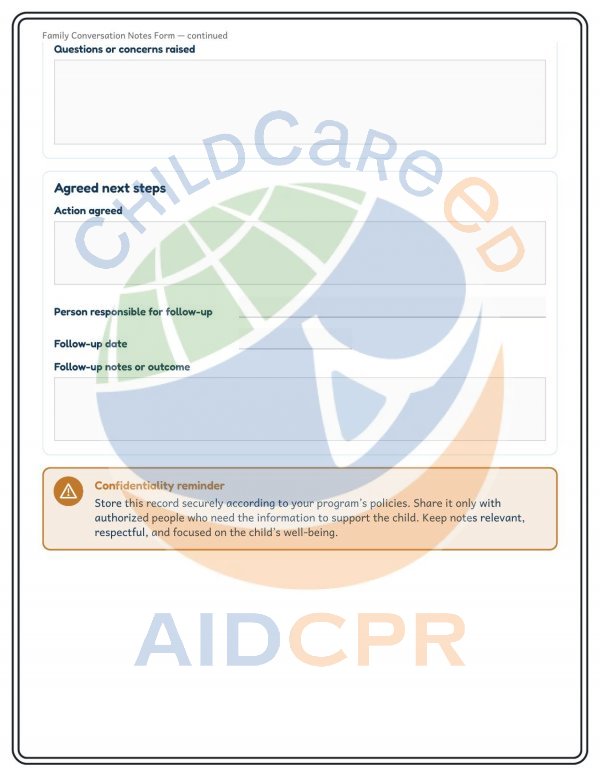
Questions or concerns raised during the conversation.
Agreed next steps and follow-up responsibilities.
Follow-up dates, notes, and outcomes.
Confidentiality reminders for responsible recordkeeping.
Practical purpose: Helps educators document meaningful family conversations, recognize family perspectives, and organize collaborative follow-up actions.
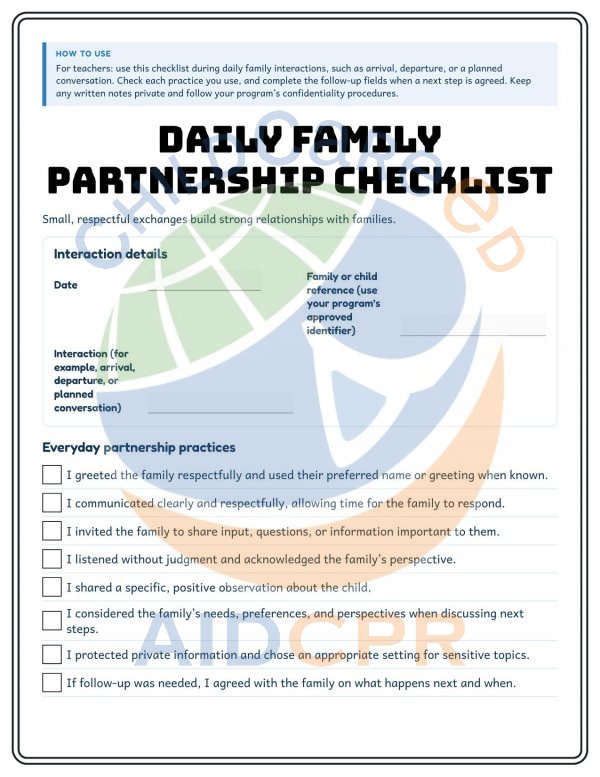
2. Daily Family Partnership Checklist — 2 Pages (Pages 3–4)
A practical reflection and communication checklist designed to help teachers build respectful relationships through everyday interactions.
Includes:
Date, family or child reference, and interaction details.
Eight professional communication practices covering:
Respectful greetings.
Clear and supportive communication.
Inviting family input.
Active, nonjudgmental listening.
Sharing positive observations.
Respecting family needs and preferences.
Protecting confidential information.
Planning appropriate follow-up.
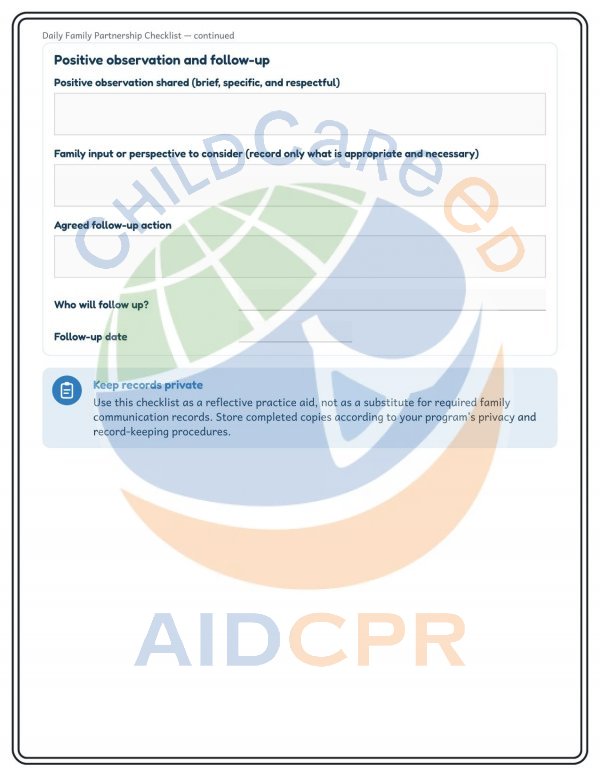
Space to record positive child-related observations.
Family input and perspectives to consider.
Agreed follow-up actions, responsibilities, and dates.
Practical purpose: Encourages intentional family engagement during daily arrivals, departures, meetings, and other communications.
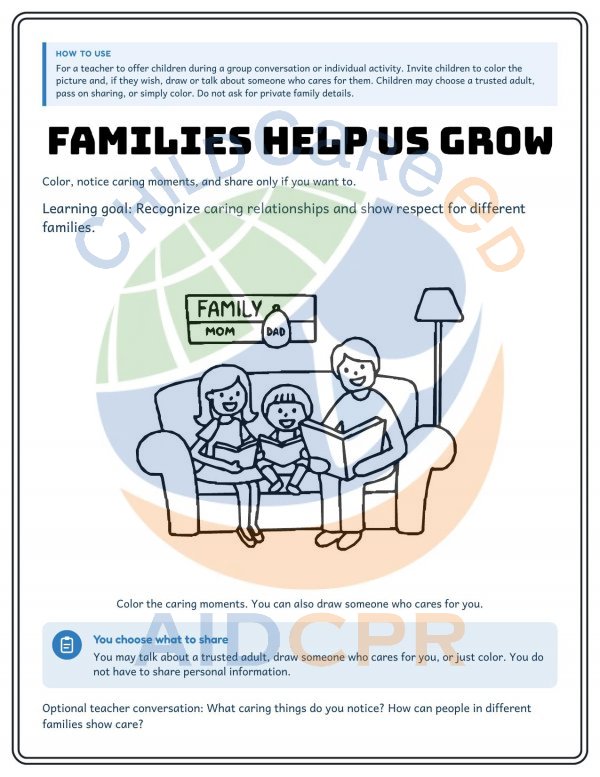
3. Families Help Us Grow — 1 Page (Page 5)
A child-friendly coloring and optional drawing activity that introduces caring relationships and encourages respect for different family experiences.
Includes:
One printable coloring picture featuring a family sharing a reading moment.
An invitation for children to draw someone who cares for them.
A reminder that children can choose what they wish to share.
Optional teacher discussion questions about caring actions and different families.
Learning focus: Recognizing supportive relationships, appreciating different family experiences, and expressing ideas through coloring, drawing, or conversation.
4. People Who Care for Me: Match and Connect — 2 Pages (Pages 6–7)
A visual matching activity that encourages children to recognize different caregivers and welcoming places where children receive care.
Includes:
Three illustrated relationship examples:
Child with a caregiver.
Child with family.
Child with a teacher.
Three care-setting examples:
Home.
Trusted adult nearby.
Childcare room.
A connect-the-pictures matching activity.
Gentle reminders that families and caregivers can look different.
A learning-goal statement on the continuation page.
Learning focus: Recognizing trusted caregivers, understanding that children receive care in different settings, and practicing visual matching skills.
Perfect For
Preschool and kindergarten classrooms.
Early childhood education and childcare programs.
Family engagement and parent-teacher communication.
Childcare provider documentation.
Daily arrival and departure conversations.
Parent-teacher meetings and follow-up planning.
Family-themed classroom activities.
Social-emotional learning discussions.
Celebrating family and caregiver diversity.
Educator self-reflection and professional development.
Why Educators Will Love It
Strengthens family partnerships: The communication forms encourage educators to listen to families, recognize their strengths, and agree on meaningful next steps.
Makes communication easier to document: The forms provide organized spaces for recording conversations, observations, and follow-up responsibilities.
Supports respectful and inclusive practices: The children's activities recognize that caring relationships and family structures can vary.
Combines professional tools with classroom activities: Educators receive resources for both their own communication practices and children's learning.
Encourages meaningful conversations: The coloring and matching activities provide opportunities to discuss kindness, care, and trusted adults without requiring children to disclose personal family information.
Reusable throughout the year: The teacher forms can support ongoing family communication, while the activities can be introduced during classroom themes about families and caring relationships.
Offers flexible participation: Children may color, draw, match pictures, or participate in optional discussions according to their comfort and developmental level.
