
Sign in to download Create a free account
This resource is free. Sign in and you'll come straight back here to download it.
Description
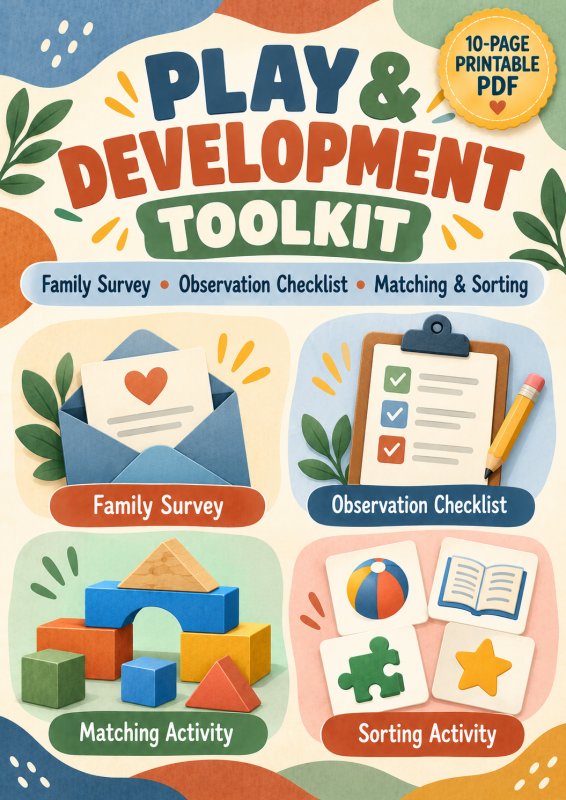
Discover how play supports children's learning and development with this 10-page Play & Development Toolkit!
Designed for preschool teachers, Pre-K educators, kindergarten teachers, and childcare providers, this printable resource combines practical observation tools, family communication materials, and engaging children's activities to help educators recognize the important skills children develop through play.
Especially useful in inclusive classrooms supporting autistic children and children with different learning and developmental needs, this toolkit encourages strengths-based observation, meaningful participation, and family collaboration.
What's Included:
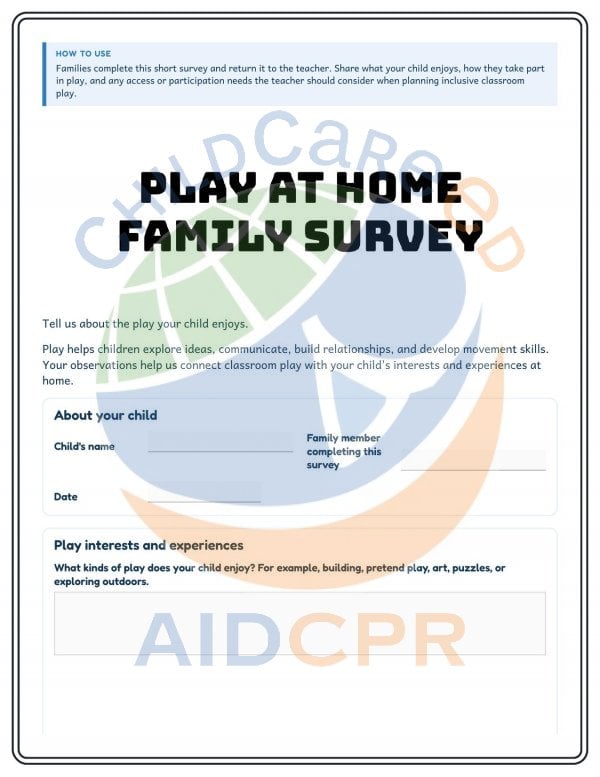
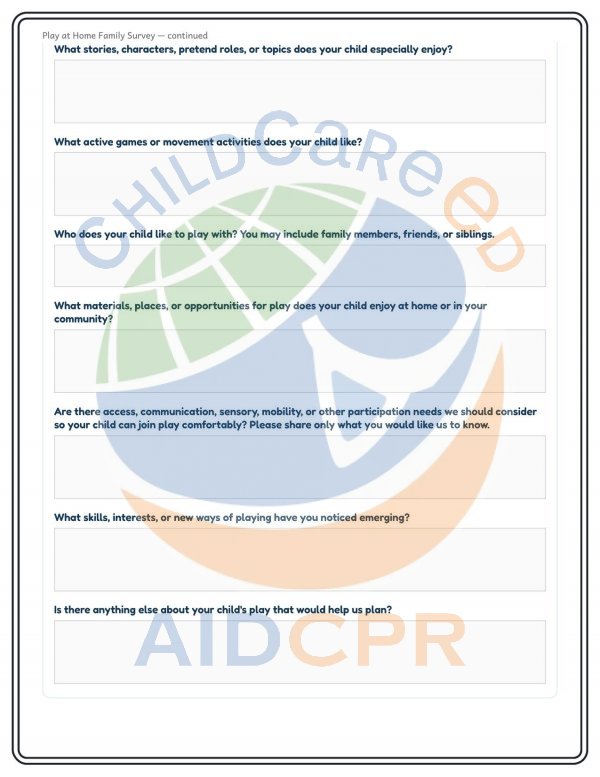
1. Play at Home Family Survey (3 pages)
A reusable family questionnaire designed to help educators understand children's play interests, experiences, and individual participation needs.
Includes questions about:
Favorite types of play, including building, pretend play, art, and outdoor exploration
Preferred stories, characters, and pretend roles
Active games and movement activities
Favorite play partners and social experiences
Materials and play opportunities available at home
Sensory, communication, mobility, and accessibility considerations
Emerging skills and new interests
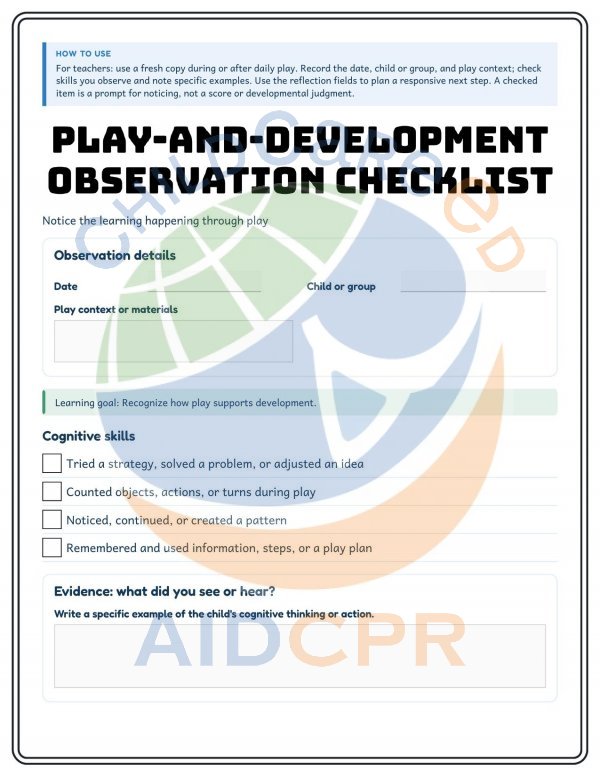
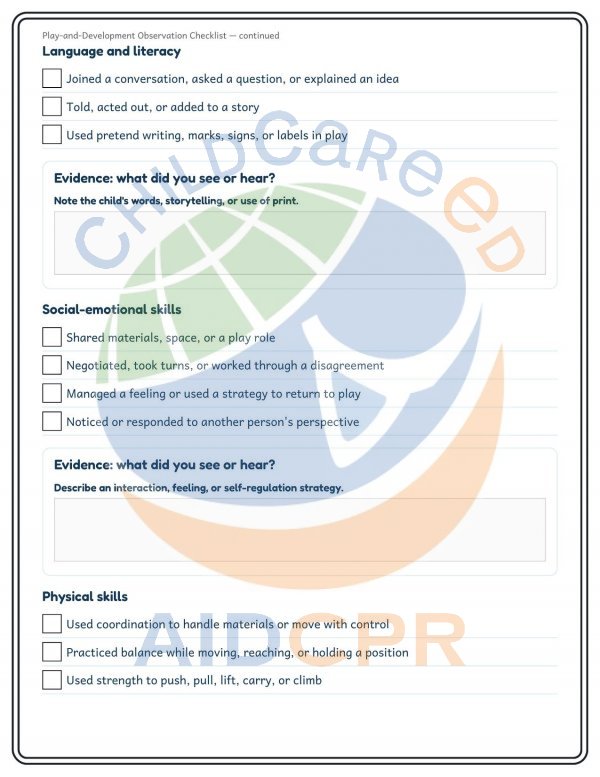
2. Play-and-Development Observation Checklist (3 pages)
A comprehensive educator observation tool for recognizing developmental skills during everyday classroom play.
Covers four important developmental areas:
Cognitive Development: Problem-solving, counting, patterns, memory, and planning
Language and Literacy: Conversations, storytelling, pretend writing, and communication
Social-Emotional Development: Sharing, cooperation, self-regulation, and understanding others
Physical Development: Coordination, balance, strength, and movement
Includes checkboxes, spaces for documenting specific observations, reflection questions, and opportunities to plan responsive learning experiences.
3. Match the Play Moment (2 pages)
An interactive picture-matching activity featuring four familiar play experiences:
Building a block bridge
Playing pretend roles
Balancing on a low beam
Taking turns with a toy
Children connect each play experience to a developmental skill, including problem-solving, physical coordination, social-emotional development, and communication.
Includes discussion prompts to encourage children to recognize what they can learn through everyday play.
4. Play Skills Picture Sort (2 pages)
A hands-on cut-and-sort activity featuring eight illustrated picture cards and four learning categories:
Think and Solve: Building towers and solving puzzles
Talk and Imagine: Pretend storytelling and creating songs
Play Together: Taking turns and sharing play materials
Move: Jumping and balancing
Children match pictures to the appropriate learning category while developing observation, classification, communication, and fine motor skills.
Perfect For:
Preschool, Pre-K, and kindergarten classrooms
Play-based learning and curriculum planning
Inclusive early childhood education
Supporting autistic children and diverse learners
Child development observations
Cognitive and problem-solving activities
Language and communication development
Social-emotional learning
Gross motor development discussions
Matching and picture-sorting activities
Family engagement and communication
Teacher planning and documentation
Why Educators Will Love It:
Play is a powerful part of early childhood development, providing meaningful opportunities for children to explore ideas, communicate, build relationships, and practice important physical and cognitive skills.
This toolkit helps educators recognize those learning opportunities through practical observation forms and engaging activities.
The developmental checklist supports thoughtful documentation across multiple learning areas, while the family survey encourages collaboration and a deeper understanding of children's experiences outside the classroom.
The matching and sorting activities help children explore the connection between familiar play experiences and the skills they are developing.
With reusable professional tools and hands-on activities, teachers can create more intentional, inclusive, and engaging learning experiences.
