


Sign in to download Create a free account
This resource is free. Sign in and you'll come straight back here to download it.
Description
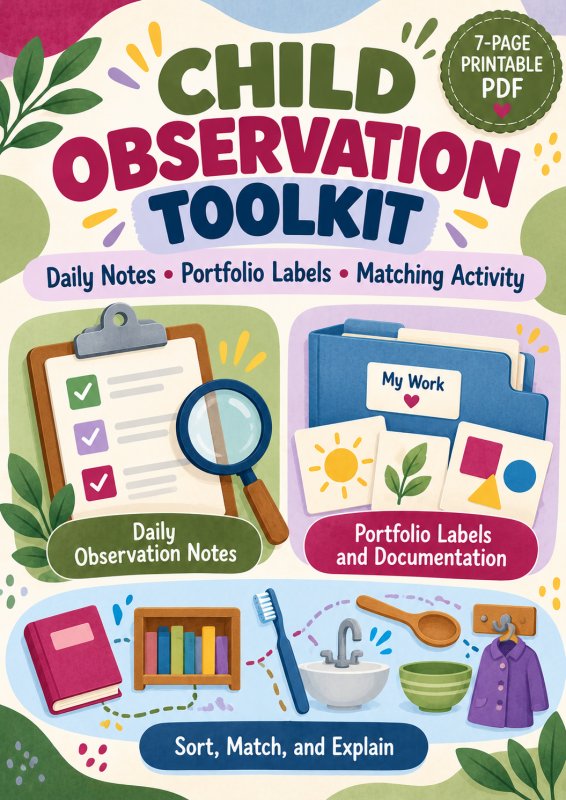
Make documenting children's learning, tracking developmental progress, and planning individualized support easier with this 7-page Child Observation Toolkit!
Designed for preschool teachers, Pre-K educators, kindergarten teachers, and childcare providers, this printable resource combines practical observation forms, portfolio documentation tools, and a child-friendly matching activity to help educators understand children's developing skills, interests, and individual learning needs.
What's Included:
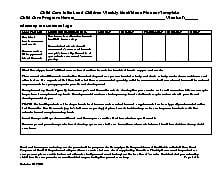
Daily Observation Notes (2 pages): A reusable teacher observation form for recording children's actions, interactions, exact words, and observable expressions during everyday classroom experiences. Includes separate sections for objective observations, professional interpretation, possible individual needs, and responsive next steps.
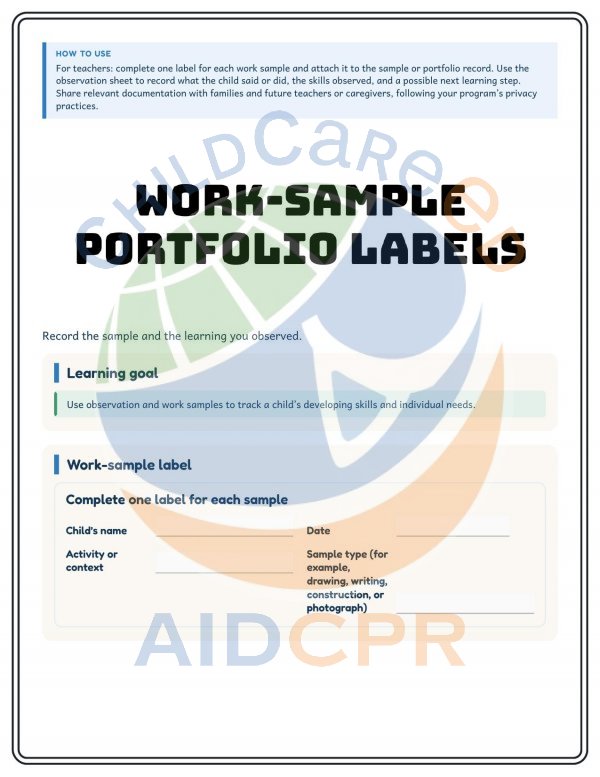
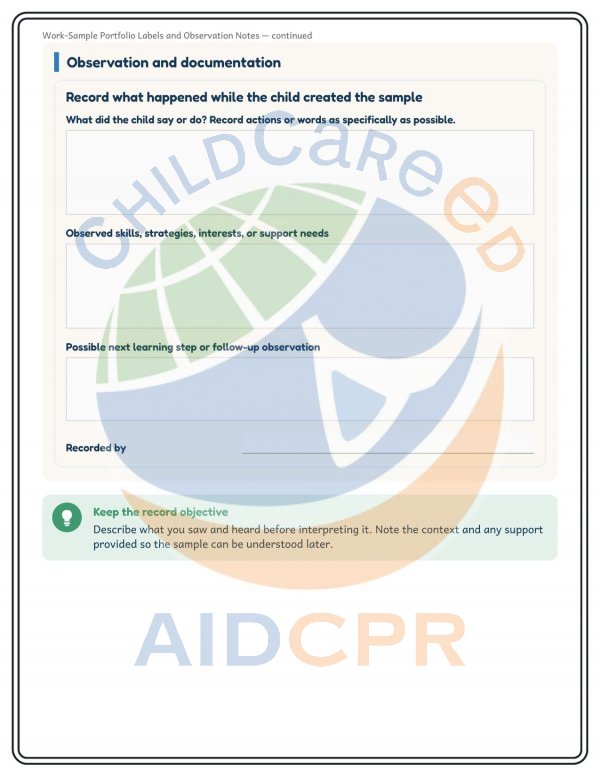
Work-Sample Portfolio Labels and Observation Notes (2 pages): A practical documentation tool for organizing children's work samples and recording evidence of learning. Includes spaces for the child's name, date, activity context, sample type, observed skills, learning strategies, interests, support needs, and possible next learning opportunities. Suitable for documenting drawings, writing, constructions, and other classroom work.
Sort, Match, and Explain Cards (3 pages): An interactive picture-matching activity where children connect four familiar items to their appropriate locations. Includes a book, toothbrush, spoon, and coat, matched with a bookshelf, sink, bowl, and coat hook. Features conversation prompts and a teacher observation section for documenting children's problem-solving strategies, communication, and participation.
Perfect For:
Preschool, Pre-K, and kindergarten classrooms
Inclusive early childhood education
Supporting autistic children and other learners with individual support needs
Child development observations
Classroom assessment and documentation
Student portfolios and work-sample collections
Observing language and communication
Matching and categorization activities
Identifying children's interests and strengths
Planning individualized learning opportunities
Teacher documentation and reflection
Why Educators Will Love It:
Meaningful observation helps educators understand how children learn, communicate, solve problems, and participate in everyday activities.
This toolkit encourages teachers to document what children actually say and do before interpreting their behavior or considering additional support.
The portfolio documentation tools make it easier to organize examples of children's learning, while the matching activity provides a natural opportunity to observe early reasoning, communication, and problem-solving.
With reusable observation forms and a practical classroom activity, educators can gather meaningful information, recognize children's strengths, and plan responsive learning experiences.
Related Training(s)
Other items you may like