
$2.49 One-time license · lifetime download access
Buy Now charges your payment method right away — the resource appears under My Resources. Or add it to your cart and check out together with trainings.
Description
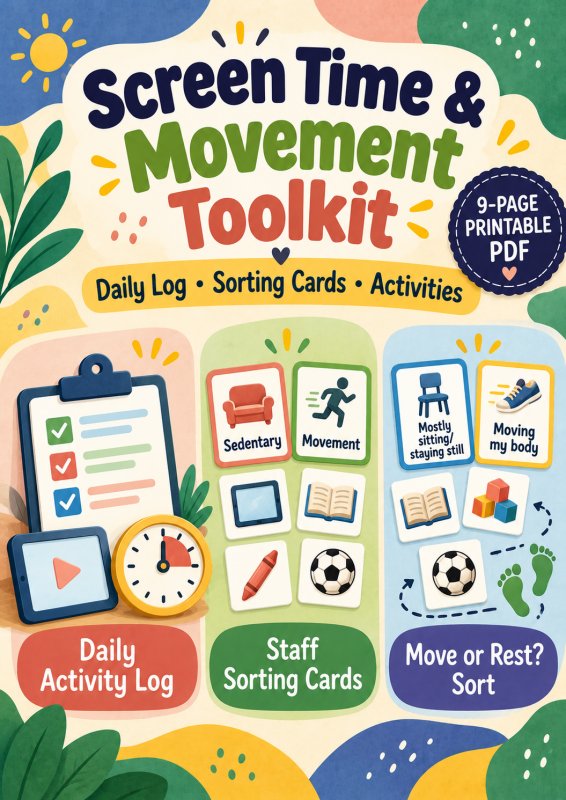
Help children build balanced daily routines, recognize the importance of movement, and explore healthy screen-time habits with this 9-page Screen Time & Movement Toolkit!
Designed for preschool teachers, childcare providers, and early childhood educators, this printable resource combines a practical daily observation log, staff sorting materials, and an engaging children's activity to support healthy movement opportunities, thoughtful screen use, and balanced classroom routines.
What's Included:
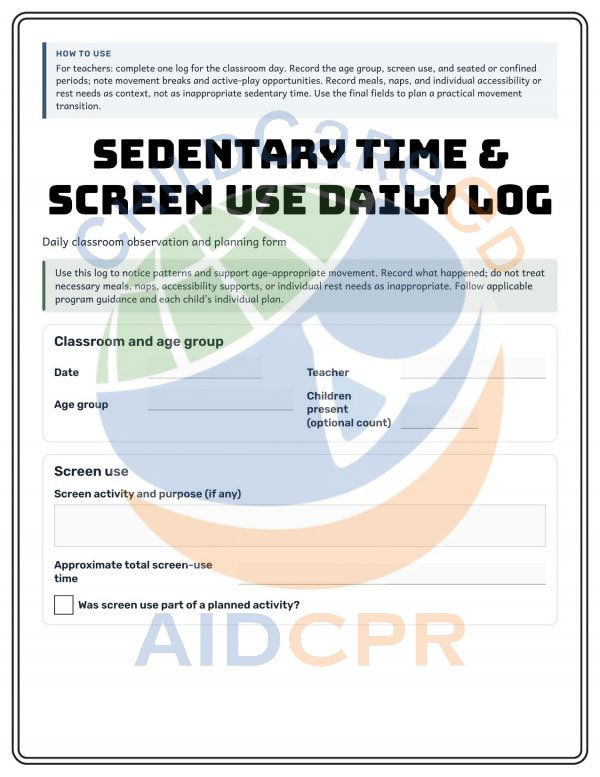
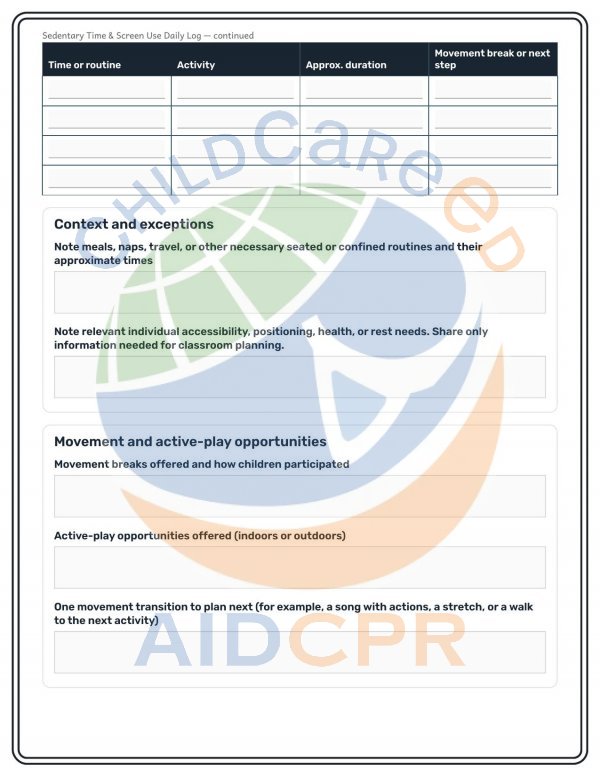
- Sedentary Time & Screen Use Daily Log (3 pages): A reusable classroom observation and planning form for documenting screen use, seated activities, movement breaks, and active-play opportunities. Includes sections for recording activity durations, necessary rest and care routines, individual accessibility needs, and plans for incorporating additional movement.
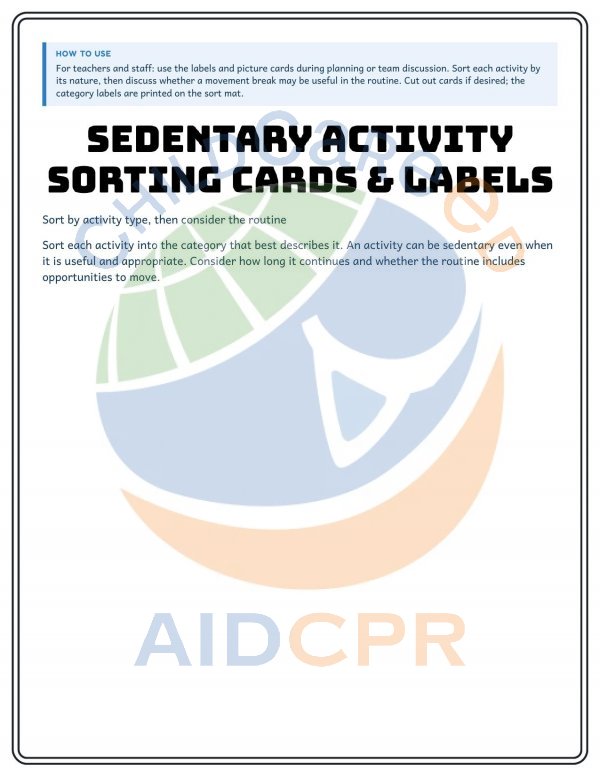
- Sedentary Activity Sorting Cards & Labels (3 pages): A professional learning and planning activity featuring seven illustrated cards and three sorting categories: Sedentary, Movement, and Consider a Movement Break. Helps educators recognize different activity types, discuss appropriate classroom routines, and identify opportunities for movement.
- Move or Rest? Picture Sort (3 pages): An interactive children's cut-and-sort activity featuring eight picture cards. Children categorize familiar activities as Mostly Sitting/Staying Still or Moving My Body. Includes examples such as reading, drawing, watching a show, running, dancing, playing catch, and hopping.
Perfect For:
- Preschool and Pre-K classrooms
- Early childhood health and wellness lessons
- Teaching balanced screen-time habits
- Physical activity and movement awareness
- Classroom routine planning
- Gross motor development discussions
- Sorting and categorization activities
- Teacher observation and daily documentation
- Small-group health education activities
- Childcare staff professional development
Why Educators Will Love It:
Helping young children develop healthy daily routines involves providing opportunities for active play while recognizing the importance of quiet activities, rest, and individualized needs.
This toolkit helps educators observe how classroom time is spent, identify opportunities for additional movement, and reflect on how sedentary activities fit into the daily schedule.
Through engaging picture-sorting activities, children can also begin recognizing the difference between activities that involve physical movement and those completed while sitting or staying still.
With reusable professional tools and child-friendly learning activities, teachers can create more intentional, balanced, and inclusive daily experiences.
