
Sign in to download Create a free account
This resource is free. Sign in and you'll come straight back here to download it.
Description
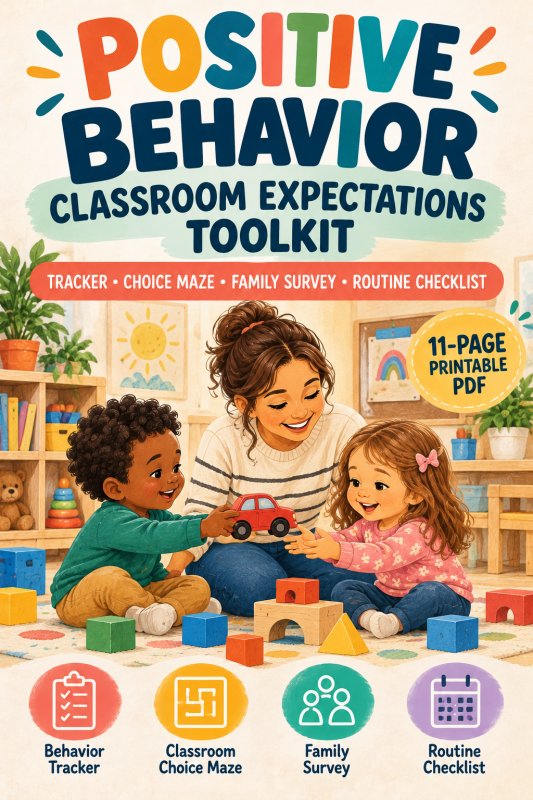
Create a positive, consistent, and supportive classroom environment with this 11-page Positive Behavior & Classroom Expectations Toolkit!
Designed for preschool teachers, childcare providers, and early childhood educators, this printable collection provides practical tools for reinforcing positive behavior, teaching clear classroom expectations, encouraging problem-solving, and strengthening communication with families.
What's Included:
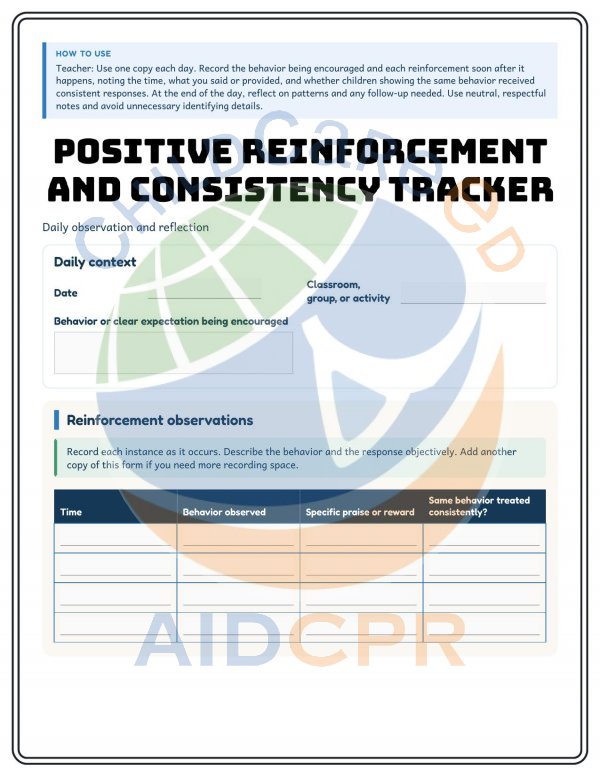
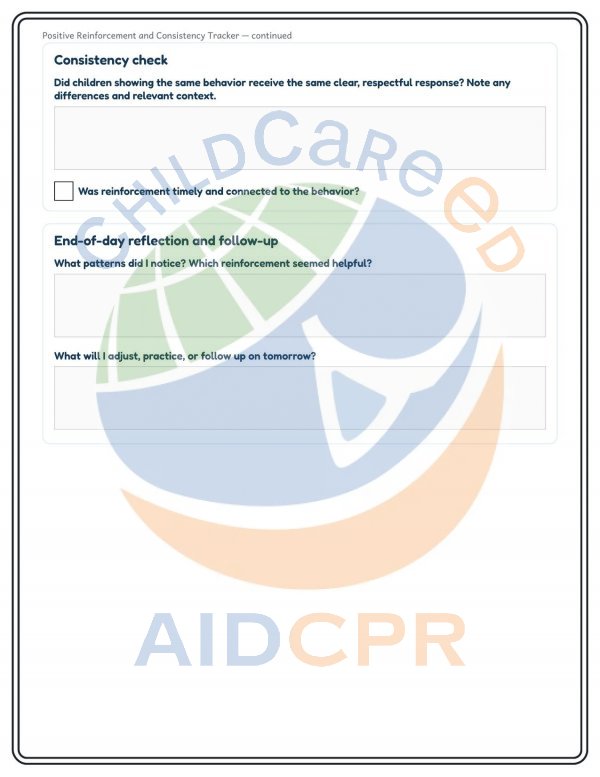
- Positive Reinforcement and Consistency Tracker (2 pages): A daily observation tool for recording positive behaviors, specific praise or rewards, consistency of reinforcement, and opportunities for teacher reflection.
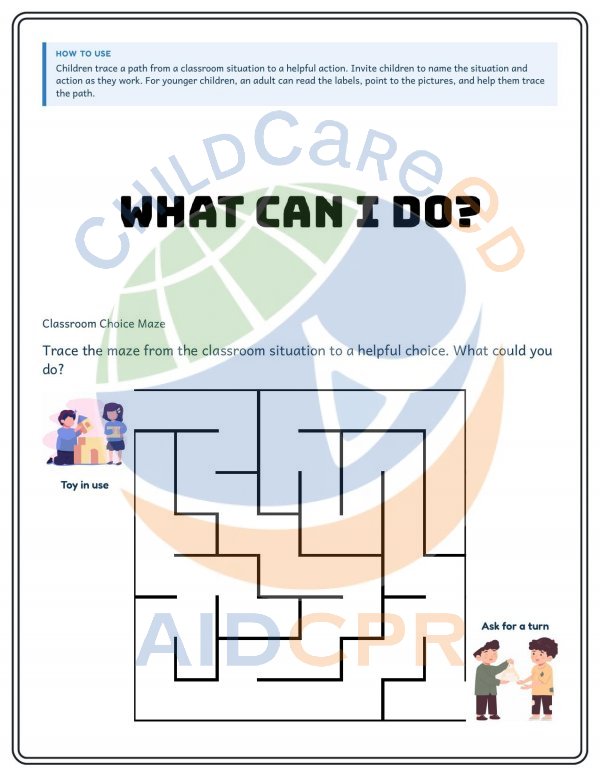
- What Can I Do? Classroom Choice Maze (2 pages): A child-friendly maze that encourages children to practice positive problem-solving by exploring how to ask for a turn when a toy is already being used.
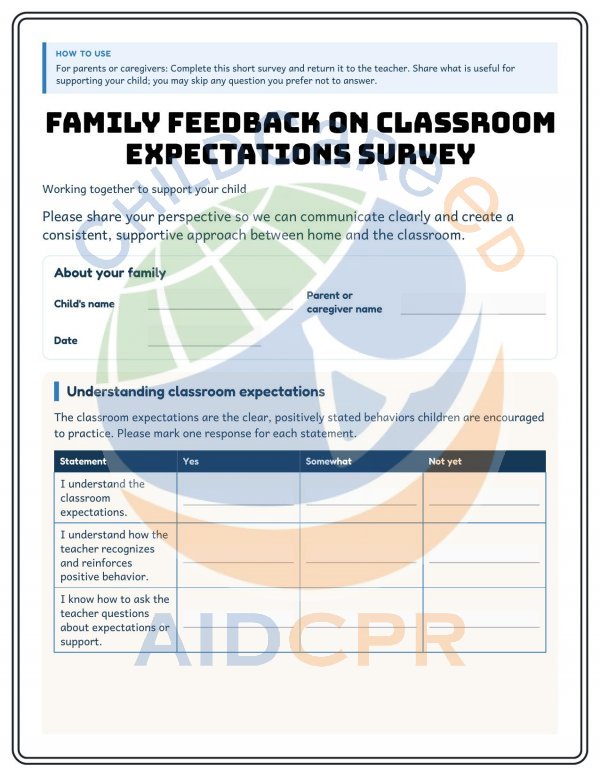
- Family Feedback on Classroom Expectations Survey (3 pages): A parent questionnaire that helps educators understand family perspectives, communicate classroom expectations, identify supportive strategies, and encourage home-school collaboration.
- Daily Procedures and Expectations Checklist (4 pages): A classroom planning tool covering arrival, toileting, snack time, learning centers, lining up, and dismissal. Includes space for teaching procedures, monitoring expectations, and reflecting on daily implementation.
Perfect For:
- Preschool and Pre-K classroom management
- Positive behavior guidance and reinforcement
- Teaching classroom routines and expectations
- Teacher observations and reflection
- Social-emotional learning conversations
- Family engagement and communication
- Early childhood teacher planning binders
Why Educators Will Love It:
This toolkit promotes a proactive approach to classroom management by helping teachers recognize positive behaviors, communicate expectations clearly, and support children through consistent, respectful guidance.
Instead of focusing only on correcting challenging behaviors, educators can use these tools to encourage cooperation, build positive relationships, and create a classroom where children feel supported and confident.
Related Training(s)
Other items you may like