Project-based learning (PBL) lets young children explore meaningful problems and create real products while developing executive function, language, and social skills. The method supports deeper learning and retention by situating concepts in authentic, motivating contexts. To help programs implement PBL we offer targeted trainings such as Project-Based Learning for Children  Buy Now $16.00 and Creating Engaging and Meaningful Learning Experiences Buy Now $55.00, both designed for early childhood professionals.
What is project-based learning in early childhood?
Project-based learning is an instructional approach where curriculum and assessment are organized around sustained investigations of real-world problems or questions. Unlike short, teacher-directed craft projects, PBL is multidisciplinary, inquiry-driven, and emphasizes student ownership of process and product. The Project and Problem-Based Learning Institute at Virginia Tech outlines core outcomes for PBL — critical thinking, collaboration, creativity, and stronger motivation — outcomes that translate directly to early childhood classroom goals when adapted developmentally (VT PBL Institute).
How do I plan a project-based unit that is developmentally appropriate for preschoolers?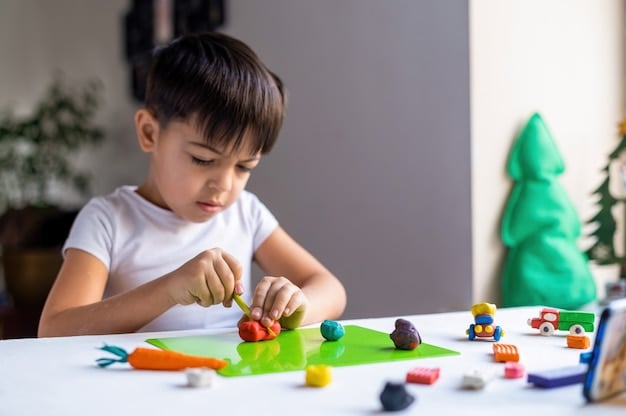
Start with a meaningful question tied to children’s interests and the learning domain (for example, “How can we reduce lunchroom food waste?” or “Where do butterflies come from?”). Plan a 2–4 week arc that sequences inquiry: observe, ask questions, explore materials, document learning, and present a product. Use simple documentation (photos, children’s dictation) for assessment. The University of North Texas clarifies the distinction between short teacher-led projects and sustained PBL that uses student choice, ongoing inquiry, and collaboration — adapt those principles by shortening cycles and providing high adult support for young learners (UNT: What is PBL?).
Concrete planning steps:
- Identify a compelling question connected to children's interests and learning goals.
- Map essential experiences: hands-on exploration, small-group inquiry, and a culminating sharing event.
- Create learning stations and materials that scaffold exploration (sensory tables, books, art supplies, simple data charts).
- Plan family engagement: invite family knowledge, co-create investigations, and schedule a showcase.
What classroom environment and teacher strategies support effective PBL?
An environment that supports choice, accessible materials, and visual documentation accelerates PBL. Dedicate a project space where materials remain available across days; use labeled bins, open shelving, and photograph-based documentation areas to make progress visible. Teacher moves that support young children include modeling inquiry language, facilitating peer collaboration, scaffolding problem-solving, and using formative observation to plan next steps. For programs seeking broader curriculum alignment, consider complementary trainings such as Play, Learn, Grow Buy Now $25.00 or Planning for Every Child: Responsive Strategies in Action Buy Now $55.00, which cover differentiation and emergent curriculum practices useful in PBL.
What are common project examples and assessment approaches for ages 3–5?
Typical PBL topics for preschoolers include community helpers, local ecosystems (butterflies, gardens), or neighborhood maps. Products can be simple: a class book, a mural, a puppet show, or a mini-exhibit. Assess by collecting children's work samples, audio recordings of explanations, and teacher notes on skills observed (language complexity, turn-taking, problem-solving). Use checklists aligned to developmental domains and share those observations with families during the culminating presentation.
What are the core principles and adaptations of PBL for preschoolers?
Project-based learning rests on a few core principles that are essential to honor when adapting PBL for ages 3–5: authentic, sustained inquiry; child agency in questions and products; meaningful collaboration; and documentation-driven assessment. For early childhood settings, those principles must be mediated by developmental scaffolds: shorter inquiry cycles, predictable routines, high adult scaffolding for language and problem solving, sensory-rich materials, and family involvement. The Project and Problem-Based Learning Institute at Virginia Tech and the University of North Texas describe the broad outcomes and distinguishing features of PBL (critical thinking, collaboration, creativity, student ownership) — those outcomes translate to preschool settings when adults intentionally adapt practice to young children’s attention, language and motor skills (VT PBL Institute; UNT: What is PBL?).
Concrete classroom adaptations (quick-reference checklist):
- Shorten the cycle: use 2–4 week projects with daily micro-goals to keep momentum.
- Routines + visual schedules: show the project flow with pictures so children anticipate each step.
- High scaffolding: model inquiry language ("I wonder…"), provide sentence stems, and use one-on-one or small-group supports.
- Sensory and manipulable materials: make complex ideas tangible with sensory tables, blocks, and art materials.
- Documentation as assessment: photograph work, collect dictation, and record brief child explanations to capture growth in language and reasoning.
- Family partnership: invite families to contribute knowledge, materials, or participate in a culminating showcase.
Assessment in early PBL is observational and formative. Use brief checklists aligned to domains (communication, social skills, problem solving), paired with artifacts (photos, drawings, recordings) that tell the learning story. Use documentation to plan next steps and to communicate progress to families and licensing authorities. These pragmatic adaptations preserve the integrity of PBL while ensuring the work remains developmentally appropriate and manageable for preschool staff and children.
Where can I learn more and what resources help me implement PBL now?
Practical next steps include taking short, focused courses and reading practical guides. ChildCareEd course recommendations: Project-Based Learning for Children Buy Now $16.00 (foundational PBL tactics), Creating Engaging and Meaningful Learning Experiences Buy Now $55.00 (lesson design and assessment), and Play, Learn, Grow Buy Now $25.00 (developmental foundations). For program-level decisions and additional professional reading see internal guidance and related articles such as How can child care programs balance screen time, educational technology, and active-learning alternatives?, How Can Early Educators Help Children Build a Lifelong Love of Learning?, Online Early Childhood Courses with ChildCareEd, Early Years Teaching Assistant Courses: What to Know, How is online childcare training helping New York educators deliver better early childhood education?, and Can Washington early childhood educators grow with ChildCareEd’s self-paced courses?.
How can I start using project-based learning in my program this week?
Choose one simple inquiry question linked to children’s current interests. Plan three brief sessions: an initial provocation and exploration, a focused small-group investigation, and a family-sharing event. Gather materials ahead of time, document learning, and reflect with staff after the mini-cycle to plan improvements. Enroll in a short course to support each step and use documentation to demonstrate impact to families and licensing bodies.
How can I summarize the benefits and first steps for PBL?
Project-based learning supports deeper content understanding, collaboration, language development, and intrinsic motivation when it is adapted for young children. To begin: pick one inquiry question tied to children’s interests, scaffold exploration with predictable routines and adult modeling, document children’s ideas and explanations, and plan a short, public sharing event that invites families. Use documentation (photos, child dictation, short checklists) to demonstrate progress to families and licensing bodies.
Immediate actions you can take this week: 1) choose a one-question inquiry, 2) prepare a provocation and simple materials, 3) schedule three short sessions (provocation, small-group investigation, family-sharing), and 4) record one sample of child talk or work to show learning. Enroll in the recommended ChildCareEd courses for deeper support and consult the linked internal articles for planning, balancing technology, and building family partnerships. These steps and the cited PBL evidence base will help your program implement intentional, developmentally appropriate projects that strengthen learning and community connections. #projectbased #PBL #earlylearning #curriculum #playbased
- CDA Infants/Toddlers: Health and Safety
- CDA Infants/Toddlers: Abuse and Neglect Reporting Requisites
- CDA Infants/Toddlers: Classroom Setup
- Project-Based Learning for Children
- CDA Infants/Toddlers: Brain Development and Gene Expression
- CDA Infants/Toddlers: Stages of Development
- CDA Infants/Toddlers: Smart Nutrition & Feeding
- Supporting Families and Caregivers in Language and Literacy
- CDA Home Visitor Subject Area 8 Part 1 Birth to 5
- Shoo, Germs! Don't Bother Me!
- DIY Snow Globes: The Fine Motor Craft That’ll Keep Kids (and Adults) Busy for Hours
- 🤯 ¿Por qué este niño está teniendo un comportamiento difícil de repente?
- 😫🧸 ¿Qué hacer cuando un bebé no quiere dormir la siesta en el aula?
- 🩺 Cumplimiento de Salud e Inmunización en Cuidado Infantil de Nevada ✔️
- 📊¿Cómo puedo hacer un seguimiento de la capacitación de mi personal en GAPDS como proveedor?✨
- 🍑 ¿Qué capacitación requiere DECAL cada año para el personal de cuidado infantil en Georgia?
- Actividades de Otoño Fáciles para Preescolares esta Temporada
- Cómo Ser Maestra de Preescolar en Georgia
- Capacitación Previa al Servicio para Proveedores de Cuidado Infantil en Georgia
- Who Qualifies for a Crayola Donation Request? A Guide for Child Care Programs
- Common After School Activities Kids Get Bored With—and What to Try Instead
- Learning Through Choice: Why Do Classroom Choice Boards Work?
- How Can Educators Use Emergent Curriculum and Project-Based Learning Effectively?
- How Can Child Care Providers Help Children Understand How Community Helpers Contribute?
- ¿Todos los niños deben participar en el tiempo de círculo?
- How Can You Make a Design Activity Accessible to a Child with Cerebral Palsy?
- How Can Child Care Providers Make Room for Floor Projects That Grow Beyond Their Starting Area?
- How Can a Preschool Community-Helpers Theme Respond to Real Local Needs?
- How Can You Adapt a Cutting Activity Without Removing a Child’s Participation?
