When a child recognizes a familiar package, they may be reading its colors and logo—but the small print holds a richer literacy investigation. Use packaging comparisons to help children look closely at letters, words, and how print communicates, and explore Classroom Tools for Emergent Literacy Buy Now $25.00 for practical strategies such as interactive read-alouds, reading buddies, and classroom labeling. This focused training can help you turn everyday materials into intentional, play-based literacy experiences; read on for an easy way to get started.
Why look beyond a package’s logo?
Young children often recognize a product through a combination of familiar colors, shapes, pictures, and brand marks. That is a meaningful beginning: children are using context to make sense of print in their everyday world. The next instructional step is to gently guide attention from the overall design toward the letters and words themselves.
Comparing two packages that use the same word in different designs creates a natural “detective” question: What stays the same, and what changes? Children can notice that a word remains recognizable even when the font, color, size, or surrounding images differ. This supports #print awareness—the understanding that written marks carry meaning—without suggesting that logo recognition alone is independent reading.
Evidence-informed guidance emphasizes combining explicit attention to print, shared reading, and purposeful play. Research also suggests that adult-guided interaction with environmental print can encourage children to examine letters within familiar logos and labels. The goal is not to quiz children or rush them toward decoding, but to make their noticing more precise and curious.
- Connect familiar everyday packaging with letters and words.
- Invite close looking, comparison, conversation, and meaningful play.
- Build on what children already know while modeling how to examine print.
What do children learn when the same word appears in different packages?
A comparison mat can make one word visible across several visual contexts. For example, children may examine two clean packages that both display “milk,” or compare the same word printed on a carton and a classroom-made label. Ask what they notice about the letters, their order, and the word’s meaning. Help children distinguish the printed word from pictures, decorative elements, and brand symbols.
This activity supports several connected understandings. Children learn that a printed word is made of letters arranged in a particular sequence; that words can look different in different typefaces; and that print can identify, describe, or provide information about an item. They can also notice initial letters, count letters, compare word lengths, and connect spoken words with written forms.
Keep claims developmentally appropriate. A child who identifies a product from its logo or package color is demonstrating meaningful environmental-print awareness, but may not yet be reading the word by analyzing its letters. You can acknowledge the child’s knowledge and extend it: “You recognized the cereal by its picture. Let’s find the word ‘cereal’—which letters do you notice?”
- Model comparing one feature at a time: first letter, letter order, or word length.
- Say the word aloud, then point to the printed form as you say it again.
- Notice similarities and differences without treating every response as a test.
How can you run a Packaging Print Detective comparison?
Start with two or three clean, safe examples that contain a repeated word or a clearly comparable label. Choose familiar items where possible, but include packages and words that reflect the varied experiences of children in your group. If using the Packaging Print Detective Comparison Mats resource, pair the mats with real, empty packaging or clear photographs, according to the activity design and your program’s safety practices.
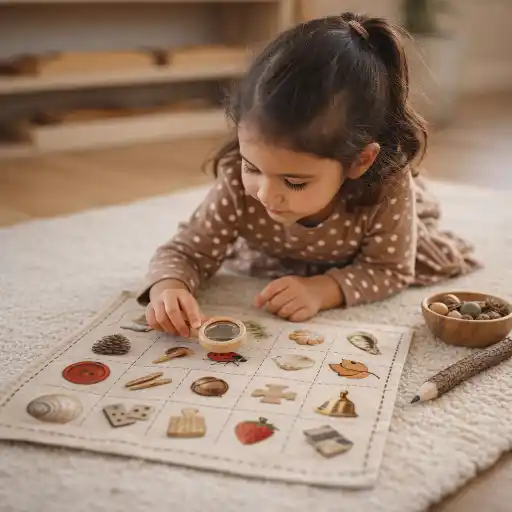
Introduce the investigation as a shared discovery. Place the examples side by side and invite children to look before you explain what to find. Then model a short think-aloud: “These packages look different. I see the word ‘rice’ on both. Let’s check whether the letters are in the same order.” Children might point, match, circle, trace, describe, or use a communication device to share observations.
- 🕵️ Invite children to be print detectives: “What do you notice first?”
- Compare one word across packages; add more examples when the group is ready.
- Use a pointer or your finger to track the word from left to right when appropriate.
- Follow with a short drawing, matching, sorting, or pretend-store activity.
Keep the interaction brief and responsive. If children become more interested in the pictures or pretend play, use that interest as a bridge back to the print rather than insisting on finishing a worksheet. Purposeful play is most useful when the adult keeps a clear, manageable literacy focus.
How can you adapt the activity for different learners and families?
Children vary in language experience, vision, attention, motor coordination, and familiarity with particular products. Adaptations can preserve the same learning goal—noticing that print communicates—while offering different ways to participate. Use large, high-contrast images, limit the number of examples, or highlight a target word with a removable frame. A child may point to a match, choose between two pictures, dictate an observation, or participate alongside a peer.
For multilingual learners, invite children and families to share the names they use for familiar items in home languages. Add those words to a comparison when feasible, and pronounce them respectfully. This approach validates children’s knowledge and helps the whole group see that words can represent the same concept across languages, while spelling and visual appearance may differ.
Use clean, empty packaging or photographs and inspect materials for sharp edges, small detachable parts, allergens, and other hazards. Avoid packaging with messages or imagery that are unsuitable for the children in your care. Do not assume that every child has encountered or used a particular product; invite children to observe without asking them to disclose family purchasing choices.
- Offer visual, spoken, tactile, and communication-based ways to respond.
- Choose examples that are culturally relevant and avoid treating one brand or food as universal.
- Partner with families by inviting optional examples or words, not required purchases.
As always, state requirements vary - check your state licensing agency.
How can educators observe learning and avoid common pitfalls?
Informal observation can show what children are noticing and what support may help next. Record specific actions rather than broad judgments: “Matched the word ‘soap’ across two labels after a prompt,” or “Pointed to the first letter on both packages.” Notice whether a child relies on color or pictures, identifies a letter, compares letter order, or connects the printed word to spoken language. These observations can guide your next activity, but a single mat is not a formal assessment.
A frequent pitfall is celebrating brand recognition as proof that a child has decoded a word. Instead, affirm the recognition and gently invite closer inspection of the print. Another is turning comparison into a rapid-fire quiz. Give children time to look, gesture, talk, and revisit examples. Keep the group’s focus on curiosity and a small, clear objective.
- Instead of: “You read it!” when a child names a logo. Try: “You recognized the package. Let’s look at the letters in the word.”
- Instead of: comparing many labels at once. Try: investigate one repeated word first.
- Instead of: correcting every guess immediately. Try: model how to check the letters and invite another look.
- Instead of: relying on the mat alone. Try: connect the investigation to shared reading, writing, or dramatic play.
For additional professional learning, Understanding Print Knowledge in Preschool  Buy Now $16.00 focuses on print knowledge, while Science of Reading Foundations in the Pre-K Classroom Buy Now $16.00 addresses a broader set of early literacy foundations. To build vocabulary through content and classroom experiences, consider Building Vocabulary Buy Now $16.00.
Conclusion: How can packaging comparisons make print more noticeable?
Packaging Print Detective comparisons turn a familiar classroom material into a purposeful opportunity to notice print beyond logos. By comparing the same word across different designs, educators can help children attend to letters, order, meaning, and the role print plays in everyday life. The strongest experiences are brief, playful, inclusive, and supported by an adult who models careful looking without overstating what a child can read.
Begin with a few safe, relevant examples; invite children to share what they see; and document specific observations to plan a thoughtful next step. Extend the idea through read-alouds, dramatic play, and classroom labels so children encounter print in varied contexts. For a more complete set of classroom strategies, explore Classroom Tools for Emergent Literacy Buy Now $25.00 and build from children’s natural curiosity—one word, package, and discovery at a time.
- Understanding Print Knowledge in Preschool
- Science of Reading Foundations in the Pre-K Classroom
- CDA Home Visitor Subject Area 3 Part 3 Birth to 5
- CDA Home Visitor Subject Area 2 Part 3 Birth to 5
- CDA Bridge Bundle: Family Child Care without Portfolio Review
- CDA Bridge Bundle: Infant/Toddler without Portfolio Review
- CDA Bridge Bundle: Preschool without Portfolio Review
- Texas Director Credential
- Supporting Families and Caregivers in Language and Literacy
- Cómo Obtener la Credencial de Visitante de Hogar CDA
- CDA Certification en Español: Recursos y Consejos para Educadores Bilingües
- 🔍 ¿Qué ves cuando observas a un niño aprender?
- 💛🧩 ¿Cómo puedo hacer que mi enseñanza sea inclusiva para los niños con autismo?
- 👶 ¿Cuáles son las proporciones y grupos requeridos en Dakota del Norte? 🏫
- Recursos en Español sobre el Sueño Seguro del Bebé
- ¿Cómo empiezo mi certificación CDA en Florida en línea?
- 10 Ejemplos de Cómo la Cultura Influye en el Desarrollo Infantil
- ¿Qué Preguntas Vienen en el Examen CDA de Nacimiento a los Cinco Años?
- Reglas de Cuidado Infantil en Illinois
- Proporciones de Cuidado Infantil y Tamaños de Grupo por Edad en Maryland (Guía Rápida para Centros y Hogares)
- Proporciones de Cuidado Infantil y Tamaños de Grupo por Edad en Nueva Jersey (Guía Rápida para Centros y Hogares)
- Proporciones de Cuidado Infantil y Tamaños de Grupo por Edad en Virginia (Guía Rápida para Centros y Hogares)
- Lista para Guardería en Casa en Illinois: Cómo Iniciar una Guardería en el Hogar
- Apoyo en Preescolar para Retrasos del Habla: Estrategias Simples que Ayudan
- Cómo Trabajar en el Cuidado Infantil en Carolina del Norte: Requisitos y Pasos
- Celebrando la amistad en el cuidado infantil durante el Día de los Mejores Amigos
- Canciones, juegos y preguntas de círculo para niños
- Cómo simplificar la capacitación para sus empleados de daycare
- How Can Packaging Print Detective Mats Help Children Notice More Than Logos?
