Minnesota's new paid family and medical leave is giving workers important time off. At the same time, centers worry about filling shifts and keeping staff healthy. This article helps directors and providers learn simple, practical steps to protect their team and keep classrooms safe and steady. Read on for easy actions you can try this week and plans you can build over time.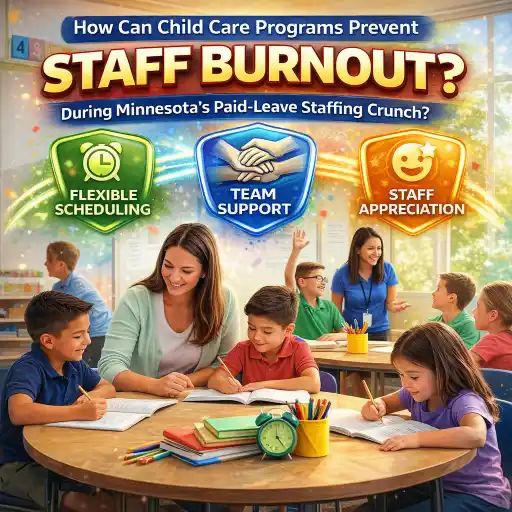
Why this matters
1) Children do best when adults are calm and steady.
2) Programs need staff who stay so routines and learning keep working.
3) When staff burn out, we see more absences, fewer openings, and stressed families. For state updates and what’s coming in Minnesota, see Child Care in Minnesota: What’s Coming in 2026.
We will use clear lists, short steps, and links to helpful resources so you can act now. Remember, state requirements vary - check your state licensing agency.
What is driving the staffing crunch when Minnesota’s Paid Leave starts?
1. Minnesota’s Paid Family and Medical Leave lets people take weeks off for health, family, or safety needs. Local news reporting explains how employers feel the impact and must plan for more time off; see local coverage and additional reaction at Mankato Free Press.
2. Employers will pay part of the premium and may need to split costs with staff. Small programs worry about administration and budget changes. The state bill summary shows many child and family policy updates that affect programs; read the summary at the Minnesota Senate summary.
3. Why this matters for centers:
- 🧾 More planned leave means more days when staff are out.
- 🚫 If you have no good substitute plan, the remaining staff get extra work and may burn out.
- 🔁 Turnover and last-minute closings hurt families and children.
For local planning ideas and an overview of state changes that affect child care in 2026, check ChildCareEd. Use #Minnesota #staff #burnout #providers #wellbeing to search for quick resources.
How does staff burnout show up, and why does it matter for child care programs?
1. Signs of burnout to watch for:
- 😔 Constant tiredness or low energy.
- 😠 More short tempers or less patience with children.
- 🧠 Trouble focusing, or forgetting tasks and steps.
- 💬 Pulling away from teamwork or classroom joy.
2. Why it matters:
a) Children need consistent adults to learn and feel safe. b) Burned-out staff leave more often. c) Programs spend time hiring and training replacements, which costs money and energy.
3. Research and guidance for leaders: The ChildCareEd articles on preventing and reducing burnout give clear, practical tips for centers; see How can early childhood programs prevent burnout in educators? A nd how can early childhood programs reduce teacher burnout?. National guidance on workplace wellbeing from HHS also highlights the need for safety, rest, and predictable schedules: HHS Workplace Mental Health & Well-Being. The OECD and CDC reports show that better working conditions cut turnover and improve health at work.
Watching for signs early helps you act fast. Quick checks and small supports stop problems from growing into long absences or resignations.
What practical steps can directors take now to prevent burnout and cover paid leave?
Here are simple, low-cost actions you can start this week. Use short lists so staff can follow them.
- 😊 Morning check-ins: 1–2 minute greetings. Ask, “What do you need today?” This builds trust fast.
- 🧾 Cut one paperwork item: find tasks you can combine or delay so teachers have fewer forms to finish after hours.
- 🚶 Micro-breaks: schedule short 2–3 minute breaks in transitions so teachers can breathe and reset.
- 🤝 Build a float or substitute pool: partner with local substitute networks or programs like Child Care Staffing Solutions to cover shifts.
- 📚 Use targeted training: buy short courses for staff (stress, mentoring, classroom management) from ChildCareEd, so staff get tools that save time and reduce stress. Consider our Stressbusters training for teachers, which offers practical wellness strategies to reduce burnout: Stressbusters training.
Also, try these scheduling tips:
- 🔁 Rotate high-stress duties so no one carries tough tasks all week.
- 🕒 Make schedules more predictable. The HHS guidance says predictable schedules help family and staff well-being.
- 💵 Offer small, steady perks if pay raises aren’t possible now: reduced tuition for staff children, transit cards, or food vouchers.
Remember: state requirements vary - check your state licensing agency for ratio and documentation rules. For training iideass sethe e ChildCareEd course list Buy Now $0.00 and the Health and Safety Orientation  Buy Now $55.00 for required topics.
Common mistakes and how to avoid them
- ⚠️ Mistake: ignoring early signs. Fix: do weekly 5-minute check-ins and quick pulse surveys.
- 🔧 Mistake: one-off wellness events with no system change. Fix: pair training with schedule changes and coaching.
- 💸 Mistake: adding unpaid work. Fix: track tasks, remove nonessential paperwork, and reassign when needed.
How can programs build long-term systems so turnover drops and paid leave works better?
Build systems that make your program steady when people need to leave. These steps take time but pay off.
- 📈 Create career steps: list simple paths (assistant → lead → mentor). Offer short courses and mentoring. ChildCareEd has director and coaching courses you can use; see Director retention ideas.
- 🤝 Partner with community groups and colleges: braid funding and training to help staff get credentials and pay help. State grant programs and MDH capacity grants can help — check the MDH Capacity Strengthening Initiative for ideas and FAQ.
- 🏥 Invest in workplace well-being: follow HHS and CDC guidance to protect safety, rest, and connection. Programs that build wellness into daily life keep staff longer; see the WELL program research on staff wellbeing: WELL program.
- 💼 Use substitute pools and staffing hubs: regional staffing systems lower last-minute stress and reduce overtime. Consider joining or starting a local substitute cooperative like Child Care Staffing Solutions.
- 🔁 Plan budget changes: when possible, include small raises, paid time off, and benefits. The OECD and Deloitte reports show that better pay, clear roles, and job design reduce turnover and stress.
Measure and adjust: run a short staff survey, track absences, and count training completions. Use that data to change one thing each month.
FAQ (quick answers)
- Q: How fast can we see change? A: Micro-changes (check-ins, breaks) help in days; big changes (pay, new partnerships) take months.
- Q: What if staff won’t use supports? A: Ask them what they need. Offer choices and keep support short and easy to use.
- Q: Where to find substitutes? A: Local staffing hubs, partner programs, or substitute pools like CCSS help fill shifts.
- Q: Who pays for training? A: Look for grants, state programs, or bulk buys from training vendors like ChildCareEd.
Conclusion — Quick checklist to start this week
- 🔎 Do a 5-minute staff check-in this week and note two common stress points.
- 🧘 Add one 2–3 minute micro-break to each day’s transitions.
- 🤝 Start a partnership for substitute help or float staff (call a local child care resource center).
- 📚 Enroll staff in one short ChildCareEd course and pair it with a mentoring check-in.
- 📋 Review one paperwork form and simplify it this month. Remember, state requirements vary - check your state licensing agency.
Small, steady steps protect your team. Use the tools and links above to plan for leave while keeping children safe and learning. For more Minnesota-specific guidance and training, visit ChildCareEd and local state resources.
- 45 Hour Child Growth and Development
- How To Keep A Healthy Class: Six Tips for Germ Control
- 1,2,3, Eyes on Me: Classroom Safety
- Family Child Care Health Essentials
- Leadership Through Mentorship
- Texas Director Credential
- 45-Hour Infant and Toddler Curriculum
- Family Child Care: Building, Premises, and Outdoor Safety
- Stay Alert! Steps to Emergency Prep Online Version
- CDA Certification en Español: Recursos y Consejos para Educadores Bilingües
- 📜 ¿Qué es el Título 22 en el cuidado infantil de California?
- Recursos en Español sobre el Sueño Seguro del Bebé
- 10 Ejemplos de Cómo la Cultura Influye en el Desarrollo Infantil
- Capacitación en Salud y Seguridad Preventiva en Línea para Proveedores de Cuidado Infantil
- Regulaciones de Cuidado Infantil en Maryland para Centros y Hogares de Cuidado Infantil Familiar
- Requisitos de Cuidado Infantil en Nueva Jersey para Centros y Proveedores de Cuidado Infantil Familiar
- Proporciones de Cuidado Infantil y Tamaños de Grupo por Edad en Maryland (Guía Rápida para Centros y Hogares)
- Proporciones de Cuidado Infantil y Tamaños de Grupo por Edad en Virginia (Guía Rápida para Centros y Hogares)
- Actividades de Otoño Fáciles para Preescolares esta Temporada
- Consejos de Supervisión Activa para Salones de Preescolar y el Juego al Aire Libre
- Cómo Trabajar en el Cuidado Infantil en Carolina del Norte: Requisitos y Pasos
- Cómo Trabajar en el Cuidado Infantil en California: Requisitos y Pasos
- Capacitación Previa al Servicio para Proveedores de Cuidado Infantil en California
- Celebrando la amistad en el cuidado infantil durante el Día de los Mejores Amigos
- La mejor manera de hacer seguimiento a la capacitación de su equipo de daycare How to Organize Staff Training for Your Child Care Center Cómo organizar la capacitación del personal para su centro de cuidado infantil
- How can child care programs prevent staff burnout during Minnesota’s paid-leave staffing crunch?
- Cómo simplificar la capacitación para sus empleados de daycare
- How can child care programs prevent employee burnout and reduce turnover?
