ChildCareEd provides First Aid and CPR AED certification focused on infants and young children. We offer a Remote Skills Verification (RSV) pathway that blends self‑paced online learning with a live remote skills check. Enroll in Pediatric RSV First Aid & CPR/AED Buy Now $115.00$95.00 or the Pediatric Blended First Aid & CPR/AED Buy Now $85.00$80.00 format.
Our RSV option uses a mailed manikin and a live instructor to verify psychomotor skills. The program aligns with common licensing expectations and follows OSHA guidance on workplace first aid and CPR training. Details for RSV logistics, scheduling, and certification are available on the RSV class listing.
What is Remote Skills Verification (RSV) and how does it work?
Remote Skills Verification (RSV) is a blended certification pathway that separates knowledge acquisition from hands‑on demonstration: learners complete a self‑paced online module covering CPR, AED, choking response, and pediatric first aid, then demonstrate practical skills during a live remote session with an authorized instructor. RSV preserves the essential elements of hands‑on practice by using a mailed loaner manikin and a live video assessment, and it delivers a digital certificate after successful skills verification. The ChildCareEd RSV class logistics—manikin loaner shipment, a scheduled live Zoom skills session with an authorized HSI instructor, and digital certificate delivery—are documented in the RSV class listing and explain the stepwise process for candidates.
Why does blended training matter for child care professionals?
Blended formats combine the cognitive learning advantages of online curriculum (flexible pacing, standardized content) with the psychomotor assessment that only live practice can confirm. For early childhood educators, pediatric‑specific scenarios (infant airway positioning, small‑child chest compressions, epinephrine administration simulation) require instructor observation and corrective feedback; blended or RSV options make that feedback possible without requiring a full in‑person workshop. See a short discussion of why blended RSV is effective for pediatric responders (Blended Learning - post) and real‑world benefits articulated in articles about community preparedness (First Aid and CPR: An Investment in Community Safety).
How should I prepare for an RSV skills verification session?
Prepare your environment and equipment so the evaluator can accurately observe your technique:
- Confirm manikin arrival and assembly; test the ventilation device and any dressings provided.
- Ensure a stable high‑speed internet connection and a desktop/tablet/laptop with a webcam positioned to show both you and the manikin clearly (RSV course listing documents minimum speed and device recommendations: RSV requirements Buy Now
$115.00$95.00). - Use a well‑lit, uncluttered workspace that allows the camera
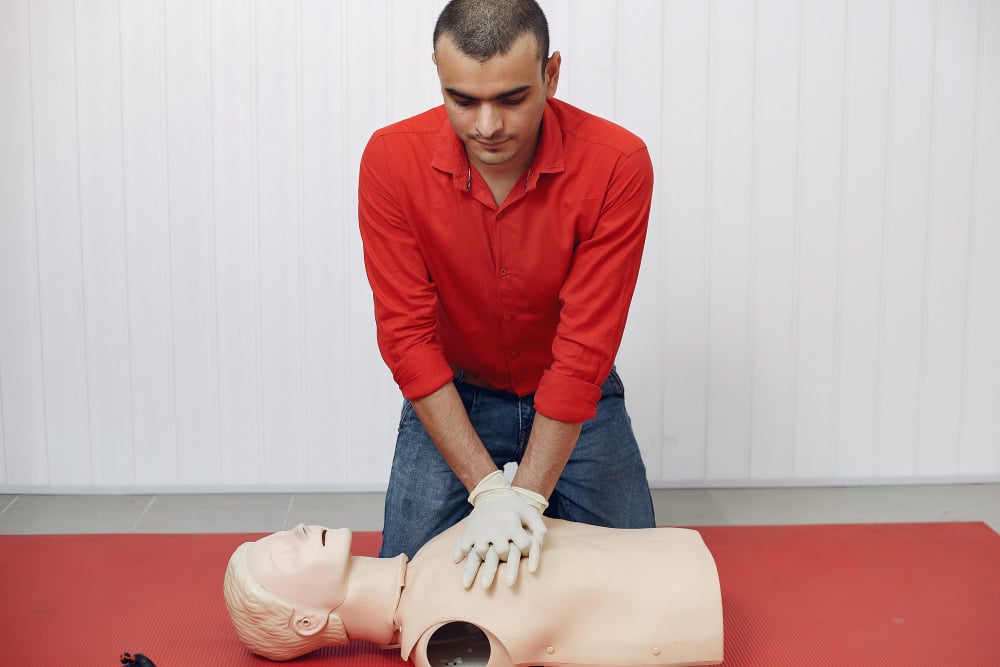 to capture chest compressions, ventilations, and positioning for infant/child scenarios.
 - Have any required paperwork or online completion certificate ready to present to the skills evaluator.
For procedural details—how a remote skills session runs and what the evaluator will look for—see the aid/CPR process overview (AidCPRProcess) and practical guidance on readiness for school‑year training cycles (Getting Ready for the New School Year).
Will RSV be accepted by state licensing agencies and my employer?
Acceptance of Remote Skills Verification (RSV) varies by state licensing agency, local regulator, and employer policy. Some jurisdictions accept blended or remote skills verification for CPR and first aid; others require in‑person, site‑based skills checks or approval of the training provider. Before you register, confirm three things with your licensing specialist or employer:
- Whether blended or RSV formats are accepted for your specific license or program type.
- Whether the provider or the specific course must be pre‑approved by the state registry or licensing office.
- The documentation the agency requires (for example: a digital certificate plus a skills verification record, course completion code, or provider approval number).
Practical verification steps: contact your licensing specialist by phone or email and quote the course title and provider (Pediatric RSV First Aid & CPR/AED Buy Now $115.00$95.00), ask whether remote manikin‑based verification is acceptable, and request written guidance if possible. ChildCareEd's Blended Learning overview explains common licensing questions about format acceptance and why you should confirm before enrolling (Blended Learning - post). Using these steps reduces the risk that your employer or regulator will later decline the course format.
How do I document RSV training for my licensing registry and employer?
Keep a clear paper and digital record to satisfy employers and registries. After successful RSV verification, you will receive a digital certificate; also retain the following items until your agency confirms acceptance:
- A copy of the online course completion (if separate from the skills verification certificate).
- The skills verification receipt, the trainer name or ID, and the date/time of the live session.
- Any tracking or shipping information for the loaner manikin, if requested by your employer or registry as evidence of a supervised skills session.
Upload or submit these documents to your employer or your state training registry as required. ChildCareEd's RSV class listing describes the digital certificate and skills verification workflow you can share with your licensing specialist (RSV class details), and the AidCPRProcess overview explains the practical sequence of verification steps that licensing offices ask about (AidCPRProcess).
Summary: What should child care professionals take away?
RSV extends accessibility without sacrificing competence assessment: when implemented with a loaner manikin, a live authorized instructor, and clear technical requirements, it offers a practical route to full certification. Choose the course format that your licensing agency accepts, prepare your space and equipment, and treat the RSV live session as the practical exam it is. For additional context and motivation, read accounts about why pediatric first aid training matters (Pediatric First Aid and CPR Training) and why seasonally timed training is useful (10 Reasons This Summer). For a concise discussion of the personal and community benefits of obtaining First Aid and CPR certification, see Be a Lifesaver, Not a Bystander.
Tags: #CPR #FirstAid #RSV #Childcare #Safety
- Adult/Child/Infant CPR AED and Adult First Aid Blended
- CDA Home Visitor Subject Area 2 Part 3 Birth to 5
- Adult Only CPR AED and Adult First Aid Blended
- Basic Life Support (BLS) Blended Healthcare Providers
- Pediatric Blended First Aid & CPR/AED Adult, Child, Infant
- Pediatric RSV First Aid & CPR/AED
- Adult First Aid Only - Blended
- Texas Director Credential Renewal
- Texas Director Credential
- ChildCareEd's First Aid and CPR Certification Course: Revolutionizing Life-Saving Skills
- The Benefits of CPR Remote Skills Training
- Keeping Our Youngest Students Safe: The Vital Importance of Pediatric First Aid and CPR Training for Teachers
- A Lifeline for Little Ones: Why First Aid and CPR Training is Essential for Teachers and Parents
- Summer Fun Meets Summer Safety: The Importance of Pediatric First Aid and CPR Training
- Pediatric First Aid and CPR Training with ChildCareEd - Empower Yourself!!
- Save Lives With Skill: CPR Training
- BLS Training For Healthcare Providers With ChildCareEd
- CDA Certification en Español: Recursos y Consejos para Educadores Bilingües
- ¿Cuáles son las mejores actividades de primeros auxilios para adultos?
- ¿Cómo pueden los equipos de cuidado infantil practicar habilidades rápidas de primeros auxilios en situaciones reales?
- Actividades de Otoño Fáciles para Preescolares esta Temporada
- Cómo Trabajar en el Cuidado Infantil en California: Requisitos y Pasos
- Cómo Ser Maestra de Preescolar en Maryland
- What are Child Care Certification Programs and How Can They Help My Team?
