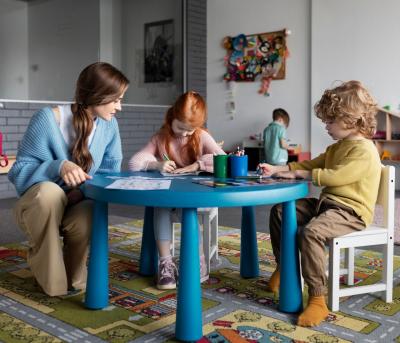
Demonstrate how theory is reflective in the child care environment for infants and toddlers.
Discover the connection between developmental theories and adolescence in the child care environment for infants and toddlers. Our page highlights how theory is reflective in the child care setting, providing valuable insights into early childhood education at our child care centers.Trainings incorporating this outcome
120 hours courses
 12 CEUs
 online
5/5
12 CEUs online
CDA Family Child Care Credential with Portfolio Review  Credencial CDA de Cuidado Infantil Familiar con Revisión del Portafolio
Credencial CDA de Cuidado Infantil Familiar con Revisión del Portafolio 5/5
102 hours courses
10.2 CEUs online
4.7/5
30 hours courses
3 CEUs online
4.7/5
3 CEUs online
CDA Bridge Bundle: Family Child Care without Portfolio Review Paquete puente CDA: Cuidado infantil familiar sin revisión de portafolio
Paquete puente CDA: Cuidado infantil familiar sin revisión de portafolio 5/5
3 CEUs online
CDA Bridge Bundle: Preschool without Portfolio Review CDA Bridge Bundle: Preescolar sin revisión de portafolio
CDA Bridge Bundle: Preescolar sin revisión de portafolio 5/5
3 hours courses
0.3 CEUs online
4.4/5







Related Outcomes
- Identify and understand the requirements of Child Care Subsidy (POC), Child and Adult Food Program, MSDE Child Care Credential, Tiered Reimbursement, and the Child Care Career and Professional Development Fund
- Demonstrate how theory is reflective in the child care environment.
- Explain how theory is reflective in the child care environment.
- Identify responses to typical daily child care scenarios with solutions that are aligned with Child Care Regulations
- Demonstrate an understanding how to maintain a safe environment under the guidance of the Office of Child Care Regulations.
- Demonstrate an understanding of the standards of high-quality child care environments.
- Identify factors that may influence learning for a child in the family child care environment.
- Demonstrate an understanding of the importance of schedules and consistency in a child care environment.
- Demonstrates understanding of Maryland State regulations for family child care home providers
- Demonstrates understanding of an appropriate family child care curriculum
- Identify strategies for providing appropriate care for infants and toddlers with chronic health issues
- Demonstrate an understanding of the Tribal Maternal, Infant, and Early Childhood Home Visiting program.
- Demonstrate appropriate interaction with infants and toddlers
- Describe the importance of monitoring the family child care environment for potential risks.
- Demonstrate understanding of the ADA and how it applies to family child care homes.
- Identify strategies to promote cultural diversity and acceptance in the child care environment
- Demonstrate understanding of developing positive relationships with child care families
- Demonstrate understanding of developing strategies for involving parents in the child care setting.
Related Articles
- Montessori for Toddlers: Fostering Independence and Learning
- CDA Certification en Español: Recursos y Consejos para Educadores Bilingües
- 🩺 Cumplimiento de Salud e Inmunización en Cuidado Infantil de Nevada ✔️
- Recursos en Español sobre el Sueño Seguro del Bebé
- Que es Título 22 en California?
- ¿Cuáles son los pasos, requisitos y opciones en línea para la certificación de 90 horas en cuidado de Infantes/Toddlers en Maryland?
- ¿Cómo solicito la licencia para una guardería en California?
- Regulaciones de Licenciamiento de Cuidado Infantil en California para Centros y Hogares de Cuidado Infantil Familiar
- Cómo Trabajar en el Cuidado Infantil en California: Requisitos y Pasos
- How Can Child Care Providers Build Secure Attachments with Infants?
- What Does the Science of Peekaboo Reveal About Infant Learning?
- Can Play Be a Primary Strategy for Supporting Children’s Mental Health?
- Which CDA Competency Standards Book Do You Need: Preschool or Birth to Five?
- What Makes a Great Home Daycare? 10 Things Parents Notice First
- No Playground Today! Rainy Day Activities for Kids All Ages.
- Proporciones para guarderías en casa bajo el Título 22: Cómo la mezcla de edades cambia su capacidad en California
- How Can Child Care Providers Support Healthy Toddler Development?
- How Can You Keep Care Responsive When a Toddler’s Temperament Differs from Yours?
